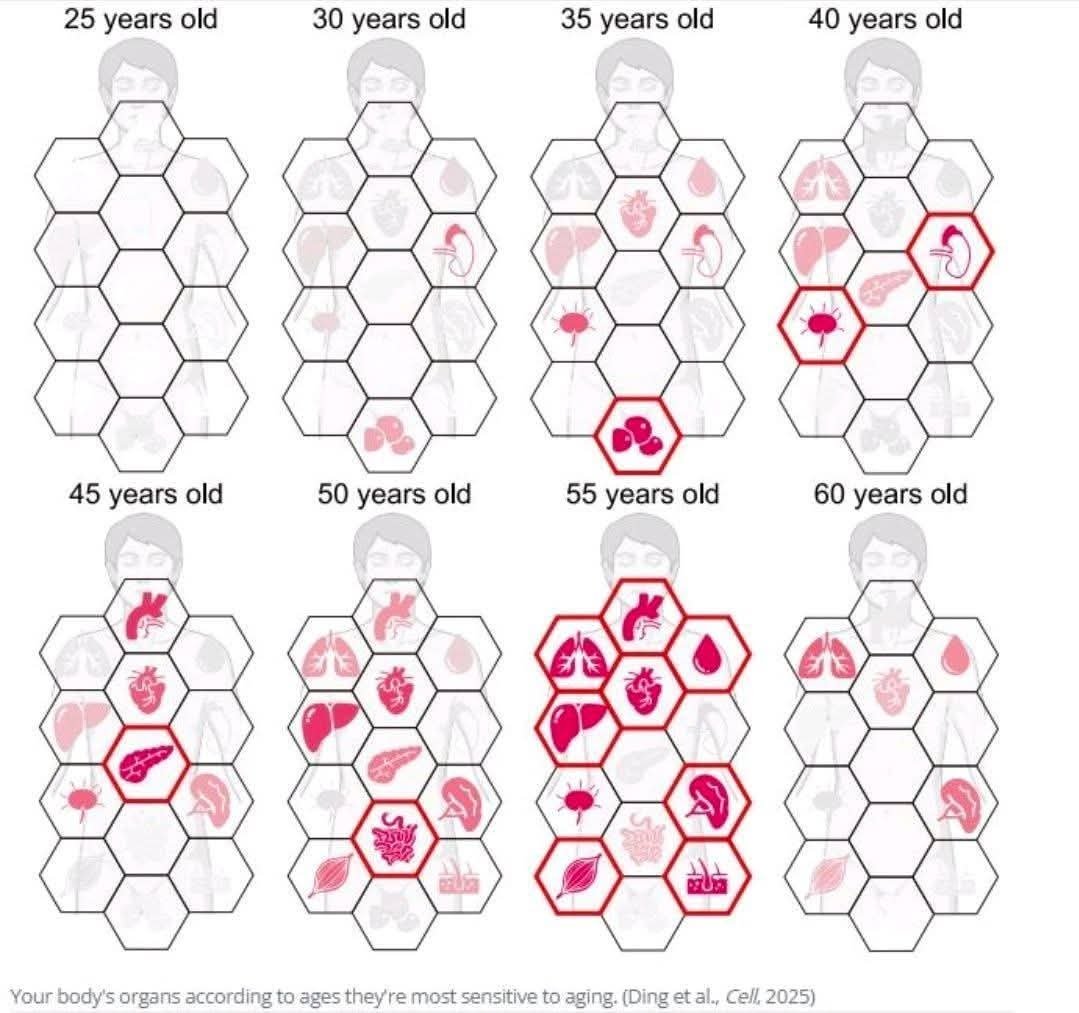
This visual summarizes findings from a 2025 Cell study mapping when specific organs become most sensitive to aging. It shows that aging is not a uniform process but a sequence of organ-specific declines that follow predictable timelines in midlife.
-
Early adulthood (25–35 years) Most organs function at peak performance, with minimal measurable decline. Early molecular signs of aging begin in metabolic and reproductive systems.
-
Example: Around age 30, subtle changes in ovarian and testicular function can begin, marking early reproductive aging.
-
Mid-30s to early 40s The heart and kidneys become among the first major organs to show measurable age-related changes.
-
Example: Cardiac tissue begins to lose elasticity, and early shifts in kidney filtration efficiency can appear by the late 30s to early 40s.
-
Example: Liver metabolism starts to slow modestly, altering the body’s ability to process fats and toxins.
-
Midlife (45–50 years) Aging becomes systemic, with multiple organs showing concurrent stress. The lungs, liver, and digestive tract display reduced regenerative capacity.
-
Example: By age 50, the gastrointestinal system becomes more prone to inflammation and microbiome shifts, influencing nutrient absorption and immunity.
-
Early 50s to mid-50s This is a critical turning point for cardiovascular, hematologic, and musculoskeletal health. The study identified this window as when the greatest number of organ systems show synchronized molecular aging.
-
Example: At age 55, changes in heart muscle stiffness, blood oxygen transport, and muscle fiber composition converge to accelerate physical decline.
-
Late 50s to 60 years By this stage, most systems—heart, blood, muscle, and lungs—show coordinated aging patterns. Cellular repair slows, oxidative stress accumulates, and inter-organ signaling (such as inflammation and hormone balance) weakens.
Example: Age-related muscle loss (sarcopenia) and reduced lung elasticity directly affect endurance and metabolic stability. This organ-by-organ aging timeline underscores that biological aging begins decades before clinical symptoms appear. Interventions that support cardiovascular, metabolic, and muscular health in the 30s and 40s may delay multi-organ decline later in life.
Source: https://x.com/drwilliamwallac/status/2011784711832568138?s=20
Open Access Source Paper: A comprehensive multi-organ proteomic atlas of human aging across 50 years