I see my PT has had me doing the ‘slingshot’ for the past two weeks.
I’m just getting over a concussion (yesterday was my first day back to a regular workout) and he was doing it to get a sense of my coordination. Last week, before my brain recovered, I couldn’t find my hands for the pass off… but yesterday I sailed through it.
Because I was able to see what he did with me, I can share that if you don’t have much coordination yet, for the first time you try those, you can kneel on the floor and go around your body in a way that if you drop it, it won’t have as far to go, and you won’t crush your toes. Once I was able to do it, he then had me stand up.
Love it. That is rock solid advice in that video. The older guy there is a beast - effortless 3 plate deadlift. Some very strong ladies there too: the first lady in the intro is listing ~80kg I think, lady at 5:30 is doing great and the lady at 6:10 is doing a ~110kg deadlift. I think it’s really apparent that those women are not going to be breaking a hip any time soon.
I personally don’t know anything, but because I have the benefit of working out with a PT, I’ll share what he says incase it’s helpful to anyone.
I just watched that video and thought I’d share he never has my husband, who is extremely strong and fit, do squats with the bar over his shoulders. For safety, he much prefers you hold plates or even have the bar in the crook of your elbow. (He’s had me do that, too). I’m sure a lot of you do the kind in the video and it’s fine for you, but I’m coming from the avoiding injury angle.
Also, @lsutiger I’ll share that if you should do deadlifts, to prevent injury, do watch a video about form. I don’t know if this is a universal issue, but he reminds me to emphasize pushing my pelvis forward when lifting to load my glutes and to keep it out of my back.
FWIW, if someone told me what their PT said, I’d probably ignore them because I’ve only met two PTs I have gotten anything out of. So, I’ll just share that this guy is not run of the mill. He has worked at a place in CO where people with difficult cases from all over the world go, including a lot of athletes, blah blah blah.
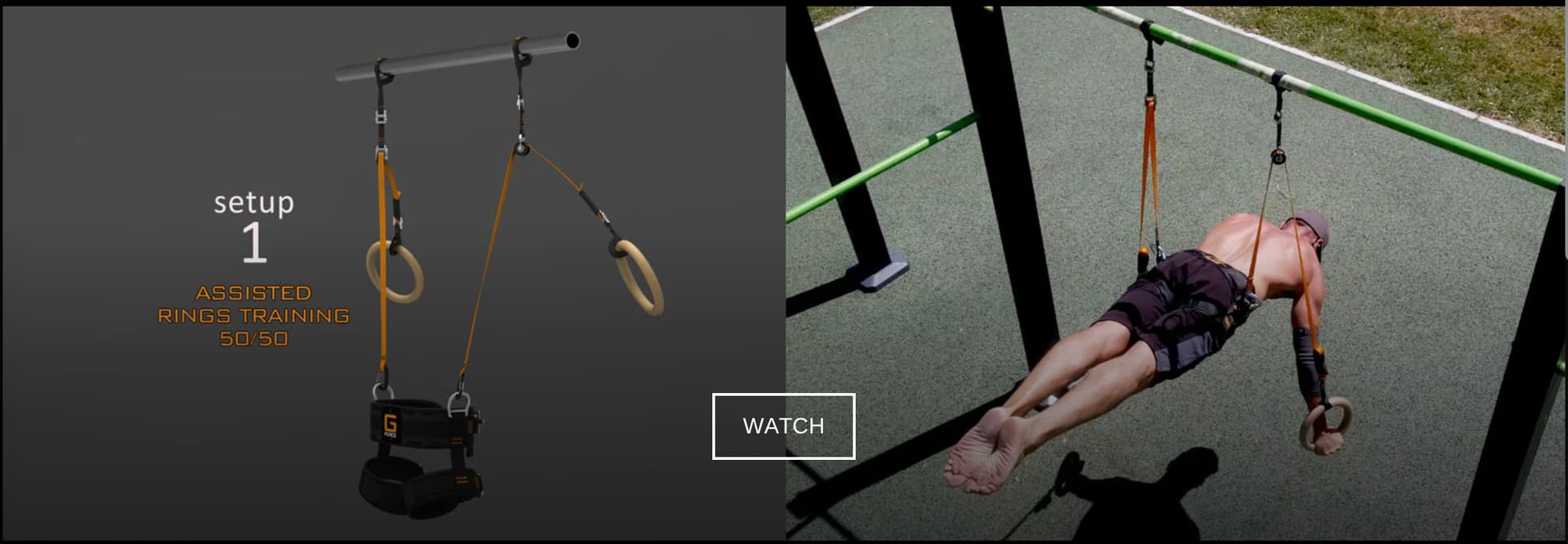
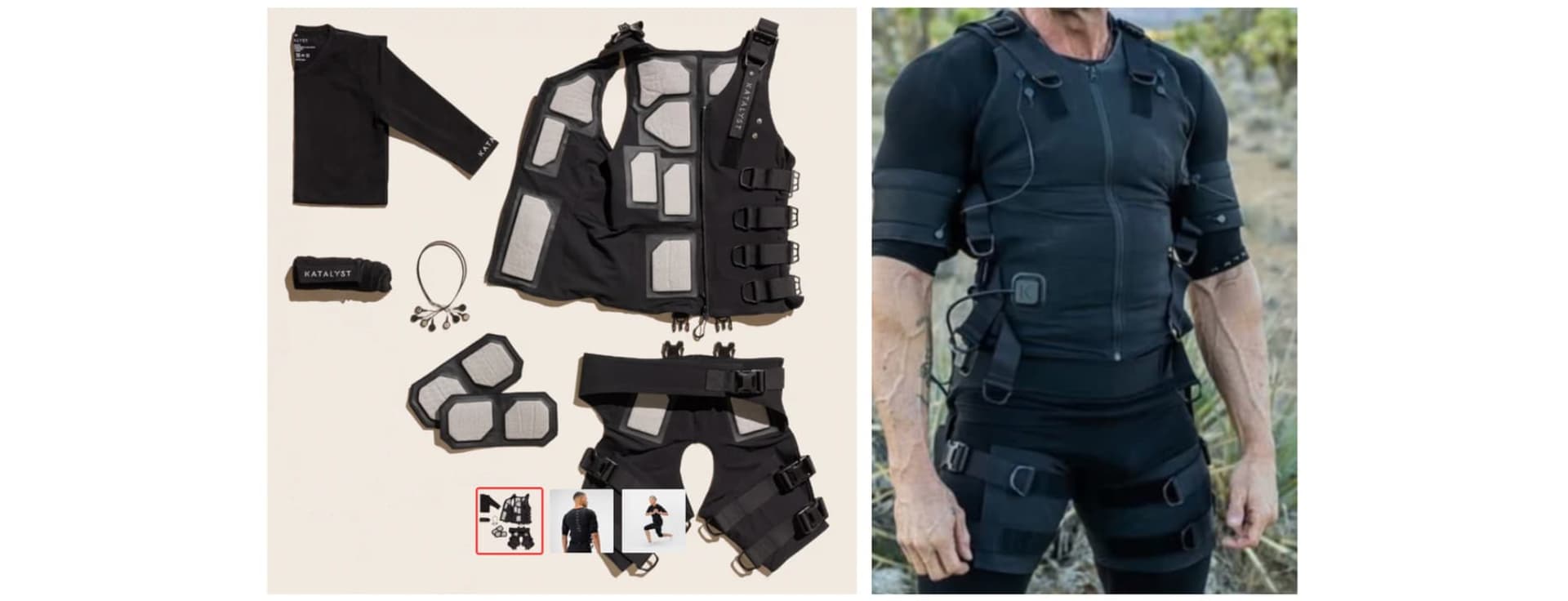
20 minutes twice per week. High intensity training. You can’t really do more in a week. You need the time to recover. If you can do more you need to dial up the stimulation intensity.
Doesn’t load the skeleton. Best to pair with once a week isometrics.
Bruce Lee adopted Bob Hoffman’s isometric training routine (which took less than 20 minutes) 2 to 3 times per week. It used the “overcoming isometric” method, which involves maximum voluntary contraction against an unmoving force, as opposed to “yielding isometrics,” where you hold a weight in place against gravity.
The exercises all performed orthogonally to the floor (think power rack) included:
3 pulls: low, middle, high (e.g., low deadlift position, high dead lift position, upward barbell row)
3 squats: low, middle, high
3 presses: low middle high
Shoulder shrug
Toe raise
Hoffman and Lee did these for 12 seconds each maybe doing 2 of the “3” exercise per session.
A TSC workout, properly done would take 90 seconds for each of 5 exercises (1 pull, 1 squat, 1 press, shoulder shrug, toe raise). 30 seconds at low to medium intensity, 30 seconds at medium to medium high intensity, 30 seconds all out.
This fatigues muscles before getting to full intensity to keep one from hurting themselves.
Like other HIT, TSC done properly can’t be done more than twice per week.
The more intensely one trains the longer recovery it takes.
One can incorporate strain gauges to better monitor intensity or just test your strength at a gym every couple of months.
Overcoming isometrics and Timed Static Contractions build strength and load the skeleton.
OK, its GQ so take it with a grain of salt, … but more reasons to do strength training…
Can Strength Training Replace Viagra?
In a world obsessed with visible gains—bigger biceps, chiseled abs, sharper jawlines—it’s easy to forget about the ones you can’t see. But according to recent research and a few candid physicians, one of the biggest beneficiaries of strength training might just be below the belt.
A July 2025 meta-analysis of 32 studies in Sexual Medicine Reviews found a positive correlation between muscle health and erectile function—not to mention higher sexual desire and satisfaction.
These findings might make gym bros everywhere breathe a little easier, and could rightfully inspire those who train less frequently. According to a 2022 survey by the Cleveland Clinic, 32% of men get worried about sexual health as they age, with chief concerns being erectile dysfunction (ED), loss of sex drive, and low testosterone. These worries are valid, especially since roughly 40% of men in their 40s, 50% of men in their 50s, and 60% of men in their 60s experience some degree of erectile dysfunction, says Gabrielle Lyon, DO, a board-certified physician, the author of The Forever Strong Playbook, and senior author of the aforementioned meta-analysis.
But how exactly do stronger muscles and stronger erections go (ahem) hand in hand? And could a solid weight lifting routine actually delay or prevent reliance on ED meds? We spoke to experts to find out.
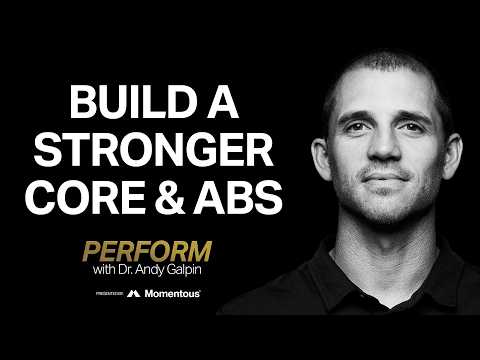
How to Build a Strong Core & Abs, Andy Galpin, PhD
I. Executive Summary
The analyzed transcript dismantles the anachronistic paradigm of core training that relies on high-frequency, low-load endurance protocols (e.g., daily unweighted crunches). The core biological thesis is that abdominal and trunk musculature are morphologically and physiologically identical to other appendicular skeletal muscles. Specifically, the transcript asserts these tissues possess a roughly 50/50 Type I (slow-twitch) to Type II (fast-twitch) muscle fiber distribution. Consequently, the physiological laws of muscle hypertrophy and strength generation—primarily Henneman’s Size Principle—dictate that maximal force production, motor unit recruitment, and structural adaptation require high-intensity mechanical loading, not merely localized metabolic fatigue.
The clinical framework bifurcates training objectives into three distinct vectors: Look (hypertrophy/aesthetics), Feel (rehabilitation/pain desensitization), and Perform (force transmission and dynamic stability). For aesthetics, programming must introduce progressive overload via load escalation in both dynamic (flexion) and anti-movement patterns, restricted to 2–4 sessions per week to permit cellular recovery. For performance, heavy multijoint compound movements (e.g., deadlifts, unilateral carries) are strictly mandated to train the core’s primary biomechanical function: feed-forward spinal stabilization. For rehabilitation, higher-frequency, low-load motor patterning is neurologically permissible but structurally inadequate for strength gains.
The speaker accurately identifies a biomechanical ceiling in direct core loading: applying maximal load to isolated spinal flexion (e.g., heavy weighted sit-ups) inherently compromises intervertebral disc integrity via uncontrolled shear and compressive forces. Thus, maximizing core motor unit recruitment safely necessitates shifting from isolated spinal flexion to heavy, anti-movement isometrics (e.g., loaded suitcase carries) or heavy compound lifts where the spine remains in a neutral, stabilized posture under load. Overall, the protocol is scientifically robust: core musculature obeys standard physiological laws, and training must aggressively transition from endurance-based burn-chasing to load-bearing progressive overload to yield measurable structural or functional adaptations.
II. Insight Bullets
Fiber Typology Parity: Core musculature exhibits a ~50/50 Type I to Type II muscle fiber ratio, contradicting the myth that the core is exclusively a slow-twitch, postural muscle group requiring unique high-rep protocols.
Size Principle Dependency: Core motor unit recruitment is load-dependent; high-threshold (Type II) motor units will not activate without high-force demands, rendering low-load planks insufficient for maximal strength.
Feed-Forward Activation: Trunk muscles activate anticipatorily (100–150 milliseconds) prior to appendicular skeletal movement to stabilize the spine against impending limb forces.
TVA Functionality: The transverse abdominis (TVA) functions to compress the abdominal cavity and generate “hoop tension” (pulling the abdominal wall inward), not to facilitate transverse plane rotation.
Oblique Mechanics: Transverse plane rotation and lateral flexion are entirely governed by the internal and external obliques.
RA Mechanics: The primary biomechanical function of the rectus abdominis (RA) is to depress the rib cage toward the anterior pelvis (spinal flexion).
Baseline Activation: Core musculature maintains a 2–3% maximal voluntary isometric contraction (MVIC) during standard standing postures, spiking to near 100% during biological events like sneezing or vomiting.
Compound Superiority: Heavy free-weight movements (deadlifts, squats) often yield higher MVIC in core musculature than isolation exercises due to the extreme systemic load forcing massive stabilization demands.
Hypertrophy Programming: Maximizing RA and oblique muscle volume requires standard hypertrophy protocols: 10–20 working sets per week, 1–2 repetitions in reserve (RIR), and 2–4 training days per week.
Load vs. Duration: Progressive overload for the core must prioritize external load escalation (e.g., weighted cable crunches) rather than endlessly extending isometric hold durations.
Spinal Flexion Limits: Spinal flexion is not inherently injurious, but the lumbar spine possesses a finite loading capacity for flexion cycles before elevating the risk of intervertebral disc pathology.
Biering-Sorensen Metric: The Biering-Sorensen test assesses the isometric endurance of spinal erectors; maintaining a horizontal extension hold for >200 seconds correlates strongly with a reduced risk of lower back pain.
Sahrmann Stabilization Shift: The Sahrmann Core Stability Test evaluates lumbo-pelvic control; inability to lower the legs without anterior pelvic tilt indicates psoas major dominance and inadequate RA/TVA bracing.
Tactile Belt Feedback: A tightly cinched lifting belt blunts native core activation, whereas a mildly snug belt increases core activation via enhanced proprioceptive feedback and a boundary for the TVA to brace against.
Postural Illusions: Chronic anterior pelvic tilt (often driven by shortened hip flexors and weak glutes) artificially distends the abdomen, mimicking excess adiposity without a change in body fat percentage.
III. Adversarial Claims & Evidence Table
Claim from Video
Speaker’s Evidence
Scientific Reality (Current Data)
Evidence Grade
Verdict
Core muscles have a 50/50 fast/slow-twitch fiber type profile, similar to the vastus lateralis.
Post-mortem autopsy models (1990s).
True. Trunk muscles (RA, obliques, erectors) exhibit mixed fiber typing, not purely slow-twitch. Source unverified in live search 2022-2026. General historical consensus.Johnson et al., 1973
C
Strong Support
The core activates 100-150ms before limb movement (Feed-forward stabilization).
Hodges & Richardson studies (1996/1997).
Highly validated physiological mechanism. Anticipatory postural adjustments (APAs) occur universally in healthy subjects. Source unverified in live search 2022-2026. Benchmark:Hodges & Richardson, 1997
B
Strong Support
Compound free weights activate the core more than isolation/machine exercises.
“The research supports that.”
Plausible, but highly context-dependent. Heavy deadlifts maximize erector spinae and TVA activation, but direct isolation (e.g., rollout) often yields higher specific RA activation. Oliva-Lozano et al., 2020
A
Plausible
High-rep spinal flexion under high load causes back injury.
Editor for pro/con piece in Strength Conditioning Journal.
High-cycle, loaded spinal flexion increases the risk of disc herniation in ex vivo models. In vivo data is highly individualized, but avoiding 1RM spinal flexion is standard clinical practice. McGill, 2010
D
Plausible
Core hypertrophy requires standard rep ranges (6-15) and loads, identical to other muscles.
General physiological principles.
Validated. Muscle protein synthesis and fiber hypertrophy are driven by mechanical tension and metabolic stress across all skeletal muscles uniformly. Schoenfeld et al., 2021
A
Strong Support
Weight belts reduce core activation if too tight, but increase it if slightly snug.
Clinical observation / “science settled for a decade.”
Partially true. Belts augment intra-abdominal pressure (IAP). Evidence suggests RA and external oblique activation actually increases with a tight belt during heavy lifts to push against the boundary. Finnie et al., 2003
B
Speculative
IV. Actionable Protocol (Prioritized)
High Confidence Tier (Level A/B Evidence)
Progressive Overload for Rectus Abdominis: Cease daily high-rep unweighted crunches. Execute 2–4 sessions per week of loaded core movements (e.g., weighted cable crunches, loaded ab wheel rollouts) in the 8–15 rep range, leaving 1–2 Reps in Reserve (RIR). Total weekly volume: 10–20 working sets.
Heavy Anti-Movement Integration (The “Perform” Protocol): To maximize motor unit recruitment without risking spinal shear forces, utilize heavy unilateral loaded carries (Suitcase Carries, 6-12 heavy steps per side) and heavy Pallof presses to train the core as a force transmitter.
Feed-Forward Optimization via Compound Lifts: Do not isolate the core exclusively. Mandate heavy axial loading (Barbell Squats, Deadlifts) at >75% 1RM to natively trigger the 100-150ms anticipatory stabilization pathways.
Experimental Tier (Level C/D Evidence - High Safety Margin)
TVA “Hoop Tension” Isolation: For aesthetic waist control and postpartum management, execute specific Transverse Abdominis vacuums or quadruped abdominal draw-in maneuvers. Focus on volumetric compression rather than active flexion.
The 5-Step Motor Control Progression: If failing Sahrmann or Sorensen tests, implement a strict linear progression before loading: 1. Isometrics → 2. Unweighted Eccentrics (Anti-movement) → 3. Loaded Eccentrics → 4. Unweighted Concentric → 5. Loaded Concentric.
Red Flag Zone (Safety Data Absent or Elevated Risk)
Maximal Load (1RM) Spinal Flexion: Attempting to find a 1-repetition maximum on spinal flexion exercises (e.g., weighted sit-ups) yields a highly asymmetric risk-to-reward ratio regarding intervertebral disc herniation.
High-Frequency Hypertrophy Chasing: Training the core to muscular failure 7 days a week. This blunts local muscle protein synthesis and drastically increases localized central nervous system fatigue without added hypertrophic benefit.
V. Technical Mechanism Breakdown
Henneman’s Size Principle (Motor Unit Recruitment): The foundational mechanism dictating core strength and hypertrophy. The central nervous system recruits motor units in order of size—from smallest (Type I, fatigue-resistant) to largest (Type II, high-force). Unweighted planks and high-rep crunches only produce sufficient force to recruit low-threshold Type I units. To stimulate high-threshold Type II units in the rectus abdominis and obliques, external resistance must be applied to force the tissue closer to its maximal force-generating capacity.
Anticipatory Postural Adjustments (Feed-Forward Motor Control): The central nervous system utilizes a feed-forward loop rather than a reactive feedback loop for spinal safety. Mechanoreceptors and higher cortical planning centers send efferent signals to the TVA, multifidus, and internal obliques to contract 100-150ms before the deltoids or quadriceps fire. This creates immediate intra-abdominal pressure (IAP) to prevent the spine from buckling under the impending kinetic transfer from the limbs.
Spinal Biomechanics (Shear vs. Compressive Loading): The vertebral column safely absorbs immense compressive force (top-down loading, as in a heavy squat) when stacked in a neutral position, stabilized by a 360-degree muscular brace. However, it is highly susceptible to shear forces (horizontal displacement of vertebrae). Repeated flexion under load (sit-ups) actively reduces compressive capacity and introduces micro-trauma to the annulus fibrosus of the intervertebral discs. Heavy anti-movement exercises build core strength by applying shear torque externally (e.g., a heavy weight pulling the body laterally) while the musculature acts isometrically to enforce pure compressive neutrality.
Bumping this thread with some new data I pulled together.
Imagine an intervention that could:
Reduce visceral fat by 10-12%
Reduce abdominal fat by 10%
Improve insulin sensitivity by 45%
Reduce HBA1C% by -0.7% (equivalent to metformin mono therapy)
Lower CRP by 56%, IL-6 by 69% and TNF-a by 43% in chronic inflammation
Reduce systolic blood pressure by 10.9 mmHg
Good news is that all of these were accomplished in various studies putting people on 12-24 week strength training programs!
What is also very interesting is that strength ended up being a stronger predictor of success than muscle mass alone. And the effort expended is also extremely important. I found this very interesting, because I assumed that the muscle mass being a glucose sink etc was important. However, studies showed that if you take muscular guys and stop training for 3 months, they retain significant muscle but lose the metabolic benefits. Thus, strength is a bit like VO2max, in that it represents the cumulative work you’ve done.
So, basically, we want to hit the gym, use movements which maximise muscle utilisation (squats, deadlifts, presses, carries etc), and take them reasonably close to failure (maybe RPE8). Higher intensity and proximity to failure recruits more muscle tissue, maximising benefits. But going to actual failure means slower recovery and it might hamper progress over time. So I usually stick to RPE8-9.
Benefits are localised to the muscle tissue which was used. i.e. squats stimulate your quads, glutes etc to upregulate GLUT4, release myokines, undergo mitochondrial biogenesis etc. Consider that your lower body makes up 40% of your muscle mass, so don’t skip leg day! Building biceps etc for looking good in a t-shirt is great fun, but a disproportionate amount of your health benefits will come from the big leg muscles and glutes.
Adding mass is hard for those of us who are ectomorphs or hard gainers. A big part of the problem is just getting enough calories and protein. I weigh 225 lbs. If my protein target is 200 grams that is about 10 cans of tuna, or 10 quarter pound burgers, or 25 eggs per day. I never eat that much. Mark Rippetoe once gave the controversial advice to drink a gallon of whole milk per day. This was only for healthy young men who tried everything else. The training is simple—the eating is the hardest part. Tom Petty had a song about that.
It’s interesting. I’m a hard gainer on 140mg testosterone a week (daily injections, serum T at 1050ng/dL), but at 200mg/wk (1350ng/dL), I put on several pounds of dry mass over 3 months already as an intermediate-advanced lifter by strength. A threshold had to be crossed.
Without exogenous T, some have tremendous trouble putting on muscle. More volume works, but one only has so much time and recovery capacity, so it isn’t practical to just double sets.
I like my life simple, so I plan meals in advance. High protein, moderate carbs, low fat, very low caloric surplus. Keep insulin sensitivity high so the substrate goes where you want it.
Rippetoe’s advice gave me digestive problems and made me fat - fat does make one fat. But he’s not a fan of a lean look anyway.
Protein is manageable, no?
2 cups of egg whites - 50g
300g fat free Greek yogurt - 30g
Two scoops of whey - 50g
160g chicken breast - 50g
200g cooked lentils with 0.5 cup black rice (dry) - 27g
2 cans of sardines - 45g
BFR is fascinating and it works. Peter Attia is one of many proponents. The muscles that I am most interested in strengthening are the spinal erectors, rhomboids, and tiny muscles in my shoulder that I cannot name. A one hour workout based on compound exercises allows me to strengthen everything. BFR would be valuable for the extremities if I had more time. It might not work well for the neck muscles such as sternocleidomastoid. Strength training is especially critical for women to prevent osteoporosis. Deadlifts, chin-ups and such make a healthy spine.
Insulin sensitivity also from the Ibanez study. Though, to be honest, most studies in this field are very small (this one only 9 subjects), and most hyertrophy/strength studies recruit college students. So I tried to find studies or meta-analyses of more representative populations.
That’s barely enough for anybody, to be honest. Even if you do a really good workout, you’re recovered after 2-3 days. It’s like 2 steps forward and 1 step back. Better than nothing, but far from optimal. If you can increase it to 2x per week, that will give you much better results because you’ll be able to make meaningful progression by building on the previous session, rather than having several days of “reset” each time.
And FWIW, I don’t think it’s necessarily the “size of muscles and longevity”, but rather having the strength, power, stability, etc. If you look at the post above, those were actually the most impactful.
There is not really any such thing as “ectomorph” (since anybody can change their phenotype), but I assume you are using this to describe somebody with a smaller frame (thin wrists, longer limbs etc) and higher calorie requirements.
Hardgainer is true though if you’re a poor responder to exercise. It kinds sucks, but it also usually means that you don’t get too fat too easily either!
That’s pretty heavy. Are you very tall? How lean are you?
A good idea is to base protein requirements off your lean mass. If you are 225 but at 30% body fat, then 160g protein/day would be a good target. And you can very easily achieve this with a little supplementation. A pre- and post- workout protein shake can easily add 50g, meaning you only need ~100g from food, which is easy.
I’m not a huge fan of BFR for people who are otherwise healthy. It seems to add unnecessary complications and I’m not sure what is gained by doing it. For people doing rehab, nursing injuries (tendons, joints etc) then it can make sense to try and get a decent hypertrophy stimulus from lower weights. But you’re still missing out on other beneficial stimulus such as stretch/tension under load, the physical loading of those tendons and joints etc, all of which cause positive adaptations. BFR training doesn’t seem to increase strength either.
It’s also not really achievable for any muscles except the limbs. Say for quads, if you are an intermediate gym bro who can squat 225lb x 10 reps, you probably don’t need to ever mess around with BFR on the quads. Might as well just work on progressing that to 315x10. Or, for a brand new lifter, I still think BFR is totally unnecessary. If you’re untrained, you don’t need fancy tricks. Just start with squatting the empty bar through a full range of motion and work on adding small amounts of weight. If you’re so frail/elderly/untrained that you can’t even squat, then maybe there’s a place for BFR.
Thanks Meatball. I’m about 6’ 3” and 63 years old. Perhaps I should have stated that I am a former hard gainer. Ectomorph is indeed a rather old fashioned term. I’m now the strongest that I have ever been and getting stronger. I wasted a lot of time when I was younger with inefficient circuit training and suboptimal diet. What finally worked for me was the Starting Strength method and eating everything in sight. I restrict calories every couple of weeks when dosing rapamycin, so excessive weight gain has not been an issue. Regardless of what we call them, some people seem to gain weight easily and some don’t. For the skinny people out there, the eating is the hardest part. I eat about 3 to 4 times as much as my wife.
Keith Baar is amazing. I’ve been watching all his podcast appearances to wring out all the juice in his brain. Getting isometrics incorporated into my strength and conditioning plan. There’s a lot that goes into the details.