1 Like
1 Like
I recall making similar points on this forum many months ago, that the methods used to quantify these plastics in the body are not the most reliable. I am not an expert in this field, but the limitations of quantifying based on “evaporating” tissues, or doing particle counts are pretty well known across multiple fields. But “microplastics” became a bit of a hot topic. I’m glad that people are pushing back and questioning the quality of the evidence.
I would assume it’s common sense that taking tons of plastics into our body isn’t a great idea. But I also think it’s not something I worry about. I do the very basics like not microwaving things in plastics, avoiding hot drinks in plastic containers, not using plastic cutlery.
In my little sunroom, where I spend a lot of time, there are windows on three sides. Not much sun here on the north coast but at least plenty of light: around me are a couple dozen green plants, various types and sizes. Plants can remove some toxins as well as CO2, and put some oxygen into the air. And moisture: I mist several times a day, which helps put some moisture into the dry indoor air. Not going to entirely fix the microplastics problem, but I think the plants help. In any case, it feels good to be in this micro “forest bathing”

space.
5 Likes
I have never really thought much about the microplastics argument. These things come and go in phases.
2 Likes
There are different views. I really don’t think it is likely my brain is 0.5% microplastics. If it is then they don’t matter.
1 Like
this is arguing from feelings, not evidence
1 Like
My evidence is that I don’t think have any problems doing the computer programming I normally do. I think it is a scare story. I am not always right. I don’t intend spending a lot of time reiterating this. (As in if you disagree with me I will probably ignore it). If it is real which I don’t think it is it does not matter.
1 Like
It’s the trendline (exponential growth - levels 1.5x current levels every 8 years) of MNPs that is of concern. Maybe it’s not an issue YET, but in 8, 16 years…
It’s what they call “the plastic debt”.
Matt Campen showed that rates of many MNPs 1.5x every 8 years - not just the PE whose findings are widely questioned.
1 Like
That is lush! Who knows whether plants, microplastics etc matter - but having a beautiful room with natural light to relax and feel satisfied in comfort must be worth a whole lot more!
2 Likes
1.5x in 8 years? The difference from average microplastic exposure and factory levels are probably many orders of magnitude larger then that. Has anyone researched plastic factory worker mortality rates? Or people who microwave plastics, or anyone else with high exposures. We must have 60 yrs of data at least.
I think they’re harmful, but it would be good to find studies on this, perhaps no one has done an epidemiological study on this.
1 Like
Though there is much we don’t yet know about microplastics, there are some easy ways to reduce exposure: pour over coffee using paper filters, loose leaf tea rather than bags or sachets (I did write to Harney and Rishi. Their quick response showed that they have moved on this. Rishi uses plant based polylactic acid in their sachets – no plastics-and Harney does something similar --), avoiding clothing with PFAS, filtering water (Consumer Lab recommended Aquagear), and surrounding yourself with lots of natural greenery – inside or outside.
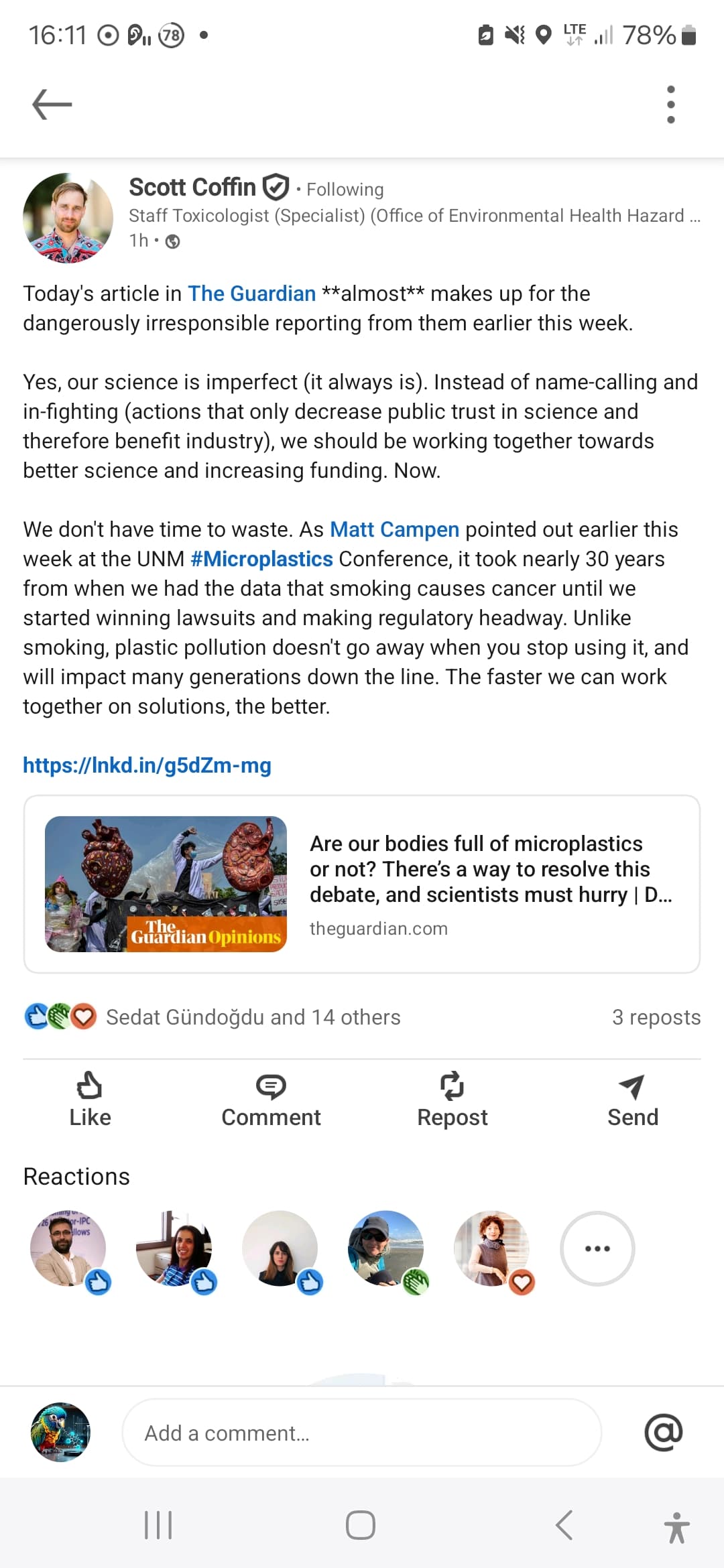
Sedat GündoğduSedat Gündoğdu • 1stVerified • 1stMercator IPC Fellow at Sabancı University / Professor at Cukurova University | Head of Microplastic Research Group | Marine Pollution Researcher | Waste ColonialismMercator IPC Fellow at Sabancı University / Professor at Cukurova University | Head of Microplastic Research Group | Marine Pollution Researcher | Waste Colonialism1w • 1 week ago • Visible to anyone on or off LinkedIn
Our recent open-access study reveals that prolonged hashtag#plastic mulching in agricultural systems leads to the silent accumulation of hashtag#microplastics in hashtag#soils, with measurable consequences for soil health and ecosystem functioning.
By examining agricultural fields subjected to 5, 10, and 30 years of plastic mulching in the Mediterranean region, we demonstrate that long-term plastic use significantly increases microplastic loads and drives a progressive decline in soil quality. Key physical and biological indicators — including aggregate stability, microbial biomass, nitrogen mineralization, and bulk density — deteriorate as plastic residues persist and migrate through the soil profile.
Using the Soil Management Assessment Framework (SMAF), we show that soil quality indices decrease by up to 17% under long-term mulching, highlighting that plastics do not simply remain inert fragments but actively interfere with soil structure, water dynamics, and microbial processes.
These findings serve as an early warning:
- Plastic mulching delivers short-term agronomic benefits, but its long-term ecological costs are accumulating beneath our feet.
- Understanding and managing plastic residues in agricultural soils is essential if we aim to protect soil as a living system and safeguard sustainable food production.
The full article is freely available as open access.
Journal of Soil Science and Plant Nutrition

god, if RFK Jr. really cares about regenerative agriculture, this is the least he can do…
that, and trash bags - seriously can’t we find a non-plastic alternative?
1 Like
The one tip that I’ve learnt to have the biggest impact on the microplastics in my body is to stop adding tea bags to scalding hot water. Now I cold brew and eventually I’ll switch to loose leaves and avoid the tea bags altogether.
2 Likes
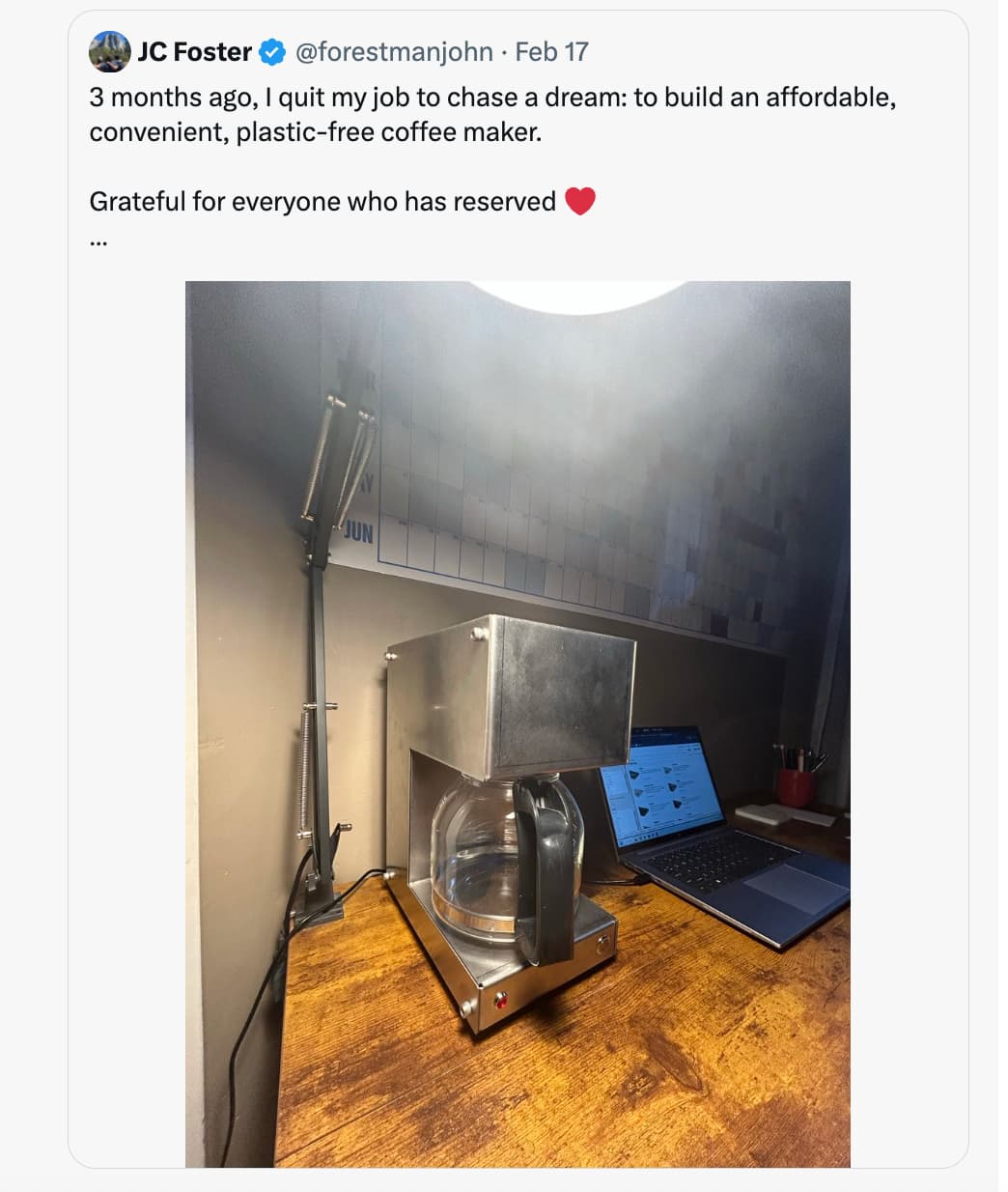
Are plastic coffee makers a significant source of microplastics? I do pour-over with a ceramic filter holder…
1 Like