Hi
Yes I’d be interested in your results. My partner is considering options at 70…
1 Like
I don’t have access to X. But I think they’re talking about this 2012 study published in an unknown Iraqi medical journal:
https://mjtu.tu.edu.iq/index.php/mjtu/article/view/539
322-329.pdf (1.7 MB)
1 Like
Hmmm… more Ginger Ale please. And, a bit of Jameson Scotch with lime. My go to bar drink.
Ever try backloading insulin syringe with T using 5/16/8mm pin for subQ?
Works better for me although it adds a step and more waste.
I have not. I think the injection site reactions came from not having the needle deep enough in the muscle.
2 Likes
Understood.
FWIW I’ve done both methods.
Ive had much less reaction using insulin pins as opposed to IM.
1 Like
I do not recommend Purerawz.co as a supplier. I have placed several orders with them, but my most recent order was shorted. I initiated a documented email trail explaining the issue and complied with all stated customer service requirements to have the missing product shipped. However, despite multiple follow-up emails, it appears that the customer service representative has lost track of the prior correspondence.
They do not seem to have any effective system for tracking or resolving customer complaints to completion. Once payment has been received, there appears to be little concern for post-sale problem resolution.
I also reviewed Reddit and found several discussions reporting similar negative experiences related to order issues.
Well, if you know of a similar company with a good reputation when it comes to customer complaints let me know.
As a general statement, it should be pointed out that when you check your testosterone level, you should ask for the gold standard Testosterone LC/MS and not the standard immunoassay which can easily be falsely elevated if you’re taking HCG, other androgens, and a few other things. Might as well make sure you get the most accurate test because it really does make a difference.
1 Like
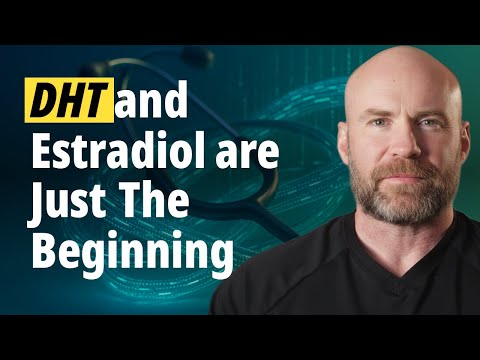
Here’s a concise summary of the most important points from that long video transcript about how testosterone metabolites work and why they matter:
• Testosterone is a pro-hormone that gets converted into many downstream metabolites beyond just estradiol (E2) and dihydrotestosterone (DHT). Those metabolites often have distinct biological effects that influence mood, body composition, cognition, immune function, vascular function, and more.
• The common notion that “it’s just testosterone, DHT, and E2” is oversimplified. In reality, testosterone’s metabolism continues far beyond those two pathways, creating many compounds that are biologically active or locally important to tissues.
• DHT itself is only one part of the story. For example, 5-beta DHT and its metabolites don’t bind the androgen receptor but instead appear to support vascular health and nitric oxide-mediated vasodilation, separate from androgenic signaling. Blocking enzymes that produce these can have unintended effects.
• Certain metabolites have neuromodulatory roles. Some act as neurosteroids that influence GABAergic signaling, anxiety, cognition, and memory, while others affect immune responses (like fever induction) by interacting with immune pathways.
• Estradiol and its metabolites are similarly complex. Some downstream estrogen metabolites appear more potent than E2 itself at specific functions like inhibiting inflammatory adhesion molecules that contribute to atherosclerosis or acting as neuroprotective agents.
• The effects of enzyme inhibitors (such as aromatase inhibitors for estrogen or 5-alpha reductase inhibitors for DHT) are not limited to changes in E2 or DHT levels. They can alter levels of multiple metabolites with unpredictable downstream effects because these pathways are interconnected and locally regulated.
• Tissue levels of metabolites often do not correlate with serum levels, so measuring serum hormone concentrations alone can give an incomplete picture of metabolic activity in tissues like brain, vascular endothelium, or prostate.
• Some metabolites may explain clinical phenomena like “steroid flu,” altered fat distribution, or adverse symptoms with drugs like finasteride because they influence pathways far downstream of the initial hormone.
• Overall, the steroid hormone network is highly complex and finely tuned, and simplistic approaches to manipulating testosterone or its downstream products can disrupt important physiological functions.
4 Likes
3 Likes
I feel the same about taking it as a woman about his age.
2 Likes
In today’s Nature:
Testosterone therapy is trending. Who really needs it, and why?
Some clinicians are pushing to broaden testosterone use, but there is debate about its benefits and risks.
Is testosterone the next miracle drug? That seemed to be the consensus of an expert panelconvened by the US Food and Drug Administration (FDA) in December. It argued for major changes in policy that would expand access to the hormone for people with a range of conditions. Committee members called testosterone replacement “a cornerstone of preventive health” and “a multibillion-dollar preventive-care opportunity”.
Testosterone is already available in the United States for people who have low levels of the hormone owing to a known medical issue, such as testicular damage. But evidence is growing that more men — and women — might benefit from the hormone, which is delivered through injections, patches, subcutaneous implants or gels. (This article uses ‘men’ and ‘women’ to reflect the language used by the panels and studies cited, while recognizing that trans, non-binary and intersex people are also affected by this issue.)
The panel’s recommendations intensify a debate that has been brewing about who might benefit from the treatment. Some clinicians say that most men with low testosterone, especially young ones with no medical issue contributing to the problem, don’t need supplemental treatment at all and should be able to raise their testosterone levels by adopting a healthier lifestyle and losing weight. Others argue that men with low testosterone who have symptoms such as low libido, fatigue and irritability could gain from the therapy.
More-enthusiastic proponents, including many members of the FDA panel at the December meeting, take a third view: that all cis men should be tested, and those with low testosterone levels should be treated even if they have no symptoms. “You could make a very strong argument that having a normal testosterone level is important for health and prevention of illness,” says Abraham Morgentaler, a urologist at Harvard Medical School in Boston, Massachusetts, who took part in the December panel.
Morgentaler and other panellists stressed at the meeting that testosterone is not just a ‘lifestyle drug’ that men take to build muscle and feel good. Yet it is increasingly being marketed that way. Podcasters such as Joe Rogan and his guests have sung the hormone’s praises. And scores of testosterone clinics are popping up around the world1, promising fitter bodies and a boost in energy levels to people who might not even have low testosterone to begin with.
At high doses, testosterone use potentially comes with risks ranging from infertility to increased mortality. The drug is currently classified as a controlled substance with potential for abuse in the United States and several other countries, owing in part to doping scandals in the 1990s and 2000s. That classification is worth reconsidering according to statements made by FDA commissioner Marty Makary, who also voiced his enthusiasm for testosterone at the December panel.
So what is the evidence for the safety and benefits of testosterone replacement?
Read the full article: Testosterone therapy is trending. Who really needs it, and why? (Nature)
1 Like
As Matt Kaeberlein says… in his Optispan podcast… TRT is one of the biggest game changers for him, in health benefits.
I have used for 6 years… weekly injections. I concur!
2 Likes
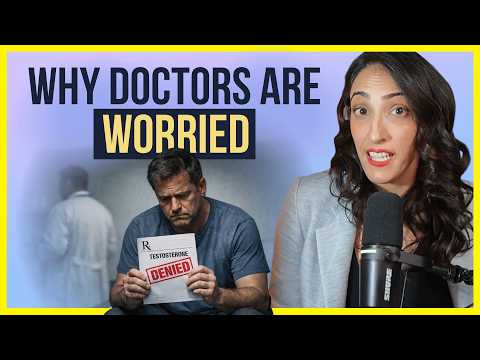
A great podcast on why testosterone is a solid supplement with benefits for aging males… but also why it isn’t being prescribed. Mostly wrong, medical assumptions from the past.
Why Most Doctors Say NO to Testosterone And Why it Might Be Killing you.
3 Likes
By health benefits he definitely means short term observable/measurable benefits. Problem is if it has long-term negative efffects, those will be working silently in the background and won’t bet something he will notice in the near term.
I think TRT is one of those things that has a good chance of trading lifespan for healthspan. A lot of indirect evidence indicates that increased testosterone may shorten lifespan even though it may improve healthspan in the short term. We need more longer term studies to confirm that directly though (especially what effect it has to increase it modestly only later in life when it has dropped a lot). That said, for many people that tradeoff may be well worth it, depending on their goals in life.
Anyways, I don’t really trust the opinions on this matter from people that have tried TRT and experienced obvious subjective positive effects from it. They are all biased and wil be inclined to convince themselves that what they are doing is beneficial for longevity, so they can eat their cake and have it too. None of us are immune to that desire and the resulting biases. I like to think I’m able to remain less biased on this issue han most, at least for the time being, since I’m not yet old enough to have experienced a significant decline in testosterone levels. Hopefully when I’m older there will be more direct evidence either way.
4 Likes
I think it depends. If someone is genuinely hypogonadal then I think it’s reasonable to believe that using TRT to restore T to the normal physiologic range may have lifespan benefits. If someone has low-normal T and uses TRT to reach mid-normal or high-normal levels, then I think it’s reasonable to believe that this may be lifespan neutral. And then once you start getting above the normal physiologic range, then I agree that the default educated guess shifts toward lifespan-negative.
4 Likes
I’m on TRT. I think it is a healthspan thing more than anything and I shape part of my overall lifestyle to counteract potential downsides of TRT.
The benefits I’ve gained from this are too high to go back to where I was.
4 Likes
At age 41 to 45, you are in the prime of your life. It was only after becoming a senior citizen that I began to understand what it feels like to experience low testosterone, along with declines in other areas. I do not like it, but that is the way it is.
TRT can restore some ability to maintain and build muscle and bone, and it can also help maintain interest and motivation in daily activities. If you have ever been to a gym with many older members, you may have noticed that they tend to walk more slowly, do less, and sit more often.
So far, I have been able to avoid that “slow lane” with the help of TRT. For me, it is a trade-off between quality of life and length of life. I prefer to maintain health and vitality for as long as possible, even if it leads to a faster decline later, rather than a prolonged, gradual decline in both body and mind.
That said, I do wonder what the difference in lifespan might be, if any, especially since my TRT simply brings testosterone levels back into the normal physiological range rather than pushing them above it.
I began TRT in my 70s because my testosterone levels were clearly low. For anyone younger or older whose total and free testosterone levels are within the normal range, who feels well, and who is able to maintain their fitness, I would recommend avoiding TRT unless it becomes necessary.
If you are considering TRT, research the potential effects on hair loss, testicular shrinkage caused by reduced endogenous testosterone production, and changes in estradiol, SHBG, LH, and FSH levels. You should also consider the differences between testosterone injections and testosterone gel before making a decision.
5 Likes
I suppose I am “lucky” in a way. My testosterone has consistently been in the 350-450 range, since my 20’s, and I just turned 40 this year. Most recent test was 360ng/dl. For reference, my estrogen also generally runs normal or a bit higher, usually 25-45 pg/ml. My most recent test was 30 pg/ml.
However, I feel absolutely fine. I hit the gym, gain muscle and strength no problem. I can standing overhead barbell press my body weight, which I feel is a decent benchmark. My libido is good. Everything functions normally downstairs. I’ve fathered children, and I did do a fertility test once and was right in the middle of the range for everything. So the low-ish number on paper just doesn’t seem to be a factor.
I’ve often thought about whether to get into TRT, but can’t really justify it. When I try to look at the evidence for TRT in an unbiased manner, I still don’t really see any sort of benefits for somebody in my position.
I also think we end up with a remarkably simplified ideology when we think about TRT. Obviously using exogenous testosterone will suppress your natural LH and FSH, and you may end up converting more to estrogen. So if I consider the idea of, let’s say, boosting my 400 up to 700 or 800, I have to ask - at what cost?
2 Likes
One of the “costs” that I have considered is higher estrogen which is neuroprotective and longevity favorable. Mine is just reported at <30.
Not sure there is much role for LH and FSH once you are replacing. But it is hard to know everything about what the effects are. My LH and FSH are both high now and TRT will suppress that - for good, bad or neutral effects?
2 Likes