Stop Spinning Your Wheels: What Actually Took My Health From Top 15% to Top 1%
. Executive Summary
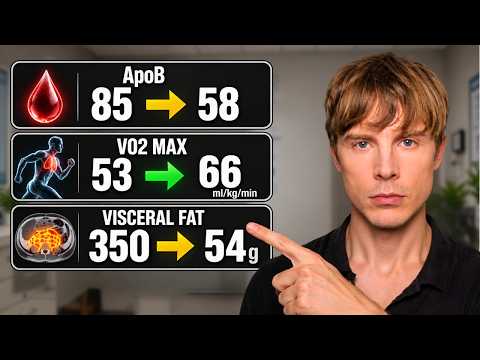
Optimizing long-term survivorship and metabolic longevity requires pivoting from generic “health behaviors” toward targeted, outcome-driven biomarker modification. Longevity is constrained by physiological bottlenecks rather than baseline strengths. Moving an individual from the 85th percentile of population health to the top 1st percentile demands ruthless prioritization of five core physiological levers: visceral adiposity reduction, cardiorespiratory fitness expansion, viscous and fermentable fiber intake, modulated protein consumption with dietary methionine-to-glycine balancing, and circadian sleep regularity.
Visceral adipose tissue functions as a pathogenic endocrine organ, driving chronic systemic inflammation, atherogenic dyslipidemia, and peripheral insulin resistance. Interventions that deplete visceral depots—primarily sustained caloric balance and zone-specific aerobic conditioning—demonstrate superior efficacy compared to resistance training alone for visceral fat mobilization. Concurrently, maximal oxygen uptake (VO2 max) demonstrates a continuous, graded, inverse relationship with all-cause mortality that extends past elite thresholds, eclipsing the longevity effect plateau observed in progressive muscular strength.
Nutritional interventions must prioritize functional endpoints over dietary dogma. High dietary fiber intake (approaching 50 g/day) delivers profound improvements in atherogenic particle clearance (ApoB/LDL-C reduction) and systemic metabolic stability. Concurrently, hyper-elevated protein consumption (exceeding 1.6 g/kg/day) offers diminishing lean mass gains while disproportionately increasing sulfur-containing methionine load. In translational models, excessive methionine intake in the absence of counterbalancing glycine accelerates metabolic dysfunction, whereas moderate protein intake coupled with glycine sufficiency preserves appendicular lean mass while enhancing insulin sensitivity.
Finally, circadian sleep consistency within a strict 30-minute window outpredicts gross sleep duration in reducing all-cause and cardiovascular mortality. Adequate sleep duration preserves lean tissue catabolism under caloric deficit conditions, preventing sarcopenic weight loss. By replacing unmeasured wellness routines with closed-loop biomarker tracking—measuring baseline parameters, deploying targeted protocols, and verifying multi-system adaptations—individuals systematically resolve rate-limiting physiological weaknesses to compress morbidity and decelerate biological aging.
II. Insight Bullets
- Bottleneck Constraint Principle: Human longevity and metabolic capacity are constrained by individual physiological bottlenecks rather than established physical strengths.
- Endocrine Pathology of Visceral Adipose Tissue: Visceral adipose tissue operates as a 24/7 pathogenic endocrine organ, releasing pro-inflammatory cytokines and driving hepatic insulin resistance.
- Visceral Adiposity Index and Cardiovascular Risk: A 2025 meta-analysis of prospective cohort data confirms that elevated visceral adiposity index significantly elevates risks of cardiovascular disease, stroke, and cardiovascular death, with risk increasing linearly per 0.5-unit increment (Wang et al., 2025).
- Calorie Restriction and Epigenetic Deceleration: Human caloric restriction trials, notably the two-year CALERIE Phase-2 RCT, confirm improvements in cardiometabolic markers and a 2% to 3% slowing in the pace of biological aging measured via DNA methylation algorithms like DunedinPACE (W. Daniel Belsky et al., 2023).
- Target Adiposity Thresholds: The lowest mortality risk across population data corresponds to maintaining body fat percentages below 15% for males and between 20% and 25% for females.
- Age-Stratified Visceral Fat Targets: Maintaining optimal cardiometabolic health requires suppressing absolute visceral fat mass into the lowest 10th percentile for age (e.g., approximately 100 g for young adults).
- Dietary Agnosticism in Body Composition: Diet composition functions strictly as a delivery vehicle; caloric balance and fat loss dictate the primary cardiometabolic benefits of dietary interventions rather than ideological dietary patterns.
- Resistance Training Longevity Ceiling: While muscular strength reduces all-cause mortality, its hazard-ratio reduction reaches an asymptote at moderate-to-advanced strength levels.
- Non-Plateauing Longevity Returns of VO2 max: Cardiorespiratory fitness (VO2 max) provides an unbroken dose-response curve with survival benefits continuing into elite fitness cohorts.
- Aerobic Superiority in Visceral Fat Mobilization: A systematic review and meta-analysis of 35 trials demonstrates that aerobic endurance exercise reduces visceral adipose tissue significantly, whereas progressive resistance training alone shows negligible isolated visceral fat reduction (Ismail et al., 2012).
- Cardiorespiratory and Muscular Synergy: Concurrent physical conditioning that maintains advanced muscular strength alongside elite cardiorespiratory fitness maximizes survival outcomes over single-modality specialization.
- Pragmatic Weekly Exercise Programming: A balanced longevity exercise framework prioritizes 3 to 4 progressive resistance training sessions alongside 1 to 3 targeted cardiovascular sessions (incorporating Zone 2 base and high-intensity intervals).
- High-Dose Dietary Fiber Utility: Daily dietary fiber intake scaled up to 50 g exerts profound systemic cardiometabolic effects, well beyond baseline population minimums.
- Atherogenic Lipoprotein Reduction via Fiber: Viscous and fermentable dietary fibers accelerate hepatic clearance of bile acids and downregulate circulating apolipoprotein B (ApoB) and low-density lipoprotein cholesterol (LDL-C).
- Colorectal Oncology Prevention: High intakes of dietary fiber (30 g to 50+ g daily) significantly reduce colorectal cancer incidence in population cohorts.
- Polyphenol-Driven Adipose Mobilization: Integrating polyphenol-dense whole foods enhances visceral fat oxidation compared to isocaloric, polyphenol-depleted nutritional regimes.
- Hypertrophy Protein Saturation Threshold: Meta-analyses show that lean mass accretion from dietary protein plateaus around 1.6 g/kg/day, rendering higher intakes metabolically superfluous for muscle retention in energy balance (Morton et al., 2018).
- Methionine-Induced Metabolic Strain: Excessive intake of the essential amino acid methionine drives hyperhomocysteinemia and metabolic derangements seen in rodent and preliminary translational models (Cavuoto & Fenech, 2012).
- Human Methionine Restriction Efficacy: Controlled human trials demonstrate that limiting methionine intake enhances systemic fat oxidation, clears hepatic lipid accumulation, and restores peripheral insulin sensitivity (Plummer et al., 2017).
- Glycine-to-Methionine Counterbalancing: Glycine acts as a biochemical mimetic of methionine restriction by enhancing clearance of methyl groups, buffering homocysteine synthesis, and mobilizing visceral lipid stores (McCarty et al., 2018).
- Circadian Sleep Consistency Superiority: Objectively measured day-to-day sleep regularity (going to bed and waking within a 30-minute window) reduces all-cause mortality by 20% to 48%, outpredicting raw sleep duration in epidemiological models (Windred et al., 2024).
- Sleep Deprivation Catabolic Partitioning: Caloric restriction conducted under sleep deprivation (5.5 hours vs. 8.5 hours in bed) shifts weight loss substrate utilization, inducing up to 80% lean mass loss and blunt fat mass oxidation (Nedeltcheva et al., 2010).
- End-State Optimization Over Activity Tracking: True health status is determined by downstream target biomarkers (ApoB, visceral fat volume, VO2 max, HbA1c, hs-CRP) rather than mere participation in “wellness” behaviors.
- Engineering Feedback Framework: Biological optimization requires applying an objective closed-loop feedback mechanism: quantify baseline biomarkers, deploy target interventions, systematically re-measure, and iterate.
- Top 1% Health Community: Siim Land manages the Top 1% Health Community (hosted on Skool), which provides biomarker assessments, coaching protocols, and peer tracking.
IV. Actionable Protocol (Prioritized)
High Confidence Tier (Level A/B Evidence)
-
Cardiorespiratory Optimization via Zone 2 & HIIT:
- Execute 150–200 minutes of weekly Zone 2 aerobic base training (lactate <2.0 mmol/L; conversational threshold) combined with one weekly high-intensity interval training (HIIT) session (e.g., 4x4 min at 90–95% max HR) to aggressively expand VO2 max and trigger visceral fat lipolysis (Ismail et al., 2012).
-
Hypertrophy Maintenance via Progressive Overload:
- Perform 3 to 4 full-body or upper/lower resistance training sessions per week focusing on compound multi-joint movements (6–12 reps at RPE 7–9) to maintain appendicular lean mass and bone mineral density without excessive systemic strain (Morton et al., 2018).
-
High-Viscosity Fiber Intake (40–50 g/day):
- Systematically scale intake of diverse soluble, insoluble, and prebiotic fibers to 40–50 g daily using whole-food sources (legumes, cruciferous vegetables, berries, chia seeds, root tubers) to bind biliary lipids, clear systemic ApoB, and improve glycemic control.
-
Circadian Anchoring & Sleep Consistency:
- Anchor daily sleep and wake times to a fixed window (±30 minutes, 7–8.5 hours total sleep) 7 days per week. Avoid severe sleep restriction during caloric deficits to prevent sarcopenic catabolism and sustain metabolic rate (Nedeltcheva et al., 2010; Windred et al., 2024).
-
Objective Target Biomarker Panel:
- Screen fasting blood panels quarterly: Target ApoB <60 mg/dL, hs-CRP <0.5 mg/L, fasting insulin <5 μIU/mL, and HbA1c <5.0%.
Experimental Tier (Level C/D Evidence, High Safety Margins)
-
Protein Titration & Methionine-Glycine Balancing:
- Cap total protein intake between 1.4 and 1.6 g/kg/day (deviating from 2.0+ g/kg bodybuilding dogmas) to minimize unnecessary sulfur amino acid load while saturating skeletal muscle protein synthesis.
- Supplement 5–10 g/day of pure glycine powder or collagen peptides alongside methionine-dense animal proteins (meat, poultry, eggs) to optimize the plasma glycine-to-methionine ratio and support hepatic transmethylation pathways (McCarty et al., 2018).
-
Polyphenol Densification for Adipose Remodeling:
- Consume polyphenol-rich foods daily (wild blueberries, pure cocoa, green tea, dark leafy vegetables) as adjuncts to accelerate visceral and hepatic lipid oxidation during caloric deficit or maintenance phases.
Red Flag Zone (Debunked Claims, Translational Gaps & Safety Risks)
-
Unmonitored Extreme Methionine Deprivation in Humans:
- Safety Data Absent: Extreme restriction of dietary methionine (<2 mg/kg/day) without clinical supervision risks negative nitrogen balance, anemia, muscle wasting, and hepatic dysfunction. Do not attempt synthetic amino-acid-stripped medical diets outside clinical trials.
-
“Health Halos” and Unvalidated Action Bias:
- Indulging in wellness practices (saunas, uncalibrated ice baths, indiscriminate longevity supplements, unregulated intermittent fasting regimes) without verifying downstream shifts in hard biomarkers (blood pressure, ApoB, DEXA visceral fat) is ineffective. Activity does not equal physiological adaptation.
-
Sacrificing Aerobic Conditioning Exclusively for Heavy Resistance Training:
- Relying solely on powerlifting or bodybuilding splits without structured cardiovascular endurance training elevates long-term all-cause mortality risk, blunts heart rate variability (HRV), and fails to clear visceral and pericardial lipid deposits.
Produced by Gemini 2.5 Pro
Target health metrics
Target health metrics for longevity require stratifying physiological capacity (such as cardiorespiratory fitness and adiposity distribution) by age decile, while holding systemic cardiometabolic biomarkers to age-invariant optimal standards. The data referenced from cohort analyses—including dual-energy X-ray absorptiometry (DEXA) normative databases of over 10,000 subjects (Ofenheimer et al., 2020) and the Cleveland Clinic cardiopulmonary cohort (Mandsager et al., 2018)—establish explicit targets to achieve top-tier health status across adulthood.
| Age Cohort | Visceral Adipose Tissue (VAT Mass) | Body Fat % (Men) | Body Fat % (Women) | VO2 Max: Elite (Men, ml/kg/min) | VO2 Max: Elite (Women, ml/kg/min) | Lean Mass (ALMI Target) |
|---|---|---|---|---|---|---|
| 20–29 | <100 g (Bottom 10th percentile) | 10–13% | 20–23% | ≥52–55+ | ≥43–46+ | Men: >8.5 kg/m² Women: >7.0 kg/m² |
| 30–39 | <150 g (Bottom 10th percentile) | 10–14% | 20–24% | ≥49–52+ | ≥40–43+ | Men: >8.5 kg/m² Women: >7.0 kg/m² |
| 40–49 | <220 g (Bottom 10th percentile) | 11–15% | 21–25% | ≥45–48+ | ≥36–40+ | Men: >8.3 kg/m² Women: >6.8 kg/m² |
| 50–59 | <320 g (Bottom 10th percentile) | 12–15% | 22–25% | ≥41–44+ | ≥33–37+ | Men: >8.0 kg/m² Women: >6.5 kg/m² |
| 60–69 | <420 g (Bottom 10th percentile) | 13–16% | 22–26% | ≥37–40+ | ≥30–34+ | Men: >7.8 kg/m² Women: >6.3 kg/m² |
| 70–80+ | <500 g (Absolute risk threshold) | 14–17% | 23–27% | ≥33–36+ | ≥27–31+ | Men: >7.5 kg/m² Women: >6.0 kg/m² |
Age-Stratified Physiological Metrics
Visceral Adipose Tissue (VAT)
- Normative Divergence vs. Longevity Target: In standard population cohorts, visceral fat accrues progressively from ~180 g in young adulthood to over 1,500 g past age 60. The video protocol mandates remaining in the lowest 10% for age rather than tracking population averages.
- Absolute Thresholds: Maintain DEXA visceral fat mass below 100 g during early adulthood, scaling to no more than 500 g at age 80. In cross-sectional imaging, VAT area should remain strictly below 100 cm² to avoid elevated cardiovascular event rates (Wang et al., 2025).
Cardiorespiratory Fitness (VO2 Max)
- The “Elite” Category Advantage: The landmark Cleveland Clinic study (Mandsager et al., 2018) showed that elite cardiorespiratory fitness (top 2.5% for age and sex) confers an approximate 5-fold reduction in all-cause mortality compared to the lowest quintile, with zero ceiling effect.
- Age Attenuation Rate: While sedentary adults experience an approximate 10% reduction in VO2 max per decade after age 30, structured endurance training (Zone 2 volume combined with interval protocols) limits this decline to roughly 5% per decade, allowing trained 60-year-olds to match the aerobic capacity of sedentary 30-year-olds.
Body Composition & Lean Mass Index
- Total Adiposity: Total body fat must remain below 15% for males and between 20% and 25% for females across middle age to avoid chronic low-grade inflammation. In adults over 65, lower thresholds adjust slightly upward (14–17% for men, 23–27% for women) to hedge against cachexia and frailty.
-
Appendicular Lean Mass Index (ALMI): Calculated as
Appendicular Lean Mass (kg) / Height (m)². The target is the top 10th to 20th percentile for age to prevent sarcopenia, supported by capping protein intake at 1.4 to 1.6 g/kg/day combined with progressive resistance training (Morton et al., 2018).
Age-Invariant Longevity Biomarkers
Unlike functional capacity, clinical targets for atherogenic particles, glycemic control, and systemic inflammation must not be adjusted upward with advancing age. Longevity medicine targets remain uniform across all adult cohorts:
- Apolipoprotein B (ApoB): <60 mg/dL (optimally 50–60 mg/dL) to arrest the progression of coronary atheroma.
- Low-Density Lipoprotein Cholesterol (LDL-C): <70 mg/dL (optimally 50–60 mg/dL), mediated via high intake of soluble/viscous fiber (40–50 g/day).
- Fasting Insulin: <5.0 uIU/mL, serving as an early indicator of peripheral insulin sensitivity before changes manifest in fasting glucose.
- Hemoglobin A1c (HbA1c): 4.5% to 5.0%, maintained via caloric management and circadian sleep anchoring.
- Total Plasma Homocysteine: <7.0 umol/L (optimally 5.0–6.0 umol/L), modulated by balancing dietary methionine with 5–10 g/day supplemental glycine or collagen peptides (McCarty et al., 2018).
- High-Sensitivity C-Reactive Protein (hs-CRP): <0.5 mg/L, reflecting the suppression of active visceral adiposity cytokine secretion.
- Sleep Regularity Index: Daily sleep onset and wake variance locked within a ±30-minute window, which delivers a 30% to 48% reduction in all-cause mortality regardless of baseline duration (Windred et al., 2024).
Produced by Gemini 2.5 Pro