You may want to review these threads if you have not already:
1 Like
I don’t see it like this at all… I see fibrosis risk as very low, given the current dosing programs that most of us undertake (low dose, once per week or less). With periodic breaks (rapamycin vacations) that many people take, it seems like a vanishing risk.
While there will be varying responses in any patient population, most of the research I’ve seen has never mentioned fibrosis as a significant concern or side effect in any of the literature.
At the same time, as I now do some research into this topic since you’ve brought it up, most of the research literature are studies looking at rapamycin (sirolimus) as a treatment for fibrosis (not the cause).
Some research here:
We sought to test the hypothesis that short-term treatment with sirolimus reduces the concentration of CXCR4+ circulating fibrocytes in patients with idiopathic pulmonary fibrosis (IPF).
RESULTS
In the 28 study participants, sirolimus resulted in a statistically significant 35% decline in the concentration of total fibrocytes, 34% decline in CXCR4+ fibrocytes, and 42% decline in fibrocytes expressing α-smooth muscle actin, but no significant change in these populations occurred on placebo.
Rapamycin (alternatively known as sirolimus) is a macrolide immunosuppressant commonly used for organ transplantation. It acts both on lymphocytes through the mechanistic target of rapamycin (mTOR) pathway to reduce their sensitivity to interleukin-2 (IL-2) and, importantly, also has anti-fibrotic properties by acting on myofibroblasts.
https://www.nature.com/articles/s41433-019-0340-3
Rapamycin Ameliorates Inflammation and Fibrosis
Potent antifibrotic activity of mTOR inhibitors sirolimus and everolimus
https://www.sciencedirect.com/science/article/abs/pii/S0168827810011797
When I search on “sirolimus and fibrosis” - the research seems very positive, though I have not done an exhaustive review as its not a significant concern of mine.
7 Likes
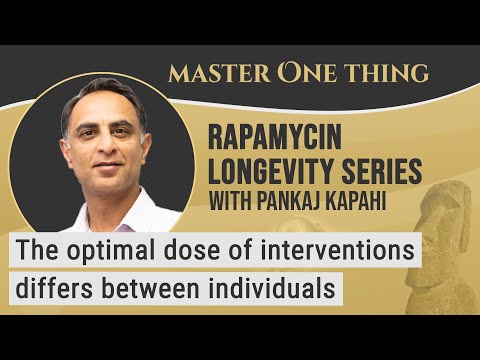
That is my thinking as well. I am trying a new schedule since 5 months where I take 1mg daily for 3 weeks and take one week pause and restart. I have not seen any adverse effect (I am planning a yearly check-up including extensive list of blood tests in about a month). The observational positive effects are mostly related to controlling sterile inflammation / autoimmune issues (dermatitis, rhinitis, joint pain…). But I had surgery in January and had a longer pause not to mess with healing and took three weeks off and all the issues that improved in last months slowly creeped back. I copied and modified this 1mg daily protocol form Pankaj Kapahi, he has lab at Buck institute and he explained about his own rapamycin protocol (2 weeks 1mg daily two weeks pause) in one of the interviews and reading some studies on rapamycin and autoimmune diseases. If biomarkers wont support it I will probably change it back to weekly.
4 Likes
Thank you! I’m happy to see there are studies which find encouraging results vis-a-vis the fibrosis issue and yet there remain many uncertainties. Then again, life itself is a crap shoot in countless respects. Our entire existence is a grand casino which we struggle to navigate, using our brains and our instincts to arrive at decisions which may or may not be to our benefit. Pardon my waxing philosophic. Anyway, you do an excellent job with the site and I hope it draws more and more members as the topics it covers are extremely important.
2 Likes
One more thing: I’ve read journal articles that state that sirolimus has no effect on mTORC2 but that appears to contradict other studies and I’m frankly confused about it. What is your opinion?
I think you’re talking about this interview and this information (queued up for the part where he talks about his dosing):
1 Like
Yes, this is the interview.
Blagosklonny suggested it in his paper Towards disease-oriented dosing of rapamycin for longevity: does aging exist or only age-related diseases? - PubMed
Based on “side” and therapeutic effect-avoidance, the most popular schedule of rapamycin for longevity is 5–7 mg once a week. The schedule is well tolerated and lacks side effects except of rare mouth sores [40]. It is based on the assumption that the intermittent schedule has fewer side effects than everyday doses. But this never was compared. For example, treatment with 1 mg rapamycin every day lacks side effects in healthy elderly [41]. So, both schedules have negligible side effects. But are they equally effective for life extension? We do not know.
3 Likes
Might I ask what underlying disease you have requiring both pulmonologist and nephrologist? If it’s scleroderma, you may react quite differently than others.
Still interesting to see any traditional doc recommending low dose rapa.
After a few years on Rapa, I developed lung fibroses (detected by X-ray), and was sent to a pulmonologist who pointed to Rapa as a culprit. I stopped Rapa, as he advised, and fibroses cleared without any medications after 4 months.
2 Likes
a new study show even intermittent use of rapamycin induce fibrosis in mice’s heart : https://www.sciencedirect.com/science/article/pii/S2212877824000334?via%3Dihub
Yes - at very high dosing, and they still did well overall.
See: Yes, the Dose Really Does Make the Poison (Skeptoid Blog)
From 6 months of age, male and female C3B6F1 hybrid mice were either continuously fed with 42 mg/kg rapamycin, or intermittently fed by alternating weekly feeding of 42 mg/kg rapamycin food with weekly control feeding.
Results
Chronic rapamycin treatment induced glucose intolerance, which was partially ameliorated by intermittent treatment. Chronic and intermittent rapamycin treatments increased lifespan equally in males, while in females chronic treatment resulted in slightly higher survival. The two treatments had equivalent effects on testicular degeneration, heart fibrosis and liver lipidosis. In males, the two treatment regimes led to a similar increase in motor coordination, heart rate and Q-T interval, and reduction in spleen weight, while in females, they equally reduced BAT inflammation and spleen weight and maintained heart rate and Q-T interval. However, other health parameters, including age related pathologies, were better prevented by continuous treatment.
Conclusions
Intermittent rapamycin treatment is effective in prolonging lifespan and reduces some side-effects of chronic treatment, but chronic treatment is more beneficial to healthspan.
1 Like
So myocardial fibromyalgia is only a problem at extremely high doses of Rapamycin?
I’m not worried about it at my doses. It seems like at transplant patient levels (significantly higher than most of us are taking) it actually still seems associated with an alleviation of fibrosis, but I’m not a doctor:
Background
Myocardial fibrosis is an important contributor for development of diastolic dysfunction. We investigated the impact of sirolimus as primary immunosuppression on diastolic dysfunction and fibrosis progression among heart transplantation recipients.
Conclusions
Early conversion to sirolimus is associated with improvement in diastolic dysfunction and filling pressures as compared with CNI therapy. Whether this could be attributed to attenuation of myocardial fibrosis progression with sirolimus treatment warrants further investigation.
1 Like
That’s all I wanted to hear. Thanks.
There is no debate that rapamycin does more good than bad. However heart fibrosis increased is still a concern to me.
1 Like
If you are concerned, please continue to do research on the topic and post anything you find - positive or negative on this issue. I think it is of interest to look at the dose levels that this issue is seen in other model organisms.
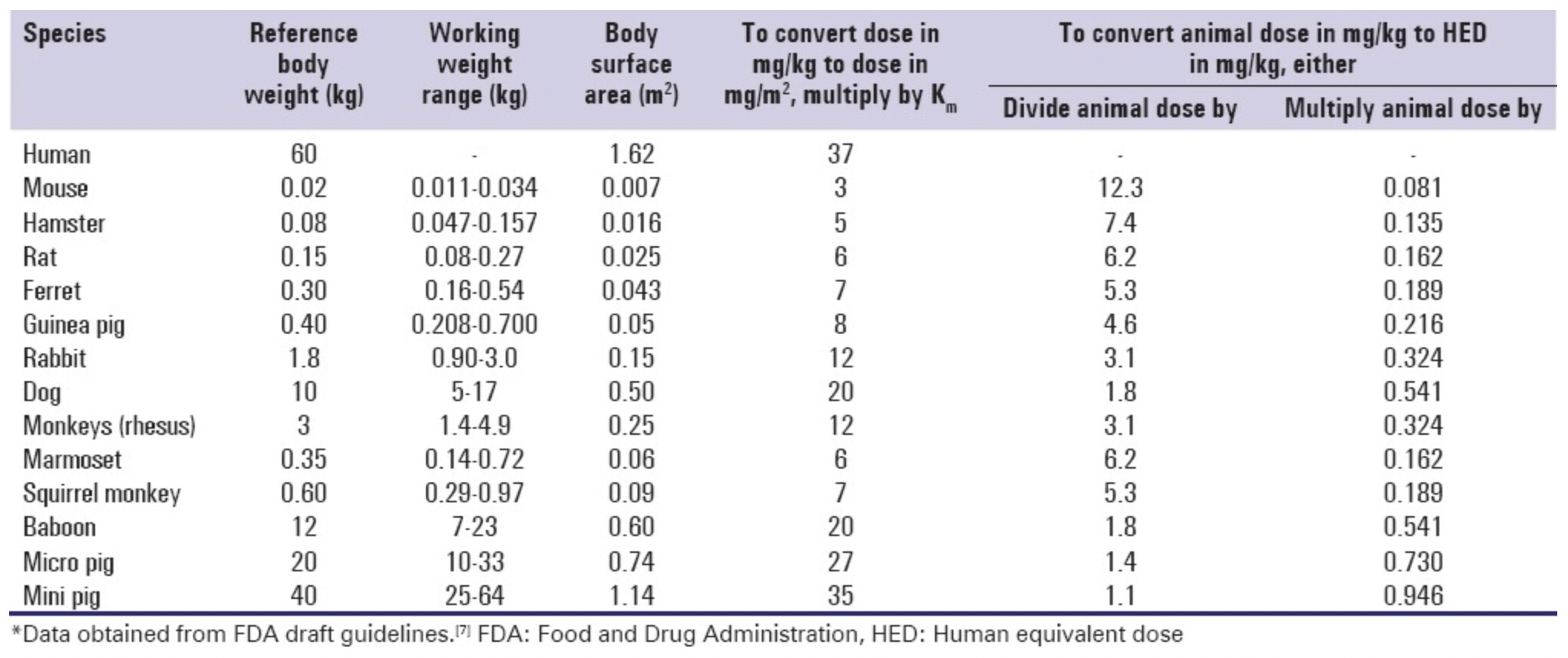
From this document:
I think daily dosing in mice is roughly equivalent to about once every 4 days or so in human terms given the speed that mice metabolize rapamycin is about 4 times faster.
| Sirolimus Dose |
Mouse mg/kg/day Dose |
Mouse: Blood/Sirolimus Level |
Human mg/kg/day Dose |
Dose for 60kg Human | Daily Dose adjusted for longer half-life (/4) |
|---|---|---|---|---|---|
| 4.7ppm | ∼2.24 | 3 to 4 ng/mL | 0.182 mg/kg | 10.92 mg | 2.73 mg |
| 14ppm | ~6.67 | 9-16 ng/mL | 0.542 mg/kg | 32.54 mg | 8.135 mg |
| 42ppm | ~20 | 23-80 ng/mL | 1.626 mg/kg | 97.56 mg | 24.39 mg |
| 126ppm | ~60 | 4.878 mg/kg | 292.68 mg | 73.17 mg | |
| 378ppm | ~180 | 45 to 1800 ng/mL | 14.634 mg/kg | 878.04 mg | 218 mg |
| Sirolimus Dose |
mg/kg/day Dose |
Blood/Sirolimus Level |
Male Median LS Increase | Female Median LS Increase | |
| 4.7ppm | ∼2.24 | 3 to 4 ng/mL | 3% | 16% | |
| 14ppm | ~6.67 | 9-16 ng/mL | 13% | 21% | |
| 42ppm | ~20 | 23-80 ng/mL | 23% | 26% |
Based on the FDA animal to human dosing conversion guide here.
Note: ½ life for sirolimus in mice is approx. 15 hours, vs. approx. 62 hours in humans. So, mice metabolize sirolimus approximately 4 times faster than humans.
1 Like
LaraPo what dose of Rapa were you taking, and how often? Hopefully your lungs have remained free of fibrosis.
Hi Walter, are you still taking the montelukast? Are there any lab tests you are using to measure its anti fibrotic results? I ask because my husband had 2 ELF scores which indicated SEVERE liver fibrosis, yet his Fibroscan (imaging) indicated 0-1 extremely low fibrosis. In summary, the ELF score, which is not imaging but a blood test, indicates that the systemic inflammatory/fibrotic process has not manifested in the liver, but it may be a response to issues with another organ (most likely the heart). The markers which comprise ELF are hyaluronic acid (HA), procollagen III amino-terminal peptide (PIIINP), and TIMP1. Montelukast reduces and modulates these drivers of fibrosis, as do other drugs like Pirfenidone.
1 Like
At that time I was on 1 mg/day for a few years. Fibrosis got resolved after I took a long break from Rapamycin.
2 Likes
I’m not taking motelukast anymore as the longevity benefits weren’t established and I did an evidence ‘cull’ to rationalise (shorten) the list of medications I was taking. Montelukast might still turn out to be beneficial (and some positive neurological effects seem certain) but in terms of longevity evidence there were stronger signals coming from other medications I chose to prioritise (like fenofibrate).
2 Likes