riboflavin orally (30 mg every 8 h) plus their usual symptomatic medications and all red meat was eliminated from their diet
All 19 patients who completed 6 months of treatment showed improved motor capacity during the first three months and most reached a plateau while 5/19 continued to improve in the 3- to 6-month interval. Their average motor capacity increased from 44 to 71% after 6 months, increasing significantly every month compared with their own pretreatment status (P < 0.001, Wilcoxon signed rank test). Discontinuation of riboflavin for several days did not impair motor capacity and yellowish urine was the only side effect observed.
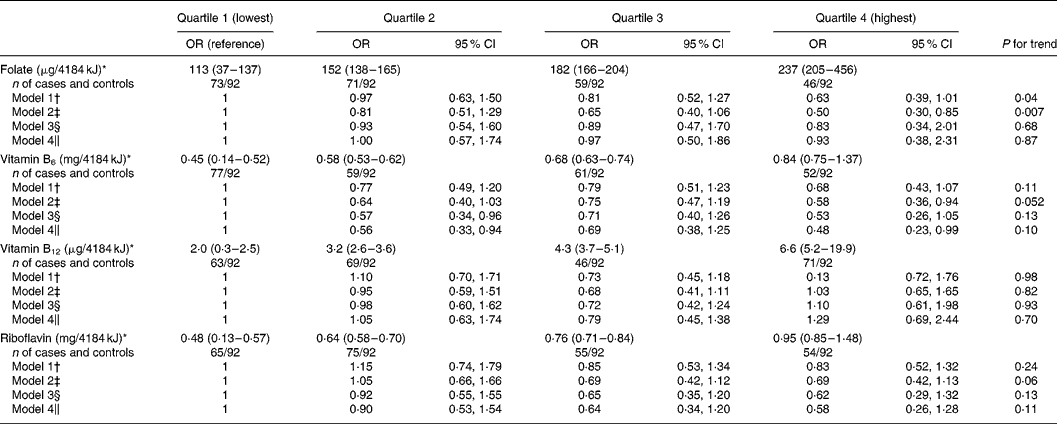
After adjustment for potential dietary and non-dietary confounding factors, intake of folate, vitamin B12 and riboflavin was not associated with the risk of PD (P for trend = 0·87, 0·70 and 0·11, respectively).
At least one epidemiology study suggests that MTX (methotrexate) doesn’t increase risk for Parkinson (for RA patients although RA is correlated with higher risk for Parkinson).
Interestingly, chloroquine and hydroxychloroquine reduced risk by about 25% for Parkinson.
Perhaps it’s been brought up, but Klotho is mediated through Platelet Factor 4 in the brain and Dana Dubol has shown that PF4 is almost completely protective in PD neurons (not motor neurons). Unlike Klotho, PF4 is readily available for human use for 20+yrs.(used in a surgery setting). Human doses are already published; safety is excellent and I think Dubol was using 1 sq inj every 2-3 wks. I will dig up the paper, but if I had PD I would certainly consider PF4. Lots of different suppliers
You have to read a couple of papers to put it together, -which I will list. In a nutshell Klotho via PF4 abrogates alpha-synuclein affects on cognition to 70% of normal. - but does not help motor difficulties (which they have established treatments for). I have to search again but i had found a clinical trial a few months ago- I will hunt it down as well. Basically why bother with Klotho when an established treatment is already approved now-all be it for a different disease process.
Quote from Dena Dubal talk with Peter Attia -“PF4 to mice as a shot in the belly (just like they had given klotho), and found it enhanced cognition in young mice, and in an aging mouse it reversed cognitive defects ‒ it was totally remarkable”
The top link doesn’t seem to connect so here is the title
Peripheral Elevation of a Klotho Fragment Enhances Brain Function and Resilience in Young, Aging, and α-Synuclein Transgenic Mice
That’s the first paper in mice?) We don’t even know if alpha α-synuclein causes PD, same issue with beta amyloid in AD…)
What does this mean? There’s no disease-modifying treatment for motor symptoms in PD. There’s only levodopa that reduces the tremors but after 5 years it gives you dyskinesia that is even worse.
I started playing around with coversations with 01 about splicing, cancer, PD etc.
I do this in the dark because it enables my superchiasmatic nucleus to think it is the end of the day (which it is) whilst still processing information.
What I really need to do is to put together something from o1 where I have checked the references and tracked things down to avoid hallucinations that looks at aging, cancer, diabetes, PD and aberrant splicing.
What seems to be the case is that acetyl-CoA shortage causes both splicing changes and otherwise long genes not to be transcribed.
This is quite rational, but appears to drive the phenotypes of aging which includes PD. It would be good to do some biohacking trials with younger PD sufferers to see if this* can fix it.
*this being increasing cytosolic acetyl-CoA through a range of biohacking techniques.
No adverse effects (the placebo group actually had more adverse effects)
In AD, at 300 mg, some mood swings. Not at 200 mg.
In Lewy body dementia, with the current drugs, when you treat motor symptoms, you increase the non-motor symptoms and vice versa.
Improved biomarkers (Aβ and tau phosphorylation)
As early as 3 months, improvement in ADAS-Cog14 (cognitive scale) that continued to 6 months
No motor improvements but 70% reduction in falls
It’s hard to measure but it seems that motor fluctuation reduced
His conclusion: Nilotinib 200 mg is safe, doesn’t worsen motor symptoms, lowers the number of falls, improves cognition and probably motor fluctuations
Next step: larger multi-site phase 3 trial in Parkinson’s disease dementia and Lewy body dementia
All 11 TK inhibitors were inversely-associated with PD. Beneficiaries taking tyrosine kinase inhibitors targeting ERBb (Erlotinib, RR 0.51, CI 0.35–0.74), TEC (Ibrutinib, RR 0.60, CI 0.49–0.74), or PDGF, VEGF, FGFR, and/or SRC, i.e. Sorafenib (RR 0.48, CI 0.27–0.84), Imatinib (RR 0.59, CI 0.46–0.75), Pazopanib (RR 0.58, CI 0.39–0.88), Nintedanib (RR 0.67, CI 0.50–0.90), Sunitinib (RR 0.64, CI 0.41–1.00), and Dasatinib (RR 0.54, CI 0.35–0.83) tended to have the most marked inverse associations. The nrTKIs inhibiting JAK, i.e., Ruxolitinib (RR 0.81, CI 0.60–1.10) and Tofacitinib (RR 0.88, CI 0.68–1.14), exhibited more modest inverse associations, as did the ABL/PDGF inhibitor Nilotinib (RR 0.71, CI 0.47–1.09).
@DrFraser: might be worth an article on your blog (I still think there’s not enough data, but we’ll soon have the results of risvodetinib in PD and baricitinib and dasatinib in AD: Parkinson's disease - #341 by adssx )
Importantly, there was an 82% slowing in the total neuropsychiatric inventory (NPI) with particularly strong reduction in anxiety, hallucinations, and delusions in the CT1812 treated arms. In addition, there was a marked reduction in caregiver distress, which suggests a positive impact on the day-to-day lives of those receiving the drug. Participants treated with CT1812 experienced a slowing of decline across all three cognitive measures compared to placebo, including fluctuations in attention which declined by 91%.
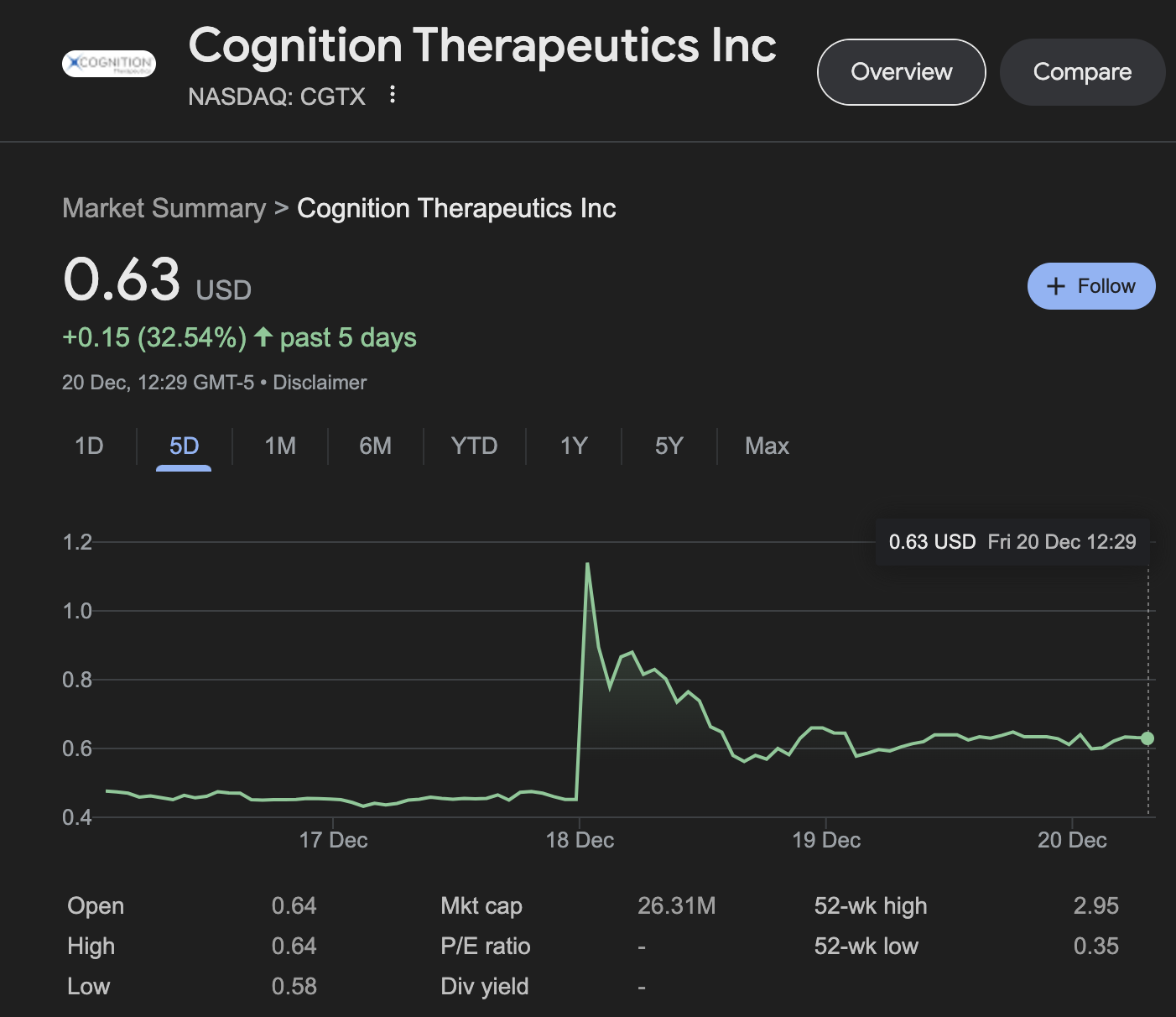
Very impressive. Markets were positively surprised:
CT1812 is an experimental orally delivered small molecule oligomer antagonist that penetrates the blood-brain barrier and binds selectively to the sigma-2 (σ-2) receptor complex, which is involved in the regulation of key cellular processes. These processes are disrupted by toxic interaction with Aβ or α-synuclein oligomers, oxidative stress and other disease drivers. The ensuing damage to sensitive synapses can progress to a loss of synaptic function, which manifests as cognitive impairment and disease progression.
It’s also tested in Alzheimer’s disease and dry age-related macular degeneration.
The one I have the most access to (and have even taken myself) is Dasatinib, which taken short term (e.g. a few days) seems probably safe. But taken long term daily, I have concerns.
Do we know anything about the doses/duration they were looking at. Off shore, Dasatinib is cheap, and most folks are taking with Quercetin/Fisetin.
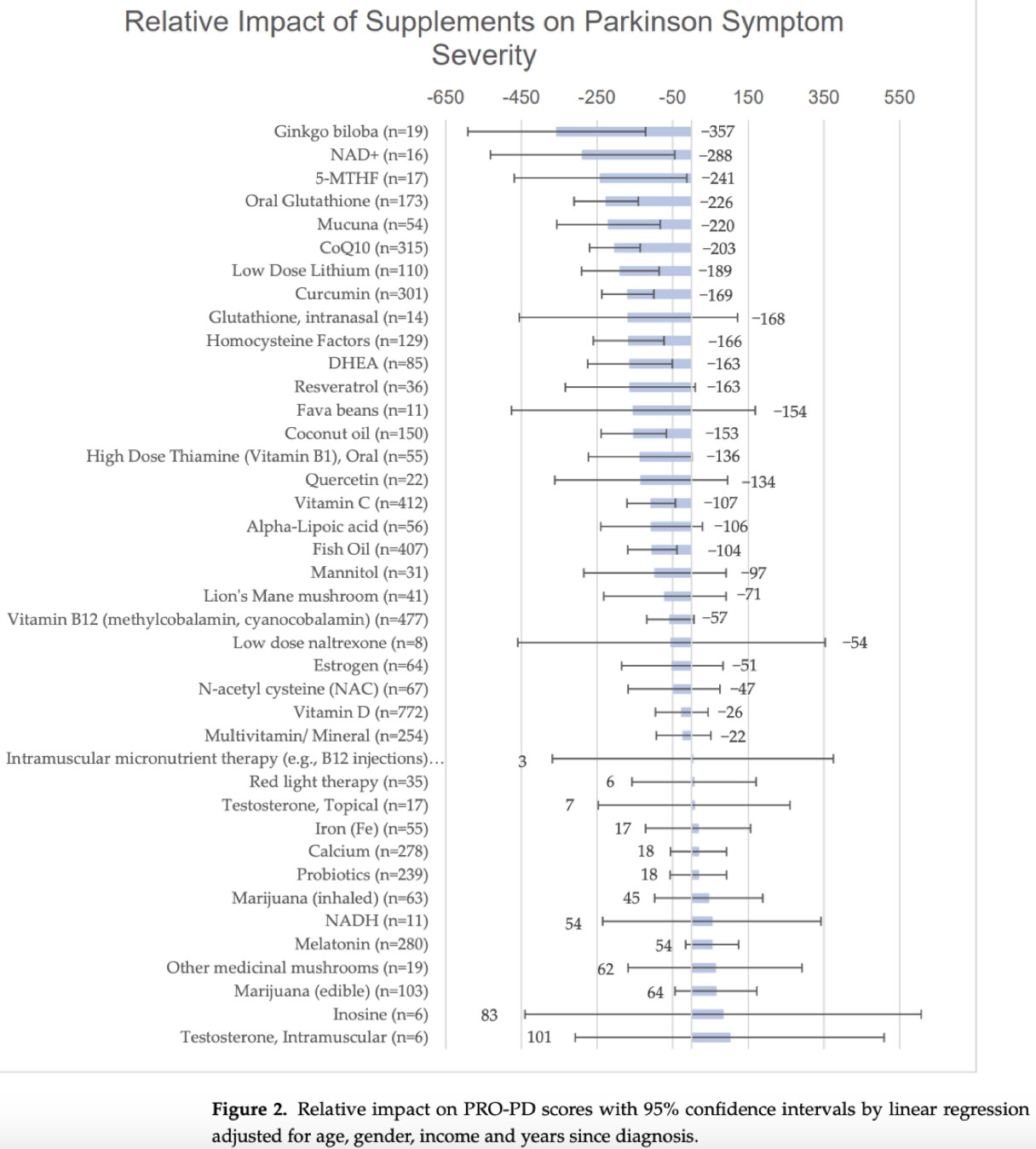
Melatonin is indeed a case where reverse causality is often present as most people only take it because they have bad sleep, hence the correlation. That said I would guess that it’s totally different for people megadosing for other reasons.
 (I still think there’s not enough data, but we’ll soon have the results of risvodetinib in PD and baricitinib and dasatinib in AD: