I would like to look at the whole paper and whether the relationship is linear. The association is only among old people and even more so among the “oldest old subjects” so it might be that a subgroup of frail people with hypotension creates that relationship while the relationship doesn’t exist among those with normal or high BP.
1 Like
They show a bar chart with grip strength versus blood pressure with pressure broken down into tertiles – “lowest tertile”, “medium tertile”, and “highest tertil”. Grip strength increases from lowest to medium to highest tertiles, but it’s not enough information to see that the trend is linear.
They offer a suggestion as to the cause of the relationship in the paper:
How can we explain the associations between higher BP and better muscular function in the oldest old? Peripheral vascular resistance increases with chronological age due to a reduced sympatholysis, which results in an elevated sympathetic tone.[31] [32] Second, morphological changes to the arteriolar network contribute to higher vascular resistance.[8] Third, aging is associated with a reduced capacity in vasodilation caused by changes in endothelium-dependent pathways in animal models.[33]–[36] Maybe increased vascular resistance during the aging process requires higher pressure as a mechanism to maintain tissue perfusion as a means to prevent further ischemic end organ damage in kidney, brain, and skeletal muscle. Another cause for higher BP in elderly could be the age-associated increase in cortisol levels.[37], [38] But as higher cortisol levels associate with lower handgrip strength, this does not explain our finding of higher handgrip strength.[38]
1 Like
Just had my BP checked as part of my annual checkup here in HK at the hospital. I guess this is why I passed out when I took Telmisartan before. Whatever else I am doing is already bringing me to my ideal BP.
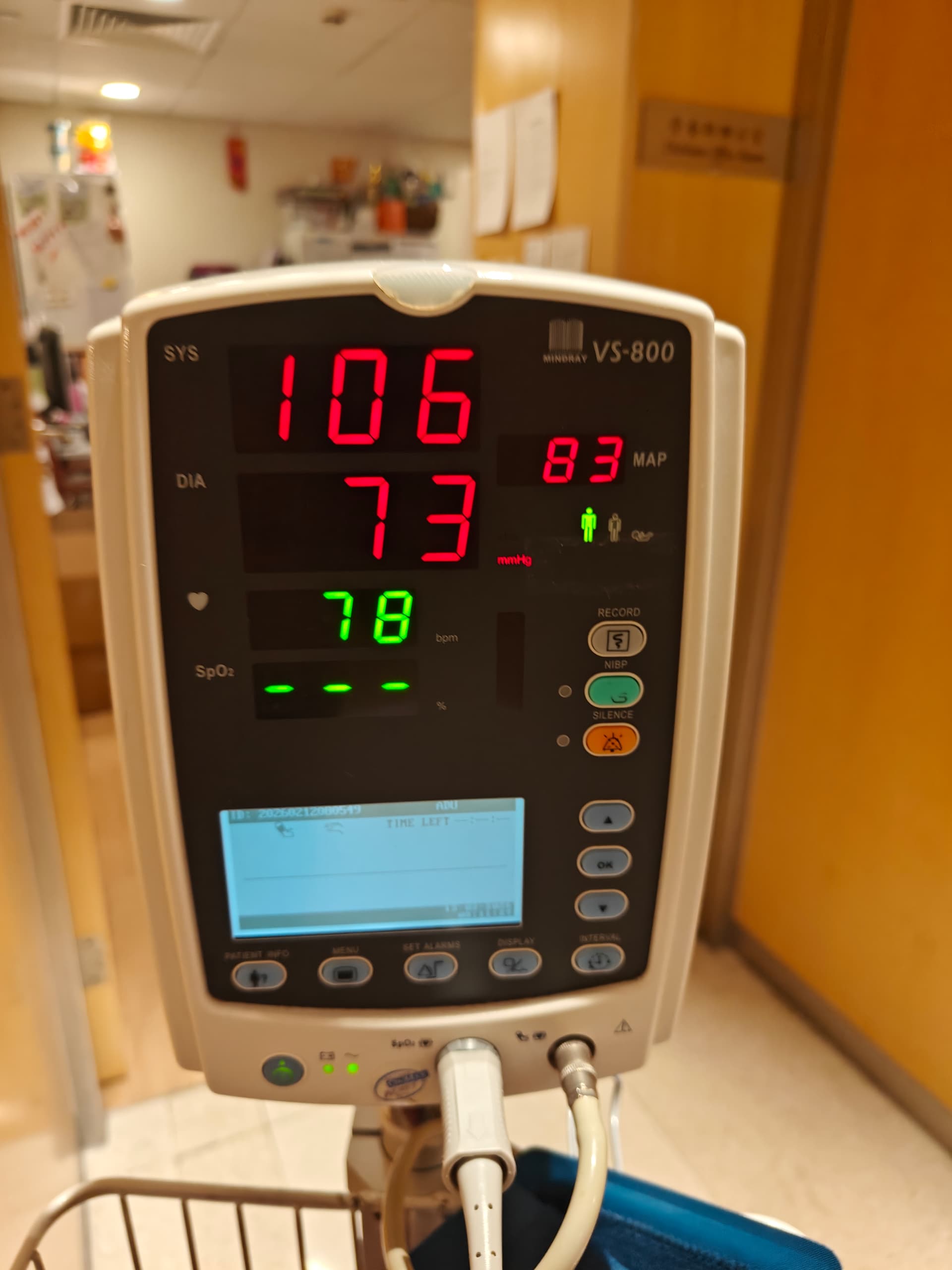
Where BP is concerned, you don’t want too much of a good thing 
6 Likes
That seems far from “passing out” territory. That’s a pretty typical blood pressure for me.
Those numbers are fine. But that’s without Telmisartan. Add Telmisartan to that and you get passing out territory.
1 Like
Awesome - I just tested mine this morning also… at night before bed it was 115 / 73, at waking it is 106/65. No medications for BP.
Feels good. No issues.
6 Likes
I wonder what in our stack may be causing this wonderful BP? Maybe long term Rapamycin use? SGLT2I? Low ApoB? All of the above?
2 Likes
Perhaps 2 to 4 mg of PDE5 inhibitor helps, I take it prior to my workouts. I’ve also started eating regular mixed vegetable/kale salads (with some great olive oil and balsamic vinegar)… so more Nitric Oxide.
4 Likes
Probably a little bit of everything but exercise (assuming you do it) probably the biggest factor
I believe you and @RapAdmin each take L-citrulline, correct? That supposedly lowers bp. Did you think that’s part of your brew?
My last reading was 102/70 (It’s the one good health metric I was blessed with!).
3 Likes
Ah yes, I have a glass of lemon juice with L-citrulline on average once every two days, perhaps 5 grams dosing.
Not sure how big of an impact that would have a day later… Gemini tells me:
L-citrulline is a non-essential amino acid with a short elimination half-life of approximately 60 minutes. It effectively lowers blood pressure (BP)—specifically reducing systolic BP by about 4 mmHg
2 Likes
I’ve been taking 1.5g. I saw @DeStrider also mention lemon juice, so I’m now adding my powders to lemon Spindrift and it’s great. (Just too lazy to squeeze lemons all the time!)
I just did a search asking if BP benefits only last those few hours and AI said it can last weeks to months:
How long the effects last
-
Acute (one dose):
Blood levels and NO‑related effects rise within 30–60 minutes; peak vasodilatory and performance effects generally last about 1–3 hours, with some residual effects possibly detectable for up to ~5–6 hours in subjective “pump” and energy. -
Chronic (daily dosing):
When taken daily (commonly 3–8 g), improvements in blood‑pressure markers, endothelial function, and some endurance/recovery metrics can persist over weeks to months, provided you keep supplementing. Effects tend to fade after stopping, though exact “washout” is not well characterized in healthy people.
Daily dosing of L-citrulline will likely provide sustained blood pressure reductions around the clock rather than just a few hours, based on studies showing modest but consistent lowering of systolic (∼4 mmHg) and diastolic (∼2 mmHg) BP with chronic use. This comes from meta-analyses and trials measuring resting BP after weeks of daily supplementation (3–9 g/day, 1–17 weeks), where effects reflect average levels over the dosing interval, not just peaks.
Why 24/7 coverage?
L-citrulline has a short plasma half-life (∼1–4 hours depending on dose/population), with peak arginine/NO effects 1–2 hours post-dose fading by 5–8 hours. However, daily dosing builds cumulative vascular adaptations—like better endothelial function, reduced arterial stiffness, and NO bioavailability—that persist beyond acute peaks, as seen in 24-hour ambulatory monitoring and trough measurements (e.g., morning BP after evening dose). Once-daily morning intake should cover you well, though splitting doses (e.g., 3–6 g AM/PM) might smooth levels more if using ≥6 g total for diastolic effects.
1 Like
Yes, the L-citrulline plays into it as well.
1 Like
Not too sure about Citrulline
1 Like
Since there is not enough information available in that paper, I can’t say it’s bs. But you can check for yourself. Take your blood pressure then take 3 grams of citrulline and check your blood pressure an hour later. From previous papers, the effective dose starts at 3 grams. At 3 grams and above it works.
2 Likes
A good overview from WaPo:
What high blood pressure does to your body
Hypertension can affect your mind, heart, eyes and more, often without causing any obvious symptoms at all.
Nearly half of adults in the United States have hypertension, or high blood pressure — but many of them, an estimated 11 million people, don’t know it. The condition is a leading cause of preventable death, increasing the risk of heart disease, kidney disease and stroke. “When we think about preventable diseases, hypertension is one of the greatest because it affects so many organs,” said Tamar Polonsky, a cardiologist and director of preventative cardiology at the University of Chicago Medicine.
Luckily, with medication, “we can get almost the majority of people down to a very reasonable blood pressure,” said John Bisognano, a cardiologist at the University of Michigan Health Frankel Cardiovascular Center. The challenge is that hypertension is silent — there are often no symptoms until the condition has triggered other health problems — so regular blood pressure checks are essential. “There are so many people who have hypertension and don’t know,” Polonsky said.
Left unchecked, here’s how blood pressure quietly damages the arteries — and eventually organs throughout the body.
Full story: What high blood pressure does to your body (WaPo)
3 Likes
What else are you doing?
4 Likes
And high blood pressure is caused by…
Arterial plaque caused by High cholesterol.
So what’s the difference between the high blood pressure and high cholesterol categories???
2 Likes
Is it that chronic High BP is caused by plaque or plaque caused by High BP? (or both).