I really appreciate you posting this!! I’ve always had very high levels of b12 and never thought it mattered (from over supplementation…well over 1000)
1 Like
Here is the summary from my conversation with Claude in an effort to over-answer your question 
PS, I have not watched the video yet, so Claude may or may not be accurate… I trust him as far as I can throw him!
Seeking Health Homocysteine Nutrients, methyl + adenosyl B12: 1,000 mcg
Blueprint Daily Essentials, methyl B12: 125 mcg
Total per day = 1,125 mcg
My last labs showed B12 at 1800 due to adding Seeking Health, but I’ve always supplemented and have often been over 1000… I just assumed it was expensive pee!
Coincidentally, I’m finishing my last bottle of Blueprint.
And because of this post, Claude Fable is advising I take Seeking Health 4× a week instead of 7, then redo labs.
I started taking Seeking Health because my homocysteine went from 6.9 to 11.3 last year. Adding that and TMG powder brought it back to 7.
In one trial, B12 plus folate together raised cancer risk slightly (about 2 extra per 100 people over 2–3 years). No trial has tested B12 alone.
But in people whose homocysteine is high (over 13), the same vitamins slowed brain shrinkage; and across all trials they cut stroke slightly (about 1 fewer per 125).
Lowering homocysteine with vitamins has not reduced heart attacks or deaths in trials — only stroke.
1 Like
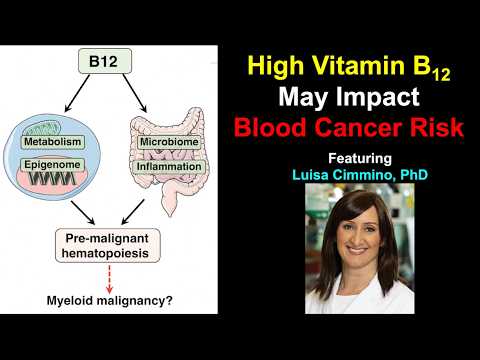
High Vitamin B12 May Increase Blood Cancer Risk
I. Executive Summary
Clonal hematopoiesis of indeterminate potential (CHIP or CH) is an age-associated premalignant condition characterized by somatic mutations in hematopoietic stem and progenitor cells (HSPCs)—predominantly within DNMT3A and TET2, which together account for roughly 70% of identified variants. While CH confers significant independent risks for acute myeloid leukemia (AML), myelodysplastic syndromes (MDS), and systemic cardiovascular mortality, the rate of clonal expansion and malignant transformation varies widely across individuals. Dr. Luisa Cimmino of the University of Miami Miller School of Medicine presents experimental and epidemiological investigations into whether elevated circulating cobalamin (vitamin B12) and one-carbon metabolic intermediates actively accelerate CH progression or simply serve as passive disease biomarkers.
Epidemiological cohorts historically associate elevated serum B12 (exceeding 600 to 1,000 pg/mL) with increased all-cause mortality, cardiovascular death, and an up to four-fold elevated risk of incident myeloid malignancies within a 12-month follow-up window. Utilizing whole-genome sequencing from the All of Us Research Program, Cimmino demonstrates that higher serum cobalamin levels correlate significantly with elevated CH prevalence and elevated variant allele fractions (VAF). To establish causality, her laboratory utilized murine bone marrow transplantation models bearing heterozygous Tet2 loss-of-function alleles subjected to supraphysiological B12 supplementation (0.5 to 1.0 mg/day human equivalent). Rather than expanding the absolute hematopoietic stem cell pool, hyper-supplementation skewed hematopoiesis toward a pro-inflammatory myeloid lineage bias (neutrophils and monocytes) at the expense of B-cell lymphopoiesis.
Mechanistically, excess cobalamin acts through two distinct pathways: a cell-intrinsic metabolic-epigenetic disruption and a systemic gut-immune axis. Intrinsically, cobalamin drives one-carbon flux, increasing S-adenosylmethionine (SAM) and intracellular succinate. Succinate acts as a competitive antagonist of alpha-ketoglutarate, suppressing residual TET2 dioxygenase activity, reducing 5-hydroxymethylcytosine (5hmC), and causing promoter hypermethylation. Systemically, unabsorbed intestinal cobalamin induces gut dysbiosis by depleting Lachnospiraceae, reducing fecal short-chain fatty acid (SCFA) production (specifically butyrate), increasing epithelial permeability, and upregulating TLR4/CD14 signaling alongside S100A8/A9 alarmin release. Co-administration of exogenous sodium butyrate reversed this myeloid bias, suppressed alarmin transcription, and reconstituted mucosal integrity in pre-clinical models, providing proof-of-concept that targeting gut-derived inflammation can modulate CH progression.
II. Insight Bullets
- Clonal hematopoiesis (CH) is an age-dependent expansion of hematopoietic stem cell clones carrying somatic leukemogenic mutations without cytopenia or overt hematological malignancy.
- Somatic mutations driving CH are present at detectable variant allele fractions in roughly 10% of individuals over age 60 and escalate to 30% to 60% in populations over age 80.
- Beyond predisposing carriers to acute myeloid leukemia and myelodysplastic syndrome, CH drives sterile systemic inflammation that accelerates cardiovascular disease, chronic kidney disease, COPD, and osteoporosis.
- Approximately 70% of all CH cases are driven by heterozygous loss-of-function mutations in either DNMT3A or TET2, two key epigenetic regulators governing the mammalian DNA methylome.
- DNA methyltransferases utilize S-adenosylmethionine (SAM) derived from one-carbon folate-methionine metabolism to synthesize 5-methylcytosine (5mC), while TET enzymes utilize alpha-ketoglutarate, iron, and ascorbate to oxidize 5mC into 5-hydroxymethylcytosine (5hmC).
- Large observational cohort studies consistently associate high serum cobalamin concentrations, even within the upper limits of normal reference ranges, with elevated all-cause mortality and myeloid cancer incidence (Flores-Guerrero et al., 2020).
- Danish population registry analyses identified a four-fold increase in the short-term risk of myeloid malignancies among individuals presenting with elevated plasma cobalamin levels (Arendt et al., 2013).
- Prospective French hospital data demonstrate that persistent, serial elevations of plasma B12 correlate with a nearly six-fold increased hazard ratio for solid tumors and hematological neoplasms (Lacombe et al., 2021).
- Cross-sectional genomic interrogation of the All of Us Research Program cohort indicates a statistically significant association between elevated serum B12 levels and higher prevalence of detectable CH mutations.
- Serum cobalamin can become secondary elevated due to severe hepatocellular injury, impaired renal filtration, or unregulated transcobalamin release by proliferating neoplastic leukocytes.
- Supraphysiological dietary intake and high-dose over-the-counter supplementation represent major preventable drivers of sustained non-physiological serum cobalamin elevations.
- The established human Recommended Dietary Allowance (RDA) for cobalamin is 2.4 micrograms per day, yet common commercial longevity and wellness supplements routinely deliver between 500 and 5,000 micrograms daily.
- In pre-clinical leukemia-prone mouse models, dietary cobalamin hyper-supplementation accelerated malignant progression and reduced survival compared to low-B12 diets (Lyon et al., 2025).
- Cobalamin operates in mammalian cells as an obligate enzymatic cofactor for only two enzymes: cytosolic methionine synthase and mitochondrial methylmalonyl-CoA mutase.
- Exposure of human acute myeloid leukemia cells to high cobalamin concentrations in vitro elevates intracellular SAM, total amino acids, and succinate levels.
- Pathologically elevated intracellular succinate functions as an oncometabolite by competitively inhibiting alpha-ketoglutarate-dependent TET dioxygenases, driving global CpG island hypermethylation and suppressing 5hmC.
- Pre-clinical competitive bone marrow reconstitution assays demonstrate that high B12 intake selectively skews Tet2-haploinsufficient stem cells toward an exaggerated myeloid differentiation bias.
- Chronic cobalamin loading induces marked neutrophilic expansion and transcriptional upregulation of the damage-associated molecular patterns (DAMPs) S100A8 and S100A9.
- Elevated S100A8 and S100A9 heterodimers signal through toll-like receptor 4 (TLR4) on myeloid progenitors to stimulate an inflammatory autocrine feedback loop driven by IL-6, IL-1beta, and TNF-alpha.
- Commensal gut microbiota are required for the pathological expansion of Tet2-deficient myeloid lineages, as germ-free housing models completely rescue aberrant myeloproliferation (Meisel et al., 2018).
- Chronic high B12 intake in mice decreases gut microbial alpha-diversity and depletes short-chain fatty acid-producing taxa within the family Lachnospiraceae.
- Analysis of United States nutritional cohorts reveals that dietary cobalamin intakes exceeding 8.5 micrograms per day are associated with reduced microbial B12 synthesis capacity and significantly lower fecal short-chain fatty acid concentrations (Gut Microbes, 2026).
- Depletion of luminal butyrate disrupts tight junction protein expression, elevating intestinal epithelial permeability to bacterial ligands such as lipopolysaccharide (LPS) and ADP-heptose.
- Exogenous administration of sodium butyrate in murine drinking water restored intestinal barrier integrity, corrected the myelomonocytic differentiation bias, and suppressed systemic IL-6 levels in cobalamin-challenged Tet2-mutant mice.
- Butyrate acts as an endogenous histone deacetylase (HDAC) inhibitor that directly counteracts TLR4-driven inflammatory cytokine transcription in bone-marrow-derived macrophages and HSPCs.
- Cobalamin is structurally homologous to heme, coordinating a central cobalt ion within a corrin ring, and is synthesized solely by bacteria and archaea, predisposing the innate immune system to recognize free cobalamin as a microbial signature.
- Physiological extracellular cobalamin is strictly sequestered by dedicated carrier proteins (haptocorrin, intrinsic factor, transcobalamin) to prevent direct contact between free corrinoids and pattern recognition receptors.
- Ongoing investigations at the Cimmino Lab utilize Tfrc and Tcn2 receptor-knockout murine models to dissociate cell-intrinsic cobalamin signaling from systemic microbiome-mediated immune priming.
- Restricting dietary methionine combined with cobalamin titration impairs aberrant S-adenosylmethionine generation, representing a potential metabolic intervention against pre-leukemic stem cell maintenance.
- Clinical differentiation between functional cellular cobalamin deficiency and dangerous non-functional serum hypercobalaminemia requires simultaneous evaluation of methylmalonic acid (MMA) and total homocysteine.
III. Adversarial Claims & Evidence Table
| Claim from Video | Speaker’s Evidence | Scientific Reality (Current Data) | Evidence Grade (A-E) | Verdict |
|---|---|---|---|---|
| High circulating vitamin B12 levels directly accelerate clonal hematopoiesis (CH) and myeloid malignancy progression | Murine bone marrow transplants (Tet2+/-) and All of Us registry correlation (Lyon et al., 2025) | Human prospective cohorts demonstrate high B12 strongly correlates with myeloid malignancies and mortality (Arendt et al., 2013); however, Mendelian randomization and epidemiological systematic reviews indicate elevated B12 in undiagnosed cancer is often an epiphenomenon of liver damage or transcobalamin release by neoplastic cells rather than pure initiation (Nutrients, 2022). Direct causation is validated only in rodents. | Level C(Human correlation) / Level D(Translational Gap for causality) | Plausible |
| Oral B12 supplementation above physiological requirements (>500 mcg/day) reduces gut microbiome diversity and short-chain fatty acids in humans | Rodent shotgun metagenomics and reference to human nutritional epidemiology | A human cross-sectional analysis confirmed that dietary cobalamin intake exceeding 8.5 mcg/day is independently associated with depleted fecal short-chain fatty acids (acetate, propionate, butyrate) and reduced microbial B12 biosynthetic pathways (Gut Microbes, 2026). Longitudinal human intervention trials remain pending. | Level C(Human cohort validation) | Plausible |
| Oral butyrate supplementation reverses B12-induced intestinal permeability and myeloid differentiation skewing | Murine drinking water supplementation with sodium butyrate alongside FITC-dextran assays | Butyrate clearly enhances enterocyte barrier function and acts as an HDAC inhibitor suppressing inflammatory cytokine release in mammalian tissues; however, oral butyrate in humans undergoes rapid proximal splanchnic metabolism with negligible systemic bioavailability to bone marrow stem cells (Canani et al., 2011). | Level D(Translational Gap) | Speculative |
| Elevated circulating B12 (>600–1000 pg/mL) independently predicts all-cause and cardiovascular mortality | Flores-Guerrero et al., 2020, JAMA Netw Open cohort of 5,571 participants | Validated across multiple independent longitudinal cohorts; plasma B12 in the highest quartile is significantly associated with hazard ratios between 1.25 and 2.0 for all-cause mortality, even after multivariable adjustments for renal function, hepatic enzymes, and metabolic syndrome (Flores-Guerrero et al., 2020). | Level C(Large prospective cohort) | Strong Support |
| Free uncomplexed vitamin B12 acts as an inflammatory DAMP via TLR4 and S100A8/A9 activation | In vitro cell culture titrations of cobalamin with AML lines and macrophages | While cobalamin structurally shares a tetrapyrrole scaffold with heme, robust physiological evidence demonstrating direct unchaperoned binding of cyanocobalamin or methylcobalamin to human TLR4 in vivo is missing; in vivo B12 is immediately bound with picomolar affinity to haptocorrin or transcobalamin (Nielsen et al., 2012). | Level D(Translational Gap) | Speculative |
| Intracellular cobalamin accumulation inhibits TET enzymes by raising succinate | AML cell line metabolomics and bisulfite sequencing showing CpG hypermethylation | In vitro exposure to supraphysiological cobalamin disrupts one-carbon flux and succinate accumulation; however, in vivo validation that standard human supplementation concentrations achieve intracellular succinate levels high enough to outcompete alpha-ketoglutarate at TET2 catalytic domains is unverified. | Level D(Translational Gap) | Unsupported |
IV. Actionable Protocol (Prioritized)
High Confidence Tier (Level A/B Evidence)
| Domain | Clinical Action | Dosing / Target | Primary Endpoint |
|---|---|---|---|
| Cobalamin Deficiency Correction | Target physiological repletion; avoid chronic supraphysiological maintenance | Cyanocobalamin or methylcobalamin 50–100 mcg/day orally (or 1,000 mcg/month IM for documented pernicious anemia) | Serum B12 maintained between 400–600 pg/mL; normalization of methylmalonic acid (MMA < 0.27 umol/L) and total homocysteine (< 10 umol/L). |
| Cardiovascular Risk Reduction in CHIP | Aggressive guideline-directed lipid, blood pressure, and inflammation control | Statin therapy (target LDL-C < 55 mg/dL), SGLT2i, and blood pressure < 120/80 mmHg | Prevention of accelerated atherogenesis, vascular calcification, and heart failure hospitalization in individuals with clonal hematopoiesis. |
| Colorectal and Mucosal Barrier Support | Dietary prebiotic fiber loading | Minimum 35–50 g/day of diverse dietary fiber (soluble, insoluble, and resistant starch) | Sustained endogenous colonic fermentation, optimized stool transit, and physiological short-chain fatty acid production without supplemental dysbiosis. |
Experimental Tier (Level C/D Evidence - High Safety Margin)
- Serum Cobalamin De-escalation Protocol: For asymptomatic individuals without malabsorption or prior gastrectomy presenting with serum B12 > 900 pg/mL driven by over-the-counter supplements. Completely cease supplemental cobalamin for 8 to 12 weeks. Monitor serum cobalamin, complete blood count (CBC with differential to track absolute neutrophil count), ALT, AST, GGT, and creatinine. Reintroduce cobalamin only if serum levels fall below 350 pg/mL, utilizing doses matching the RDA (2.4 to 5.0 mcg/day).
- Targeted Enteric Butyrate Support: Enteric-coated, delayed-release sodium or calcium/magnesium butyrate capsules (dosed at 300 to 600 mg BID with meals) or microencapsulated tributyrin (500 to 1,000 mg daily). Mechanism involves bypass of gastric and duodenal absorption to deliver unesterified butyrate directly to the colonocyte lumen, stimulating tight junction protein (claudin-1, occludin, ZO-1) synthesis and downregulating intestinal epithelial NF-kB signaling. Monitoring: Track gastrointestinal tolerance, stool frequency, and systemic inflammatory markers (hs-CRP, ferritin).
- Hematopoietic Clonal Expansion Surveillance: Annual serial complete blood count with differential and high-sensitivity C-reactive protein (hs-CRP) in individuals over age 60. An escalating absolute neutrophil count (ANC > 6,000/uL), an expanding neutrophil-to-lymphocyte ratio (NLR > 3.0), or unexplained macrocytosis (MCV > 98 fL) warrants comprehensive molecular hematology referral for high-depth targeted next-generation sequencing (NGS) gene panels interrogating DNMT3A, TET2, ASXL1, and JAK2 mutations.
Red Flag Zone (Debunked, High-Risk, or Contraindicated)
Chronic High-Dose Cobalamin Hyper-Supplementation (1,000 to 5,000 mcg/day): Daily ingestion of mega-dose cobalamin in the absence of documented pernicious anemia, total gastrectomy, or severe ileal resection is clinically contraindicated. Supraphysiological loading drives persistent circulating hypercobalaminemia, depletes short-chain fatty acid-producing gut microbiota, promotes a pro-inflammatory myeloid bias, and is epidemiologically linked to elevated all-cause mortality and accelerated malignant transformation in asymptomatic clonal hematopoiesis carriers.
Ignoring Incidental Unexplained Hypercobalaminemia (>1,000 pg/mL): Dismissing a persistently elevated serum B12 level in a patient who does not consume supplements as a benign finding is a severe diagnostic error. Endogenous hypercobalaminemia frequently represents the earliest biomarker of occult solid tumors (hepatocellular carcinoma, renal carcinoma), active myeloproliferative neoplasms (CML, polycythemia vera), acute alcoholic or viral hepatitis, or end-stage renal filtration failure. A full workup including hepatic enzymes, renal profile, and peripheral blood smear must be immediately initiated.
Relying Exclusively on Oral Butyrate to Clear Systemic Hematopoietic Mutations: Attempting to treat established clonal hematopoiesis, myelodysplastic syndrome, or leukemic progression with over-the-counter butyrate supplements is hazardous. While butyrate modulates mucosal inflammation in animal models, it does not correct heterozygous genomic deletions or somatic frameshift mutations in human hematopoietic stem cells and cannot substitute for clinical hematologic monitoring or approved antineoplastic therapies.