Read the full story: Major Weight Loss and Knee-Pain Relief Seen With New Eli Lilly Drug (NY Times)
The maker of Zepbound reported results from a study of retatrutide, which targets three hormones in the body and led to much more weight loss than any approved drug.
People with obesity and arthritis taking an experimental obesity drug made by Eli Lilly lost more weight than with any drug now on the market, and they reported relief from their arthritis symptoms, the company announced on Thursday.
The drug, retatrutide, is a next-generation obesity and diabetes medication from Eli Lilly, which already sells Mounjaro for diabetes and Zepbound for weight loss. These drugs catapulted Lilly in November into becoming the first medical company to hit a trillion-dollar valuation.
Arthritis experts said they were impressed by the effects of retatrutide on knee pain, especially added to the significant weight loss in participants.
Dr. MaCalus Hogan, chair of orthopedic surgery at the University of Pittsburgh Medical Center, said the results are “a huge step forward in weight loss management and relief of orthopedic pain.”
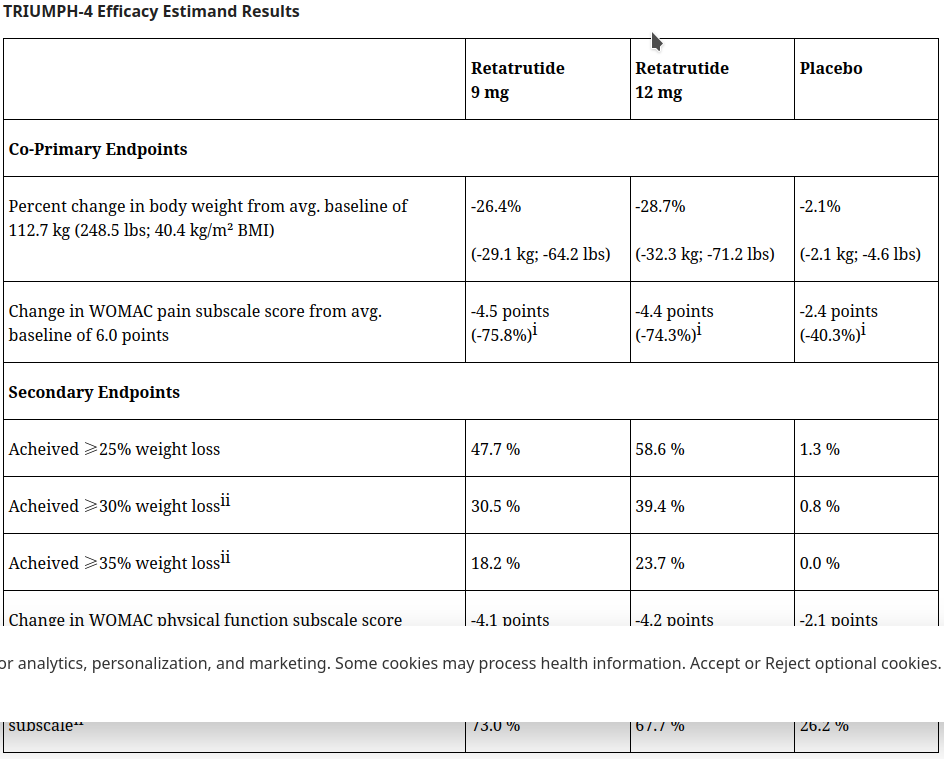
Participants reported their knee pain on a standard scale, the WOMAC, that goes from 0 to 10, with 10 being worst. Those taking the highest dose of retatrutide reported a pain reduction of 4.4 points, a 74.3 percent reduction in pain, while those taking the placebo reported a reduction of 2.4 points, a 40.3 percent reduction.
WOMAC physical function scores, which measure pain, stiffness and difficulty moving, fell by 4.2 points, a 73.7 percent reduction, in those taking 12 milligrams of retatrutide. Those taking the placebo reported a reduction of 2.1 points, a 35.6 percent reduction.
The maker of Zepbound reported results from a study of retatrutide, which targets three hormones in the body and led to much more weight loss than any approved drug.
…
The clinical trial that found the result lasted 68 weeks and included 445 people with both obesity and knee arthritis. They were randomly assigned to inject one of two doses of retatrutide — nine milligrams or 12 milligrams, once a week, or a placebo.