Blood Levels Matter for effective treatments. One size doesn’t fit all.
A 35-year-old woman struggling with 18 months of post-COVID depression, exhaustion, recurrent fevers, and persistent skin infections found relief with lithium treatment. But here’s what made the difference: monitoring her blood levels.
At a serum level of 1.14 mmol/L symptoms improved significantly. When the level dropped to 0.8 mmol/L symptoms returned
" Lithium dramatically improved patient’s mood from a “3” out of 10 best [with 7 being considered euthymic] to “7–8” at a serum level of 1.14 mmol/L. Her excessive daytime fatigue decreased from “severe and life altering” to “mild-to-moderate”. When we attempted to lower the lithium dose to achieve a serum level of 0.8 mmol/L, patient’s mood declined from “7–8” to “3–6”, and when dose was again increased to a serum level of ≥ 1.0, mood again returned to “7–8”."
This case illustrates a critical principle in personalized medicine: the same dose doesn’t work for everyone. Genetic differences, metabolism, and individual physiology mean that therapeutic monitoring—not just the drug itself—is what drives real outcomes.
Lithium’s potential for post-COVID and neuroinflammation is promising, but low-dose approaches alone haven’t shown broad benefits in trials. Higher doses with closer monitoring might be the key for some patients.
The reason for this is:
Optimal Longevity Dosing: To replicate the highest tiers of natural environmental exposure without entering the pharmacological range, longevity and biohacking communities typically utilize 1 to 5 mg of elemental lithium daily. (Note: elemental lithium is only a fraction of the compound’s total weight; for example, roughly 120 mg of lithium orotate yields about 5 mg of elemental lithium).
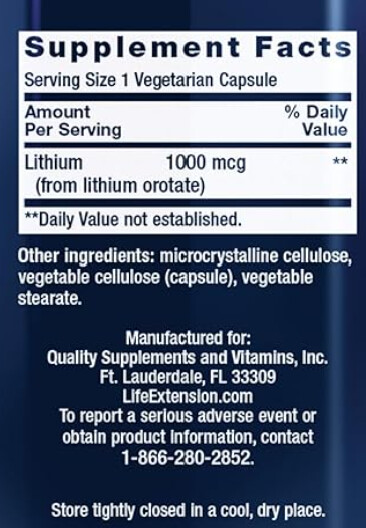
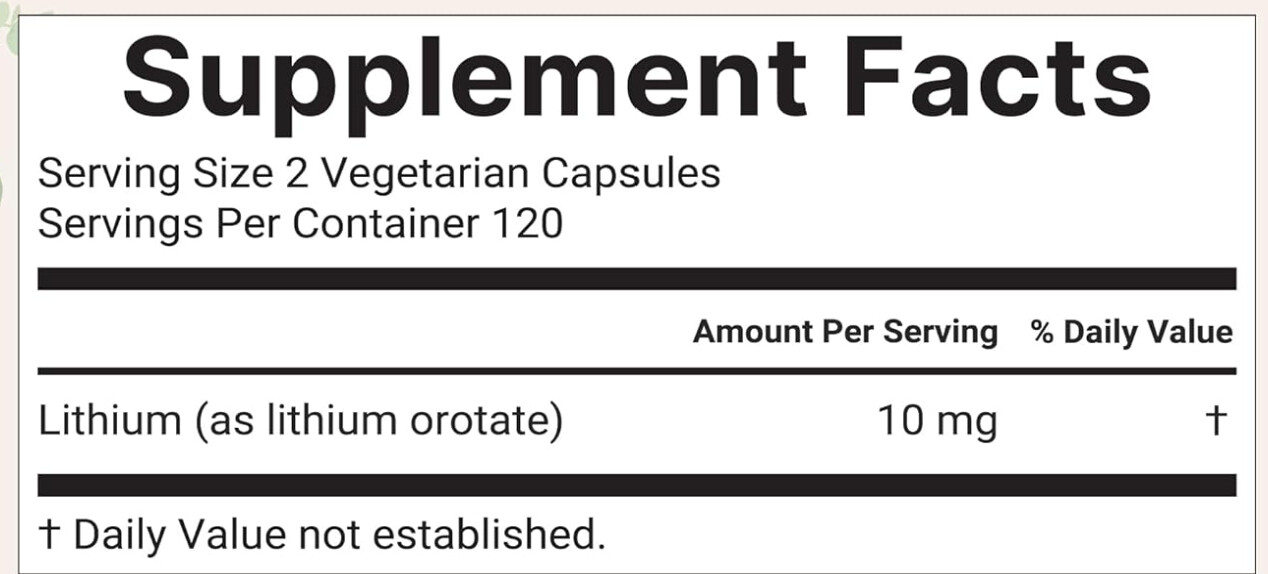
You have to be very careful to read the supplement ingredients. some like including Life Extension lithium orotate, which provides a clear answer to how much elemental lithium their supplement contains.
Life Extension clearly states that you get 1,000 mcg (1 mg) of actual lithium. So one capsule of this would be the actual minimum dose for lithium orotate’s benefits.
Has anyone noticed an increased prevalence of muscle cramps when taking lithium?
Normally, I never get them, but I started getting calf cramps in the morning every few days after adding 5 mg of lithium orotate. I wonder if this is related.
For context, I also take 20 mg of Telmisartan and 12.5 mg of Empagliflozin. I am unsure of the net effect of this combination on my lithium levels.
Don’t know if your leg cramps are caused by the lithium, but a remedy that works well for me is magnesium foam – you can find it on Amazon. It’s called Theraworxx. I use it every night and no more cramps. (also take magnesium glycinate).
To confirm the AI-discussion of the LATTICE trial:
Peter Attia and Michael Rae have an equivalent essay about the shortcomings:
Key points:
Admission of patients was not based on any biomarker or measure of Alzheimer’s. AD markers were noted, but any MCI qualified for inclusion (i.e. prior strokes, vascular dementia, Parkinson’s, Huntingtons etc.). Eventually only about 25% of patients turned out to progress with AD - 75% had other causes of MCI. Prior studies essentially screened in an AD-specific patient population.
Although not planned from the outset, the Lithium dose actually delivered throughout the trial was substantially lower (less than half) of the predecessor trials of Forlenza et. al. - dosing was adjusted down to eliminate any potential chance of side effects.
Especially 1. implies, that the trial was actually vastly under-powered to find any statistically significant effects for AD specifically.