Aah, good on ya! Exactly my approach. Arguing with insurance companies beholden PCPs is entirely pointless. Get the meds yourself. That said, there are limitations to this approach. Not all meds are readily available from places like India, and the current import regimen is under question. I can only hope that the import situation can resolve itself not too long from now.
6 Likes
There’s another MR showing zetia targets to increase dementia risk. Im hopeful it reduces the risk but confounding data always raises a concern.
Can you please share it?
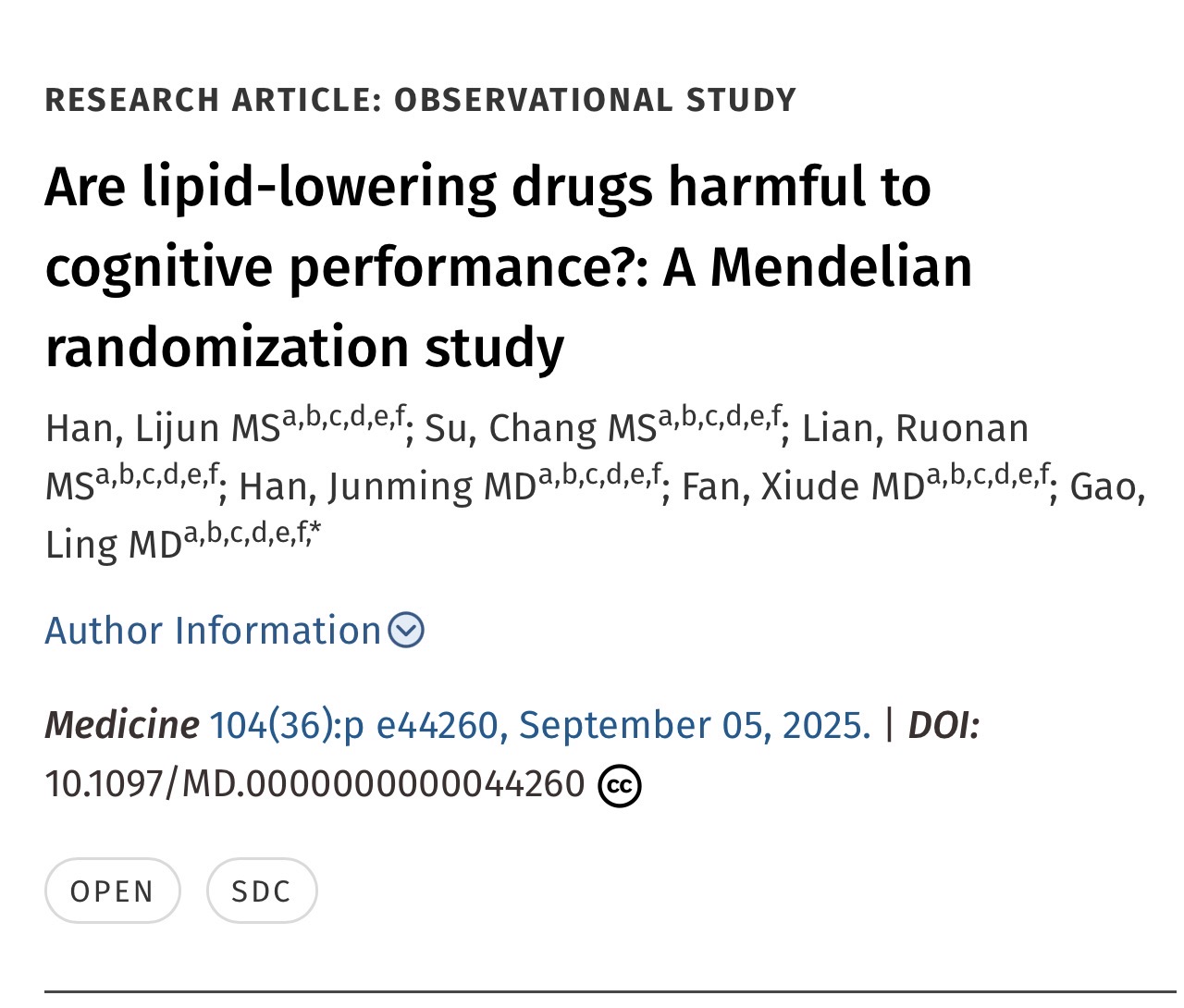
Notably IMPROVE-IT showed no adverse effect by adding zetia so that’s reassuring.
2 Likes
I grew up before MR studies but it would seem like lifetime exposure is just so different in the world of cholesterol as to make them almost worthless.
Like brain development requires cholesterol so that is a huge problem. Now certainly some cholesterol agents don’t seem to have a negative effect in this study but that may just say they don’t effect cholesterol during brain development.
Am I wrong here?
Impact factor 1.4 in medicine is fairly low.
1 Like
Here’s a link to the study: Are lipid-lowering drugs harmful to cognitive performance?: A Mendelian randomization study - PMC. Statins, and especially ezetimibe, might reduce cognitive performance as measured by logic, reasoning, and fluid intelligence tests.
Looks like Ezetimibe will protect you from getting dementia by turning you into an idiot 
Well, more specifically, if you take Zetia from birth, you might not be that smart.
4 Likes
Dr. Lily Johnston looks at the study, while reacting to Nick Norwitz’s video.
Is Ezetimibe the Secret to Preventing Dementia? Surgeon Reacts to @nicknorwitzMDPhD (via Lily Johnston, MD MPH

2 Likes
I. Executive Summary
In this peer-review analysis, Dr. Lily Johnston, MD MPH (a vascular surgeon specializing in cardiometabolic prevention), evaluates a hypothesis presented by Dr. Nick Norwitz regarding the off-target repurposing of Ezetimibe for Alzheimer’s disease (AD) and neurodegeneration prevention. The core discussion centers on a 2024 study published in Aging Biology(Ganne et al., 2024), which asserts that Ezetimibe acts as a novel neuroprotective agent by disrupting the protein-protein interaction between the scaffolding protein 14-3-3G (gamma) and Hexokinase-1 (HK1). Under pathological conditions, 14-3-3G::HK1 co-aggregation accelerates amyloid-beta and tau deposition. In vitro cell cultures and C. elegans models demonstrated that Ezetimibe disrupts this interface, reduces aggregate accrual, and activates neuronal autophagy by approximately 40% via AMPK pathways. Furthermore, the paper’s observational analysis of the IQVIA PharMetrics Plus claims database (4,361 Ezetimibe users vs. 945,000 age-matched controls) reported an 8-fold reduction in Alzheimer’s disease and related dementias (ADRD) incidence (hazard ratio 0.14).
Critical peer review of the publication reveals fatal methodological limitations that invalidate its primary clinical conclusions. Most notably, the Aging Biology paper completely omitted database query methodologies, regression model parameters, and covariate controls from its Materials & Methods section. The reported 8-fold relative risk reduction reflects an absolute risk reduction (ARR) of only 0.7% (0.8% in controls vs. 0.1% in Ezetimibe users), yielding an unadjusted Number Needed to Treat (NNT) of approximately 143 over an unspecified observation period. Crucially, this effect size was calculated from just five total dementia events in the Ezetimibe cohort. The retrospective analysis failed to adjust for indication bias, baseline lipid parameters, co-administration of statins or aspirin, or stroke risk factors, and aggregated all dementia subtypes without excluding vascular dementia.
Rigorous human interventional and genetic data contradict the off-target neuroprotective thesis. Phase 3 randomized controlled trials (RCTs), such as IMPROVE-IT (N = 18,144; Giugliano et al., 2015), and meta-analyses encompassing over 140,000 subjects (AHA Statement, 2023) show zero reduction in cognitive decline or dementia incidence with Ezetimibe or systemic lipid lowering. Mendelian Randomization (MR) studies targeting NPC1L1 confirm that genetic NPC1L1 inhibition yields no Alzheimer’s protection independent of non-HDL cholesterol lowering. Consequently, Ezetimibe monotherapy cannot be recommended for off-label neuroprotection. Instead, validated interventions—such as intensive blood pressure control (SPRINT-MIND, 2023), glycemic optimization (Lancet Commission, 2024), MFSD2A-targeted LPC-DHA uptake, and novel CETP inhibition via Obicetrapib (Phase 3 BROADWAY Sub-study, 2025)—represent superior evidence-based strategies for cognitive longevity in high-risk APOE4 carriers.
II. Insight Bullets
- Ezetimibe is a selectively acting, FDA-approved lipid-lowering drug that targets the Niemann-Pick C1-Like 1 (NPC1L1) transporter in small intestine enterocytes, blocking dietary and biliary cholesterol absorption.
- Unlike HMG-CoA reductase inhibitors (statins), Ezetimibe does not inhibit endoprotection pathways, hepatic cholesterol synthesis, or coenzyme Q10 (CoQ10) biosynthesis.
- A 2024 study in Aging Biology identified Ezetimibe through a hypothesis-naive, high-throughput in silico drug screen aimed at disrupting neurodegenerative protein-protein interactions.
- The paper’s focal target is the interaction between the scaffolding protein 14-3-3G (gamma) and Hexokinase-1 (HK1), an enzyme critical to neuronal glucose metabolism.
- In pathological states such as Alzheimer’s, Parkinson’s, and Creutzfeldt-Jakob disease, HK1 detaches from outer mitochondrial membranes and co-aggregates with 14-3-3G, accelerating neuronal cell death.
- Proteomic analysis of postmortem hippocampal tissue confirms significant enrichment of detergent-insoluble 14-3-3G and HK1 aggregates in human APOE4/4 Alzheimer’s and cardiovascular disease brains.
- In cultured human neuronal cell lines, Ezetimibe treatment significantly reduced Thioflavin T-stained amyloid-beta aggregate burden.
- In vitro assays demonstrated that Ezetimibe reduced hyperphosphorylated tau accumulation in human cell models.
- Ezetimibe upregulated neuronal autophagy markers by approximately 40% in cell culture assays.
- In C. elegans transgenic worm models expressing human amyloid-beta fused to mCherry, Ezetimibe significantly reduced fluorescent aggregate accumulation.
- The paper’s epidemiological query of the IQVIA PharMetrics Plus database (2006–2020) claimed an 8-fold lower incidence of ADRD among Ezetimibe users (HR 0.14).
- A major peer-review reporting flaw is that the publication’s Materials & Methods section contains zero technical description of the clinical database query, inclusion/exclusion criteria, or regression modeling.
- The absolute risk reduction (ARR) for dementia in the database analysis was 0.7% (0.8% in age-matched controls vs. 0.1% in Ezetimibe users).
- The calculated Number Needed to Treat (NNT) for Ezetimibe in the database study is ~143 over an unstated observation timeframe.
- The reported 8-fold effect size was driven by a total of only five dementia cases among 4,361 Ezetimibe-treated patients, introducing massive statistical volatility.
- The retrospective database cohort failed to adjust for baseline ApoB/LDL-C levels, indication bias, or concurrent prescriptions of statins, PCSK9 inhibitors, and antiplatelet agents.
- The database aggregated all dementia types into ADRD without excluding vascular dementia, where lipid-lowering and microvascular therapy directly alter event incidence.
- The IMPROVE-IT landmark Phase 3 trial (N = 18,144) evaluated Simvastatin + Ezetimibe versus Simvastatin alone and found no reduction in neurocognitive adverse events or cognitive decline.
- Systematic meta-analyses of 20 randomized controlled trials encompassing >140,000 subjects demonstrated no significant reduction in dementia or cognitive impairment from lipid-lowering therapy.
- Mendelian Randomization (MR) studies targeting NPC1L1 genetic variants demonstrate that lifelong genetic inhibition of NPC1L1 does not protect against Alzheimer’s disease independent of non-HDL-C lowering.
- Some genetic MR analyses indicate that NPC1L1 genetic inhibition may paradoxically correlate with an increased risk of cognitive impairment.
- The extent of central nervous system (CNS) penetration and blood-brain barrier passage of Ezetimibe at standard therapeutic human doses remains unquantified.
- Historical clinical trials demonstrate that clearing amyloid-beta or tau in vitro and in animal models rarely translates to cognitive improvement in human clinical trials.
- Gastrointestinal side effects, specifically diarrhea, occur in 3–5% of Ezetimibe users due to altered intestinal cholesterol absorption and unabsorbed luminal lipids.
- Dose halving (5 mg daily), evening administration with food, and lowering osmotic magnesium supplementation can mitigate Ezetimibe-induced gastrointestinal distress.
- Obicetrapib is an oral Cholesteryl Ester Transfer Protein (CETP) inhibitor currently undergoing Phase 3 clinical evaluation for cardiovascular and lipid management.
- A prespecified sub-study of the Phase 3 BROADWAY trial showed that 10 mg daily Obicetrapib significantly attenuated plasma phosphorylated tau-217 (p-tau217) progression over 12 months.
- The biomarker benefit of Obicetrapib was most prominent in APOE4/4 homozygotes, showing a 20.48% placebo-adjusted reduction in plasma p-tau217 (P = 0.010).
- Lysophosphatidylcholine-bound DHA (LPC-DHA) is actively transported across the blood-brain barrier via the endothelial MFSD2A transporter.
- APOE4 carriers exhibit altered unesterified fatty acid brain uptake, making MFSD2A-targeted LPC-DHA delivery a biochemically rational approach for brain enrichment.
- Endogenous brain lithium levels are significantly depleted in human patients with mild cognitive impairment (MCI) and Alzheimer’s disease.
- In 2025 preclinical models, dietary lithium depletion accelerated GSK3beta activation, amyloid accumulation, and neuroinflammation, which was reversed by lithium orotate supplementation.
- Microdose lithium trials in human MCI cohorts show preliminary cognitive stabilization, but large Phase 3 Level A RCT evidence remains absent.
- Phase 2 human RCTs testing Nicotinamide Riboside (NR) demonstrated systemic NAD+ elevation but failed to yield statistically significant reductions in CSF p-tau or cognitive decline.
- The 2024 Lancet Commission on Dementia established that 14 modifiable risk factors account for approximately 45% of preventable dementia cases globally, led by midlife hypertension, physical inactivity, and diabetes.
III. Adversarial Claims & Evidence Table
| Claim from Video | Speaker’s Evidence | Scientific Reality (Current Data) | Evidence Grade | Verdict |
|---|---|---|---|---|
| Ezetimibe reduces dementia incidence by >7-to-8-fold (>85% relative reduction). | IQVIA PharMetrics Plus claims database analysis (4,361 users vs. 945,000 controls) cited in Aging Biology. | Methods omitted from paper; unadjusted for indication bias or statin/aspirin co-medication. Absolute risk reduction is only 0.7% (NNT ~143) based on 5 cases. RCTs (IMPROVE-IT, N=18,144) show zero cognitive benefit (Giugliano et al., 2015; AHA Statement, 2023). | Level C (Observational Cohort) | Unsupported |
| Ezetimibe directly inhibits 14-3-3G::HK1 binding to halt amyloid and tau aggregation. | In silico molecular docking and in vitro human cell line / C. elegans assays (Aging Biology, 2024). | Disruption occurs at unvalidated in vitro concentrations with unknown human blood-brain barrier penetration. Plaque/tau disruption in vitro repeatedly fails to translate to clinical cognitive protection (Ganne et al., 2024). | Level D (Translational Gap) | Speculative |
| Ezetimibe upregulates neuronal autophagy by ~40% via AMPK activation. | Cultured human neuronal markers and C. elegansmCherry-amyloid model. | AMPK-dependent autophagy activation is confirmed in rodent ischemic models, but CNS translatability and accumulation at standard human oral doses are unproven (Ganne et al., 2024). | Level D (Translational Gap) | Speculative |
| Genetic inhibition of NPC1L1 protects against Alzheimer’s disease. | Assumed alignment between Ezetimibe drug target and genetic lipid modification. | Mendelian Randomization (MR) studies confirm that NPC1L1 genetic variants do not reduce Alzheimer’s risk independent of non-HDL-C lowering, and some genetic models suggest potential adverse cognitive effects (ChemRxiv MR Analysis, 2025). | Level A (Mendelian Randomization Meta-analysis) | Unsupported |
| Obicetrapib (CETP inhibitor) significantly lowers plasma p-tau217 in APOE4 carriers. | Mention of Phase 3 CETP inhibitor trials in lipid and neurodegeneration research. | Phase 3 BROADWAY trial prespecified sub-study demonstrated 10 mg daily Obicetrapib reduced plasma p-tau217 by a placebo-adjusted 20.48% in APOE4/4 homozygotes over 12 months (P = 0.010) (BROADWAY Sub-study, 2025). | Level B (Human Phase 3 RCT Sub-analysis) | Strong Support |
| Lithium orotate (5 mg/day) halts Alzheimer’s pathology by inhibiting GSK3beta and replacing brain Li deficits. | Self-supplementation choice based on GSK3beta inhibition and endogenous brain Li loss data. | 2025 Nature landmark study proved endogenous brain lithium depletion accelerates amyloid/tau deposition via GSK3beta activation, and lithium orotate repletion reverses pathology in AD mice. Human trials remain small pilot studies (Lithium AD Study, 2025). | Level D (Translational Gap) / Level C (Human Cohort) | Plausible |
| LPC-bound DHA (Centrate Omega Max) crosses the blood-brain barrier via MFSD2A more effectively than TG-DHA. | Targeted brain delivery strategy for APOE4 carriers with impaired fatty acid transport. | Human PET imaging and pharmacokinetic trials confirm LPC-DHA is transported directly across the blood-brain barrier via the endothelial MFSD2A transporter, bypassing APOE4 transport deficits (DHA Brain Transport Study, 2025). | Level B/C (Human PET / Transport Study) | Strong Support |
| NAD+ precursors (NR / NMN) slow cognitive decline and reduce Alzheimer’s biomarkers in humans over 40. | Recommendation for cognitive longevity based on age-related cellular NAD+ depletion. | Phase 2 human RCTs demonstrate safety and systemic NAD+ elevation but failed to demonstrate statistically significant reductions in CSF p-tau or cognitive decline in human AD trials (Phase 2 NR Trial, 2023; PMC Trial, 2024). | Level B (Human RCT) | Speculative |
| Low-dose Ezetimibe (5 mg evening) with reduced magnesium eliminates GI side effects while preserving efficacy. | Personal self-experimentation protocol to overcome Ezetimibe-induced diarrhea. | Diarrhea occurs in 3–5% of users due to unabsorbed intestinal cholesterol. Dose reduction and lowering osmotic laxative load reduce osmotic gut load, but CNS target engagement at 5 mg is unstudied. | Level E (Anecdote / Expert Protocol) | Plausible (GI) / Speculative (CNS) |
| Metabolic optimization, glycemic control, BP management, and exercise are the primary pillars of AD prevention. | Dr. Lily Johnston’s peer-review summary opposing supplement-centric paradigms. | SPRINT-MIND RCT and 2024 Lancet Commission report establish that intensive SBP control (<120 mmHg), physical exercise, and insulin sensitivity reduce MCI and dementia incidence by up to 45% (Lancet Commission, 2024; SPRINT-MIND Trial, 2023). | Level A (Meta-analysis & Multicenter Phase 3 RCT) | Strong Support |
IV. Actionable Protocol (Prioritized)
High Confidence Tier (Backed by Level A/B Evidence)
- Intensive Systolic Blood Pressure Management: Target systolic blood pressure < 120 mmHg utilizing standard antihypertensive therapy to reduce vascular cognitive impairment and probable dementia risk (SPRINT-MIND Trial, 2023).
- Glycemic & Metabolic Optimization: Eliminate peripheral insulin resistance via dietary intervention and exercise to maintain fasting glucose < 90 mg/dL and HbA1c < 5.4%, directly mitigating APOE4-associated neuronal hypometabolism (Lancet Commission, 2024).
- Vascular & Atherosclerotic Risk Reduction: Standard ApoB/LDL-C management via statins, ezetimibe, or PCSK9 inhibitors for primary cardiovascular and ischemic stroke prevention.
- Targeted Aerobic Physical Activity: Minimum 150–300 minutes per week of zone-2 aerobic activity combined with resistance training to boost circulating Brain-Derived Neurotrophic Factor (BDNF) and cerebral perfusion.
Experimental Tier (Level C/D Evidence with High Safety Margins)
- LPC-DHA Transport Enhancement: Supplementation with lysophosphatidylcholine-esterified DHA (1,000–2,000 mg/day) to exploit the endothelial MFSD2A transporter, bypassing APOE4-mediated BBB lipid transport deficits (PMC / NIH, 2025).
- Low-Dose Elemental Lithium (Lithium Orotate): Microdosing (1 mg–5 mg elemental lithium daily) to attenuate endogenous brain lithium depletion, inhibit GSK3beta overactivity, and suppress microglial neuroinflammation (PubMed, 2025).
- Emerging CETP Inhibition Monitoring: Tracking Phase 3 outcomes for Obicetrapib (10 mg/day) in high-risk APOE4 carriers exhibiting elevated plasma p-tau217 and cardiovascular dyslipidemia (BROADWAY Sub-study, 2025).
Red Flag Zone (Debunked or Lacking Safety/Efficacy Data)
- Off-Label Ezetimibe Monotherapy for Dementia Prevention: Prescribing Ezetimibe solely for off-target neuroprotection is unsupported by interventional RCTs or Mendelian Randomization studies. The observational claims of an 8-fold reduction are methodologically compromised.
- High-Dose NAD+ Monotherapy for AD Modification: Relying on NR or NMN as primary disease-modifying agents for Alzheimer’s prevention, as human Phase 2 RCTs fail to demonstrate cognitive slowing or CSF p-tau clearance.
3 Likes
Unfortunatly as I have gotten older my digestive tract is more sensitive. I have been taking ezetimibe for years, but it still sometimes causes me mild diarrhea. Too bad so many great drugs have side effects that affect the unfornate few. Common Side Effects
Most common symptoms are mild and tend to resolve within the first few weeks of starting the medication. They include: [1]
1 Like
Do you take tributyrin to help with the gut or mastic gum to help with the stomach?
I do take tributyrin, but it doesn’t seem to help. I am thinking of dropping ezetimbe, because I can keep my LDL quite low with pitavastatin and bempedoic acid. Probably not worth the effort for a few extra points
2 Likes
Sorry to hear you’re the rare case that suffers side effects from Ezetemibe. For most, it’s an easy win.