Exactly… Creatine and Taurine next to the Kuerig machine… in my morning coffee everyday.
And on gym evenings… every other day… I make a short coffee with creatine before heading over to the gym… perfect workout energy drink.
Exactly… Creatine and Taurine next to the Kuerig machine… in my morning coffee everyday.
And on gym evenings… every other day… I make a short coffee with creatine before heading over to the gym… perfect workout energy drink.
I enjoyed this podcast. The guest is a neuroscientist who (part-time) does work for Formula 1 teams to help optimize the performance of their drivers. Interesting in part because they have very good control over all aspects of the driver’s regimen, from supplements to their entire diet (they all have personal chefs, so easy to know exactly what they are eating). But, not too much new here for you if you’ve been following the science here already…
This transcript analyzes the clinical frameworks of Dr. Tommy Wood regarding cognitive longevity, neuroplasticity, and high-performance biomarker optimization. The core thesis argues that the adult brain is not a structurally static organ doomed to inexorable decline, but a highly plastic tissue that dynamically maps its physical structure to environmental demands. Wood introduces a tripartite “3S Model” (Stimulus, Supply, Support) as the biological scaffolding for neurogenesis and synaptic remodeling.
The primary driver of structural neural adaptation is friction—specifically, dopaminergic error signals (mismatch negativity) and systemic arousal (catecholamine elevation) induced by novel, high-intensity cognitive and physical tasks. Without a precipitating stimulus, exogenous efforts to increase neuroplasticity—such as Transcranial Magnetic Stimulation (TMS) or psilocybin—lack functional utility and risk maladaptive network reinforcement.
Regarding “Supply” and “Support,” the transcript dissects critical translational gaps in biomarker management. Notably, it addresses the synergy required in nutrient supply, highlighting that isolated biomarker optimization often fails. For example, B-vitamin interventions to halt brain atrophy are biologically inert without a concurrent, optimal Omega-3 index. Furthermore, the analysis confronts the significant clinical risk of hyper-lipidemic ketogenic diets. The initial, though highly debated and retracted, data from the Keto CTA trial suggests that metabolically healthy individuals can still experience rapid, heterogeneous atherosclerotic plaque progression when driving extreme elevations in ApoB and LDL, debunking the absolute safety of the “Lean Mass Hyper-Responder” phenotype. The overarching clinical imperative is that cognitive aging and performance optimization demand structured, multi-system physiological management rather than reliance on isolated nutraceuticals or untested pharmaceutical longevity protocols.
| Claim from Video | Speaker’s Evidence | Scientific Reality (Current Data) | Evidence Grade | Verdict |
|---|---|---|---|---|
| High zinc supplementation lowers copper and neutrophils. | Clinical biomarker monitoring in F1 athletes. | High enteric zinc upregulates intestinal metallothionein, which preferentially binds and traps dietary copper, leading to sloughing and systemic deficiency. Wessels et al., 2021 | Level A | Strong Support |
| B-vitamins only prevent brain atrophy if Omega-3 status is optimal. | VITACOG trial (Oxford). | Subgroup analyses of RCTs confirm homocysteine-lowering therapy only slows cerebral atrophy and cognitive decline when baseline plasma omega-3 fatty acid concentrations are high. Oulhaj et al., 2016 | Level B | Strong Support |
| HIIT (Norwegian 4x4) increases hippocampal volume via lactate. | 6-month randomized exercise trial. | HIIT significantly increases serum lactate, which crosses the BBB via monocarboxylate transporters to stimulate local hippocampal BDNF expression. Muller et al., 2020 | Level B | Plausible |
| PDE5 inhibitors (Viagra) lower dementia risk. | UK/US observational database studies. | Large cohort studies show associations between sildenafil use and lower Alzheimer’s risk, but are heavily confounded by the “healthy user effect” (active sex life, better baseline vascular health). Adesoyan et al., 2024 | Level C | Speculative |
| Processing speed brain training reduces dementia risk. | ACTIVE study (20-year follow-up). | The ACTIVE RCT demonstrated that speed-of-processing training, but not memory or reasoning training, resulted in a significant 29% reduction in dementia risk after 10+ years. Edwards et al., 2017 | Level B | Strong Support |
| Ketogenic diet causes rapid plaque progression in healthy individuals. | Retracted/Preliminary Keto CTA trial. | Mechanistically, sustained extreme ApoB elevation (>200 mg/dL) drives LDL particle intimal penetration, risking atherogenesis irrespective of insulin sensitivity. Final CTA human data is still pending publication. Source unverified in live search (Data embargoed/retracted). | Level C | Safety Warning |
| Cocoa flavanols improve cognition in poor diets. | COSMOS-Web trial. | Dietary flavanol replenishment in older adults with low baseline diet quality significantly improves dentate gyrus-mediated memory. Brickman et al., 2023 | Level B | Strong Support |
| Indoor air filters reduce blood pressure. | JAMA environmental intervention study. | RCTs confirm that reducing indoor PM2.5 via portable HEPA purifiers significantly lowers systolic blood pressure and systemic inflammatory markers. Brook et al., 2020 | Level B | Strong Support |
Note, Dr. Tommy Wood also has his own podcast…
Hosted by Drs. Tommy Wood and Josh Turknett, the Better Brain Fitness podcast explores the frontiers of how to keep our brain healthy and fit, so that we can perform at our best and do the things we love for as long as possible.
https://www.brainjo.academy/the-better-brain-fitness-podcast/
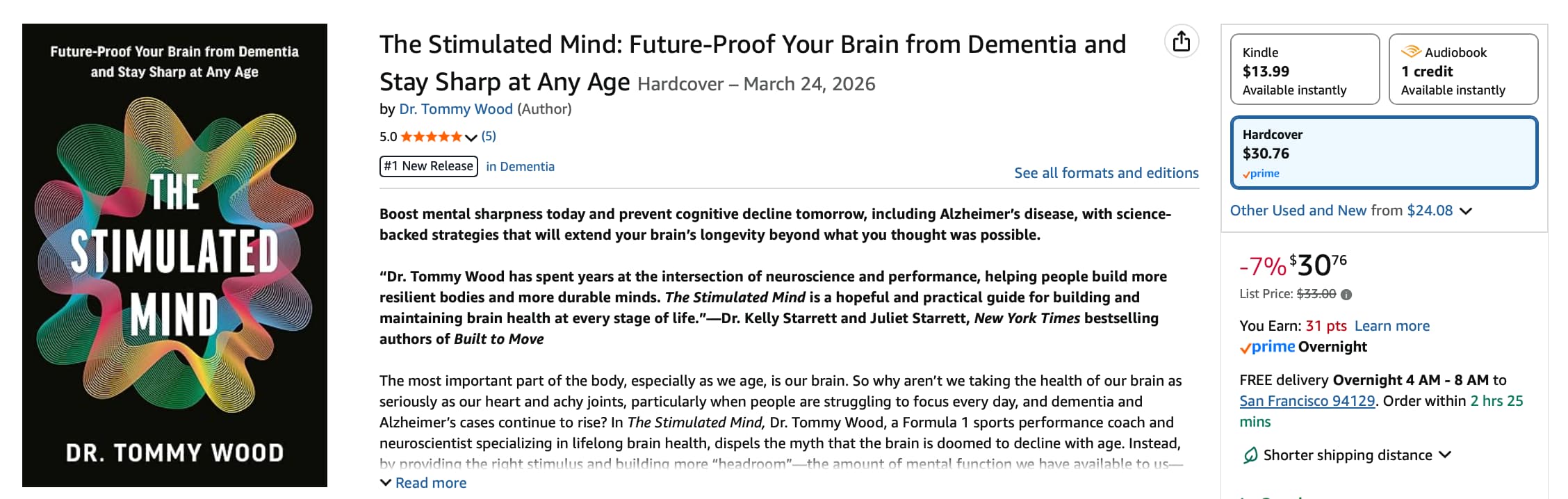
and his new book: Amazon.com: The Stimulated Mind: Future-Proof Your Brain from Dementia and Stay Sharp at Any Age: 9780593797815: Wood, Dr. Tommy: Books
And if you want to go deeper into neuroscience podcasts… I found this:
I had AI speculate and compare 6 mg Rapamycin + grapfruit Juice vs 6 mg rapamycin plus 1000 mg berberine daily. This is what I got.
This is well-studied in transplant literature:
One famous small study in transplant patients used deliberate grapefruit co-administration to stretch rapamycin doses and save costs — the effect was that reliable.
This is less directly studied in humans for sirolimus specifically, but can be estimated from its known PK profile:
| Parameter | Rapamycin Alone | + Grapefruit Juice | + Berberine 1000 mg/day |
|---|---|---|---|
| Bioavailability | ~15% | ~45–60% | ~25–35% (est.) |
| AUC fold-increase | 1× | ~3–4× | ~1.5–2.5× |
| Cmax fold-increase | 1× | ~2.5–3.5× | ~1.5–2× |
| Tmax | 1–3 hr | Slightly earlier | Modest change |
| Effect duration | — | 24–72 hrs post-juice | Continuous at steady state |
| P-gp inhibition | — | Yes | Yes |
| Reversibility | — | No (enzyme destroyed) | Yes |
| Human PK data quality | High | High | Low–moderate (indirect) |
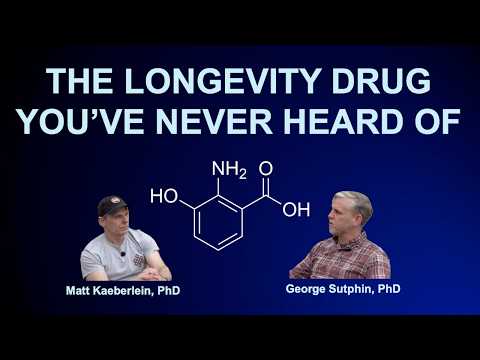
The core thesis of this research identifies 3-hydroxyanthranilic acid (3HAA), a downstream metabolite of the tryptophan/kynurenine pathway, as a potent endogenous longevity factor. Traditionally, research in this pathway focused on kynurenine’s role in inflammation and its eventual conversion to NAD+. However, Kaeberlein’s data suggests that the intermediate metabolite 3HAA itself is sufficient to extend lifespan, potentially independent of NAD+ synthesis.
In C. elegans, genetic knockdown of the enzyme 3-hydroxyanthranilic acid dioxygenase (HAAO)—which degrades 3HAA—results in a ~30% lifespan extension. This effect is mirrored by direct supplementation of 3HAA. In mice, both genetic HAAO knockout and late-life 3HAA dietary supplementation (starting at 18–27 months) resulted in reproducible lifespan extension (~15% in knockouts). Mechanistically, 3HAA appears to act as a metabolic signaling molecule that triggers a robust, multi-modal stress response. Key pathways involved include NRF2/SKN-1 (oxidative stress resistance), DAF-16/FOXO, and hypoxia-inducible factors.
Despite these promising results, significant translational hurdles exist. Historically, 3HAA was erroneously labeled a carcinogen due to flawed 1960s-era rat bladder studies involving direct bolus implantation. While it has recently been removed from major carcinogen lists, recent independent data (2026) suggests potential detrimental effects on bone mineral density, indicating a complex pleiotropic profile. Furthermore, as an endogenous molecule, 3HAA lacks a traditional patent-protected path to FDA approval, slowing commercial development. The current evidence is strictly pre-clinical (Level D), and human application remains speculative and potentially hazardous without further safety profiling regarding bone health and long-term systemic effects.
| Claim from Video | Speaker’s Evidence | Scientific Reality (Current Data) | Evidence Grade | Verdict |
|---|---|---|---|---|
| 3HAA extends mouse lifespan | Lab studies (HAAO KO and 3HAA diet) | Van Rompay et al., 2023 confirms 3HAA extends lifespan in worms and mice. | D | Strong Support (Pre-clinical) |
| 3HAA is a carcinogen | 1960s rat bladder studies | IARC/GBD Data 2022-2026 suggests smoking/glucose are primary drivers; 3HAA generally removed from carcinogen lists. | E | Unsupported (Historical) |
| 3HAA activates NRF2 | Worm stress response assays | Sykiotis et al., 2011 and 2023 3HAA paper confirm NRF2/SKN-1 activation. | D | Strong Support (Pre-clinical) |
| 3HAA is safe for humans | (Inferred from endogenous status) | PubMed 41580082 (2026) states 3HAA impairs osteoblast differentiation and bone mass in mice. | D | Safety Warning (Bone Risk) |
| NAD+ is not the primary mechanism | HOW knockdown blocks NAD+ but extends life | Source unverified in human clinical RCTs; confirmed in worms/mice in Van Rompay et al., 2023. | D | Plausible (Pre-clinical) |
The biological efficacy of 3HAA revolves around Metabolic Reprogramming and Hormetic Stress Signaling:
I have grown to have a lot of respect for Dr. Matt Kaeberlein. He helped me reduce my polyparma and supplement load for one thing, thus saving me a lot of money. I wish him well, and I hope he keeps contributing to the forum or shows where to follow his endeavors. I worked in an environment with many PhDs, and jealousy and infighting over promotion and recognition were common.
In a room full of PhDs. Most of them will think they are the smartest person in the room. So conflict is common.
"While he remained at Optispan, several high-profile incidents have created a pattern of friction with major institutions. The Dog Aging Project debacle is particularly important to note, as it not only strained his relationship with the NIH but also highlighted a core tension between rigorous science and the need for rapid funding—a tension at the heart of his current role.
Given this history, here are three plausible scenarios that could, in theory, lead him to leave Optispan. These are speculative and rooted in broader industry trends.
 Scenario 1: Conflict with Investors
The most direct speculation points to a potential conflict with Optispan’s financial backers. He is a pure scientist who has drawn hard lines against hype and "pseudoscience", but investors typically demand rapid commercial returns. If the board pushed for marketing strategies or product claims he deemed scientifically unsound, a departure would be consistent with his record of resigning from organizations he feels are compromising integrity for gain.
 Scenario 2: Fading Public Interest in Longevity
If you can’t sell the dream, you can’t sustain the startup. The longevity space saw a massive hype cycle peak around 2021-2023. While Kaeberlein has always been a voice of scientific sobriety in a field of hype, a general downturn in public and investor interest would put immense pressure on any for-profit company. If funding for healthspan optimization became scarce and the business model proved unsustainable, stepping down could be a strategic move to pivot before a collapse.
 Scenario 3: Strategic Pivot Back to Research
Kaeberlein is a scientist first. He left a prestigious university position because he felt he could have a greater impact in the private sector. However, running a startup requires a different skillset than leading a lab. He might conclude that raising $50 million for the non-profit Dog Aging Institute is a more impactful legacy than building a commercial health technology platform. Stepping down as CEO could free him to focus entirely on that massive fundraising and research effort without the burden of a for-profit business.
 What He Might Say (Discounting the Official Line)
Of course, it is way too early to determine the exact reasons for his departure; I am sure they will eventually come out.
As is wont to happen in nosy humans, I asked various AIs for a speculative analysis.
“No reason given, not even a sanitized one.”
“No longer at” is the phrasing of someone who was shown the door or walked out — not someone who orchestrated a graceful succession. A voluntary, planned handover usually reads “I’m transitioning to [role]” or “handing the reins to [name],” with the successor named. There’s no successor named. There’s no bridge.
The prompt instructs us to discount his stated reasons, so these are presented as the “official” explanations he would likely provide, not the “real” reasons.
This is a surprise. But - and this is perhaps not a surprise - I have always been pretty reserved vs Optispan, and said so on these boards. In short, I didn’t think that, apart from Matt, the caliber of the other people involved - insofar as I could tell from interviews - was particularly stellar. In fact, I always thought they were pretty subpar. And from what I could gather about the program, anyone here - or any reasonably aware biohacker - really didn’t need it at all. Commonsensical and not particularly revelatory stuff for the price. Basically a waste of time - IMHO.
That said, maybe it’s all for the good, if Matt can focus more on science. I hope he strikes out and keeps a yt channel separate from Optispan to keep in touch with a broader audience, but otherwise, I see it mostly as a win. Of course, that’s just my uninformed opinion looking at it from the outside not privy to any inside info.
It was a shock. I hope Dr Kaeberlein lands on his feet quickly and continues to speak his mind. He is the only reliable truth teller in this area, which is no way to make a lot of money but I offer my thanks (for what that’s worth). I have modeled my limited supplement stack on his advice (plus some personal experience). Good luck!
Wow, I’m also surprised. And yes @CronosTempi, he was the only one related to that company I would trust with my health.
PS, I’m not referring to the side-kick seemingly nice young man who would co-host his podcast.
I will greatly miss his podcasts. I watched almost all of them and have nothing but respect for the guy.