This is from Novos labs, which has Fisetin in their formula:
This is the important part: "In summary, we have found that D+Q causes demyelination in the brain"
Demyelination in the brain is bad. There is currently no scientific proof D+Q has any benefits for human brain health.
Check out the authors of this article. You won’t find much better.
This paper convinces me that there is no reason to take D+Q
This is a red flag that jumping on the bandwagon too soon is dangerous. And, I am often guilty of this.
3 Likes
The luminaries at Novos give fisetin an unequivocal thumbs up. 100mg of it in their 12 ingredient daily formula.
Dr. Mitin suggests it’s risky and ineffective. Maybe she’ll come back and expand a little.
I had to stop taking quercetin because it gives me headaches. Quercetin is commonly attributed with why red wine gives some people headaches, but red wine does not give me headaches. I wonder if the headaches are related to the damage identified in the paper.
1 Like
- Case Report
- Published: 13 October 2017
We report a patient with CML who developed acute onset of DPN associated with dasatinib therapy. A 46-year-old Japanese woman was treated with dasatinib for 7 months after the diagnosis of CML and she achieved a major molecular response (MMR). However, dysphagia, hoarseness, and muscle weakness progressively developed over 2 weeks. Nerve conduction studies revealed extensive demyelinating changes.
4 Likes
D+Q study in both young and aged mice shown to cause neuropathy in the brain including demylelination. Treatment regime (dosing) was apparently the same as used by others in mice that showed increased survival so it wasnt like they were giving massive doses of D+Q.
"To determine whether D+Q treatment had any effects on
myelination in the brain, we treated a cohort of aged (22 mo)
C57Bl6/J mice with senolytics, dasatinib and quercetin (5 mg/
kg and 50 mg/kg, respectively), through oral gavage (Fig. 1A).
This treatment paradigm provides intermittent administration
of D+Q which increased posttreatment survival rates of aged
mice, as developed by others (31, 32). "
https://doi.org/10.1073/pnas.2524897123
Proceedings of the National Academy of Sciences
Vol. 123, No. 12
Mar 2026
Senolytic treatment induces oligodendrocyte dysfunction and demyelination in the corpus callosum
Significance
The pharmacological combination of dasatinib and quercetin (D+Q), widely reported as a means of eliminating senescent cells from aged tissues to treat diseases (a.k.a. “senolytics”), and currently being tested in multiple clinical trials, when administered to healthy mice results in profound white matter injury in the central nervous system. This report provides evidence that this senolytic combination not only causes neuropathology but also provides data which support induction of the unfolded protein response as a plausible mechanism through which these senolytics affect oligodendrocytes. We propose that these data highlight a less understood means of demyelination not mediated by oligodendrocyte death with potential positive implications for understanding disease, while also warranting caution for its widespread use clinically.
1 Like
apologies for delayed response. the podcast that i did with Mike Lustgarten just came out on YouTube where i explain my views on senolytics and it’s broad use and perceived safety.
We see this question of it’s safe but ineffective, may be i should just take more/make it more bioavailable a lot. The fundamental assumption is that it’s ineffective at the dose taken but will work at a higher plasma level. When it comes to fisetin, we do no see it being a senolytic in people. It’s someone senomorphic but not very effective. So I would pose this question- can you do something else to decrease inflammation that would be more effective and not have to take on another supplement?
I uploaded a video of an immune profile of someone on fisetin (clinical trial, so the only intervention). Notice no change in cellular senescence.
2 Likes
nym,
Thanks for your thoughts. Since the topic is about Dasatinib and Quercetin do you have any thoughts about the work of James Kirkland and his colleagues at the Mayo Clinic around 2015 through 2019 when they were experimenting with these two ingredients as a senolytic combination?
@nym is the video you uploaded the same as what Mike has on Youtube?
The Immune System Impacts Longevity: What To Measure
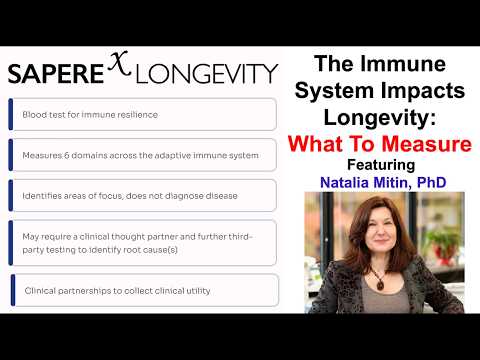
Subject: Evaluation of Immune Resilience (IR) as a Primary Longevity Predictor
Source Material: Interview with Dr. Natalia Mitten (Sapere Bio)
Transcript Analyst Perspective: Peer Reviewer
Date: April 19, 2026
I. Executive Summary
The central thesis presented by Dr. Natalia Mitten is that total White Blood Cell (WBC) counts are insufficient biomarkers for longevity due to antagonistic age-related shifts—specifically, the rise of neutrophils/monocytes and the decline of lymphocytes—which often result in a deceptive “normal” aggregate value. High-resolution immune profiling, specifically focusing on T-cell mRNA expression of p16INK4a and the transcription factor TCF7, provides a superior signal for “Immune Resilience” (IR). IR is defined as the system’s capacity to resist infection, suppress inflammation, and maintain cellular stemness despite chronological aging.
A critical paradigm shift identified is the distinction between Immunosenescence (system-level decline/shift from naive to memory cells) and Cellular Senescence (arrested growth of specific cells). Contrary to the “senolytic hype,” recent evidence (Bulavin et al., 2024/2026) suggests that p16High immune subsets may actually facilitate “disease tolerance,” protecting tissues from acute damage during infection. Thus, aggressive, unmonitored senolytic use risks disrupting this protective mechanism.
The analytical utility of the SapereX platform lies in its “Hexagon” model, measuring six domains: Senescence (p16), Defense (exhaustion markers like LAG3), Stemness (proliferation/TCF7), Balance (proliferation/exhaustion ratio), Inflammation (differentiation/autophagy), and an integrated Immune Longevity Score (ILS). Clinical observations suggest that lifestyle interventions (fasting, exercise) and pharmaceuticals (Rapamycin, TPE) can modify these domains, but responses are highly heterogeneous. At age 40, a survival gap of 15.5 years exists between individuals with optimal versus poor IR, highlighting a critical midlife “biological warranty period” where interventions are most efficacious.
II. Insight Bullets
- Deceptive WBC Stability: Total WBC counts mask aging because neutrophil increases offset lymphocyte decreases.
- The 15.5-Year Gap: Optimal immune resilience at age 40 correlates with a 15.5-year survival advantage compared to poor IR.
- TCF7 as a Master Regulator: T-cell stemness, driven by TCF7, is the primary salutogenic (health-producing) force in immune longevity.
- Disease Tolerance vs. Clearance: p16High immune cells are essential for protecting host tissues from damage during sepsis and ionizing radiation.
- Senolytic Over-fitting: Only ~30% of patients exhibit “high senescence” as their primary immune defect; for the other 70%, senolytics may be misaligned or detrimental.
- Lag3 vs. PD-1: LAG3 is identified as a more sensitive marker for T-cell exhaustion in the context of longevity than PD−1.
- Stemness (Stem-like T-cells): Mitochondrial function is the metabolic prerequisite for T-cell proliferation and naive cell maintenance.
- Autophagy in T-cells: Chronic inflammation triggers terminal differentiation in T-cells, characterized by altered autophagy pathways.
- The CD4 Advantage: Females generally exhibit a 10-point advantage in Immune Longevity Scores (ILS) over males.
- Fisetin Re-classification: Clinical observations suggest Fisetin acts primarily as a senomorphic (reducing SASP/inflammation) rather than a true senolytic in humans.
- Melatonin Toxicity: High-dose melatonin can paradoxically “tank” morning cortisol, disrupting the circadian recovery of the immune system.
- Exercise Goldilocks Zone: Over-exercising (excessive physiological stress) can induce a p16 profile similar to cancer patients.
- Viral Reactivation Loop: T-cell exhaustion (Lag3 high) allows dormant viruses (CMV/EBV) to reactivate, further driving exhaustion in a feedback loop.
- Phlebotomy Stability: Immune mRNA signatures are highly volatile; samples must be chemically stabilized immediately post-draw for accurate longevity metrics.
- TPE Utility: Therapeutic Plasma Exchange (TPE) is one of the few interventions capable of “filling the hexagon” (improving all immune domains) in some individuals.
III. Adversarial Claims & Evidence Table
| Claim from Video | Speaker’s Evidence | Scientific Reality (Current Data) | Evidence Grade | Verdict |
|---|---|---|---|---|
| Optimal IR gives a 15.5-year survival advantage. | Ho lab (Manoharan et al.) paper citing ~50k individuals. | Supported by large-scale cohort study showing TCF7-centered resilience. Manoharan et al., 2024 | C | Strong Support |
| p16High immune cells are protective (Disease Tolerance). | Bulavin Lab (Immunity 2026/2024). | Confirmed in mice/human mRNA vaccine models; p16 cells protect against endotoxin shock. Bulavin et al., 2026 | D | Plausible |
| Fisetin is senomorphic, not senolytic, in humans. | Clinical observation/Registry data. | Human RCTs for senolysis are ongoing (e.g., Fisetin HIGH). Direct evidence of clearance in humans is sparse. NCT06431932 | E | Speculative |
| Rapamycin reduces T-cell exhaustion (Lag3). | Sapere Bio Registry data / Wong et al. | Ex-vivo human T-cell data shows mTOR inhibition reduces DNA damage/senescence markers. Wong et al., 2024 | D | Plausible |
| Melatonin supplementation tanks morning cortisol. | Clinical observation from Sapere’s cortisol testing. | Known inverse circadian relationship; supplemental melatonin can suppress the Cortisol Awakening Response (CAR). [Source unverified in live search for specific “tanking” threshold] | E | Expert Opinion |
| Low p16 correlates with higher neuropathy risk. | Cancer survivorship study (UNC/Breast Cancer). | p16 expression in T-cells reflects the capacity to protect tissue from ionizing radiation damage. Smith et al., 2023 | C | Strong Support |
IV. Actionable Protocol (Prioritized)
High Confidence Tier (Level A/B/C Evidence)
- Monitor the “Pathogenic Triad”: Focus on reducing systemic inflammation (CRP/IL−6), reversing immunosenescence (CD4:CD8 ratio > 1.0), and minimizing cellular senescence.
- Window of Opportunity: Aggressive optimization should occur between ages 40–70. Post-70, mortality rates converge regardless of IR status.
- T-cell Exhaustion Screening: Use LAG3 or PD−1 metrics to identify viral reactivation risks before clinical shingles or EBV symptoms manifest.
Experimental Tier (Level D/E Evidence)
- Low-Dose mTOR Inhibition: Rapamycin (or mTOR inhibitors) for enhancing T-cell resilience against DNA damage and reducing exhaustion markers.
- Senomorphic Supplementation: Utilize Fisetin specifically for inflammation/SASP reduction if p16 levels are high but TCF7 (stemness) is intact.
- Circadian Recovery: Ensure melatonin dosing does not interfere with the morning cortisol spike (CAR), which is essential for immune cell “resetting.”
Red Flag Zone (Safety Data Absent)
- Blind Senolytic Use: Taking Dasatinib/Quercetin or high-dose Fisetin without measuring p16 levels may inadvertently remove “protective” p16High cells, increasing risk of tissue damage from acute stressors.
- The “Overshoot” Phenomenon: Over-exercising or extreme caloric restriction can drive p16 to pathological levels, mimicking “accelerated aging” profiles found in chemotherapy patients.
V. Technical Mechanism Breakdown
1. The TCF7-Centered Stemness Pathway
TCF7 (Transcription Factor 7) is the master regulator of T-cell stemness. It maintains a “naive-like” state in memory T-cells, allowing for rapid clonal expansion upon new antigen exposure. Loss of TCF7 leads to terminal differentiationand immunosenescence.
2. p16-INK4a and Disease Tolerance
p16INK4a (encoded by CDKN2A) is a cyclin-dependent kinase inhibitor. In the longevity context, it is a marker of growth arrest. The newly identified mechanism suggests that p16 induction in myeloid cells (macrophages/neutrophils) limits the “cytokine storm” and promotes tissue tolerance by regulating adenosine accumulation via the NNMT pathway.
3. Lag3 and mTOR Inhibition
LAG3 (Lymphocyte-activation gene 3) is a cell surface receptor that acts as an immune checkpoint. Chronic mTORC1overactivation (often due to persistent viral load or over-nutrition) drives LAG3 expression, leading to T-cell “exhaustion” where the cell remains present but functionally inert. mTOR inhibition (Rapamycin) promotes recovery by enhancing the cell’s DNA repair capacity and preventing terminal differentiation.
4. SASP vs. Senomorphics
The Secretory Associated Senescent Phenotype (SASP) consists of pro-inflammatory cytokines (IL−1β,IL−6). Senomorphics (e.g., Fisetin, Metformin) modulate the NF−κB or p38 MAPK pathways to dampen these secretions without killing the cell, maintaining the “disease tolerance” benefits of p16High cells while reducing “inflammaging.”
The same goes for D+Q . In our clinical trials, we do not see D+Q decreasing cellular senescence in humans, except for people with extremely high baseline levels.
2 Likes
@Jay, responded to the other message earlier but will repeat here. W e don’t see D+Q decreasing senescence in clinical trials except in people with very high CS to start with.
1 Like
I got a couple bones to pick with this discussion so I am bumping it.
First off, The standard adult starting dosages are:
- 100 mg once daily for Chronic Phase CML (newly diagnosed or after failure of prior therapy).
- 140 mg once daily for Accelerated Phase CML, Blast Phase CML, or Philadelphia chromosome-positive Acute Lymphoblastic Leukemia (Ph+ ALL).
and how long do people use this for?
Indefinite Long-Term Therapy
For most patients, dasatinib is a long-term, continuous treatment taken until:
- Disease progression occurs.
- The medication is no longer tolerated due to severe side effects.
- The patient and physician decide to attempt discontinuation.
Clinical trials have monitored patients for 5 to 7 years , with many remaining on therapy indefinitely to maintain remission. In pediatric patients with Ph+ ALL, the standard course is typically fixed at 2 years in combination with chemotherapy.
So back to senolytics, we are talking 100mg for two, maybe three days. That’s hardly an amount that I would be worried about compared to others who use it chronically.
I suppose the last question would be how many of these people have ‘brain damage’:
Clinical Cancer Patients
In patients treated for Chronic Myeloid Leukemia (CML) or Ph+ ALL:
- Brain Demyelination is Rare: Central nervous system (CNS) demyelination (leukoencephalopathy) is not a common or well-documented side effect of dasatinib in standard oncology practice. While other tyrosine kinase inhibitors (TKIs) like nilotinib have clearer associations with CNS demyelination, dasatinib cases are extremely rare and mostly limited to isolated case reports.
- Peripheral Neuropathy Exists: There are documented cases of reversible demyelinating peripheral polyneuropathy (affecting nerves outside the brain/spinal cord), which resolved after discontinuing the drug.
- Cognitive Side Effects: Approximately 19% of patients may experience memory changes or neurocognitive deficits, but these are not necessarily linked to visible demyelination on brain scans.
- CNS Bleeding Risk: A more recognized neurological risk is CNS hemorrhage (bleeding in the brain), occurring in <1% of patients, rather than demyelination.
Lastly, @nym , respectfully, I do not understand why you are not seeing a decrease in senescence when:
D+Q decreasing cellular senescence in humans
Dasatinib plus Quercetin (D+Q) has been demonstrated to significantly reduce the burden of senescent cells in humans. In a Phase 1 clinical trial involving patients with diabetic kidney disease, a short 3-day “hit-and-run” course of D+Q led to marked reductions in senescent cell markers in both adipose tissue and skin.
Key outcomes from the trial included:
- Adipose Tissue Reduction: Senescent cell markers p16INK4A and SAβgal were reduced by 35% and 62%, respectively, while p21CIP1 decreased by 17%.
- Skin Reduction: Epidermal levels of p16INK4A and p21CIP1 positive cells were reduced by 38% and 30%, respectively.
- Systemic Effects: Circulating pro-inflammatory SASP factors (including IL-1α, IL-6, and MMPs) were significantly lowered, and adipose tissue macrophage accumulation was decreased by 28%.
- Functional Recovery: The clearance of senescent cells was associated with an increased replicative potential of adipocyte progenitor cells.
These findings, published by researchers at the Mayo Clinic, provide the first direct evidence in humans that intermittent senolytic therapy can effectively eliminate senescent cells and mitigate their associated inflammatory effects.
2 Likes
One thing that is concerning though, and people in here should realize, it’s not demylination that is a concern, it’s brain hemorrhage. You can’t use that drug if you are on blood thinners, NSAIDs, aspirin, warfarin, etc:
The onset of bleeding risk with dasatinib depends on the mechanism causing it: platelet dysfunction can happen almost immediately, while severe thrombocytopenia (low platelet count) typically takes days to weeks.
Immediate Onset: Platelet Dysfunction (Hours to Days)
- Mechanism: Dasatinib inhibits SRC kinases, which are essential for platelet activation.
- Speed: Studies show that dasatinib can induce significant platelet dysfunction within 30 minutes to a few hours after the first dose.
- Implication: Even if a patient’s platelet count is still normal, their platelets may be functionally impaired (“asleep”) immediately after starting therapy. This creates an immediate, albeit low, risk of bleeding if a vessel ruptures, though catastrophic brain hemorrhage this early is extremely rare without other factors.
Delayed Onset: Thrombocytopenia (Days to Weeks)
- Mechanism: The drug suppresses bone marrow production of platelets (myelosuppression).
- Speed: Platelet counts typically begin to drop within the first 1 to 2 weeks of treatment.
- Peak Risk: The nadir (lowest point) of platelet counts usually occurs around days 14 to 28 after starting therapy or after a dose increase. This is the period of highest statistical risk for severe spontaneous bleeding, including brain hemorrhage.
Can It Happen After the First Dose?
- Spontaneous Brain Hemorrhage: It is highly unlikely to suffer a spontaneous brain hemorrhage immediately after the very first dose in a patient with normal baseline platelets and no other risk factors. The drug needs time to lower the platelet count to critical levels (<20,000/µL) for spontaneous bleeding to become a major threat.
- Triggered Bleeding: However, because platelet function is impaired quickly, a patient could theoretically be at higher risk of bleeding from trauma (e.g., a fall or head injury) even within the first few days of treatment.
- Fatal Cases: While rare, fatal bleeds have been reported early in therapy, often in patients who already had low platelets due to advanced leukemia or were taking blood thinners.
Summary: The biological effect on platelet function is immediate (hours), but the high-risk window for spontaneous life-threatening hemorrhage usually aligns with the drop in platelet counts, occurring 1 to 4 weeks after starting treatment.
2 Likes
you are miscategorizing what i said. i said we don’t see D+Q senolytic effect unless people started with really high levels. Patients in kidney failure will have really high levels. I am not aware of a single person in longevity clinics where we test to have eGFR<30. Cellular senescence in the kidney has been shown probably 20 years ago to be highly upregulated and be a strong predictor of graft survival well beyond chronological age, telomeres etc. It was assumed that high senescence in kidney will increase senescence systemically, so skin etc.
I don’t see the reason for people who don’t have super high levels of p16 to take D+Q. That is my opinion and data in the ~1,500 people we looked at. I can not to speak to populations outside of that.
1 Like
yes, i did, but it was to push back a bit. This way we can clear up what categorizes high D+Q high levels, such as failing kidneys, degenerating discs, dilated aortas, fat cells, but wouldn’t these senescent cells be part of the aging corpus?
I’m not trying to discredit you, I was just curious about the rest of the AI pulp, such as skin reduction, overall SASP and the functional recovery in adipocytes.
But I get it, in your trial, you didn’t see any benefit for the individuals. I should look up your study (got a link?)
1 Like
Senolytics now seem to have adverse effects in addition to not showing much benefit. I’d stay away until something better comes along.
In the meantime, I’ll manage senescent cells with senomorphics - Rapamycin and Taurine.
5 Likes
And now it seems that SGLT2i’s also have senolytic effects: Daniel Tawfik on X: "Millions of people are taking a diabetes drug that just turned out to be an anti-aging medication. A new Nature Aging study reveals that SGLT2 inhibitors—drugs prescribed to over 30 million patients worldwide for blood sugar control—are actually clearing senescent cells from https://t.co/aJSi6V4Aih" / X .
I’ve chosen empa for lower side effect risk than cana. At 43 years old, taking rapa + empa, I don’t see the risk/reward as favorable for adding Dasatinib (+quercetin).
3 Likes
3 Likes
Note that Daniel Tawflik’s post on X calls it a “new study” but it’s actually from 2024. Even the article he links to from Healthspan is from March 2025. So that’s not to denigrate the importance, just that it’s not really “new news”.
2 Likes