I read this today: https://www.ahajournals.org/doi/10.1161/ATVBAHA.125.322924
1 Like

Just saw this on X from someone using Retatrutide. I am not sure how real it is. If this interests you, I would recommend doing more research on the topic:
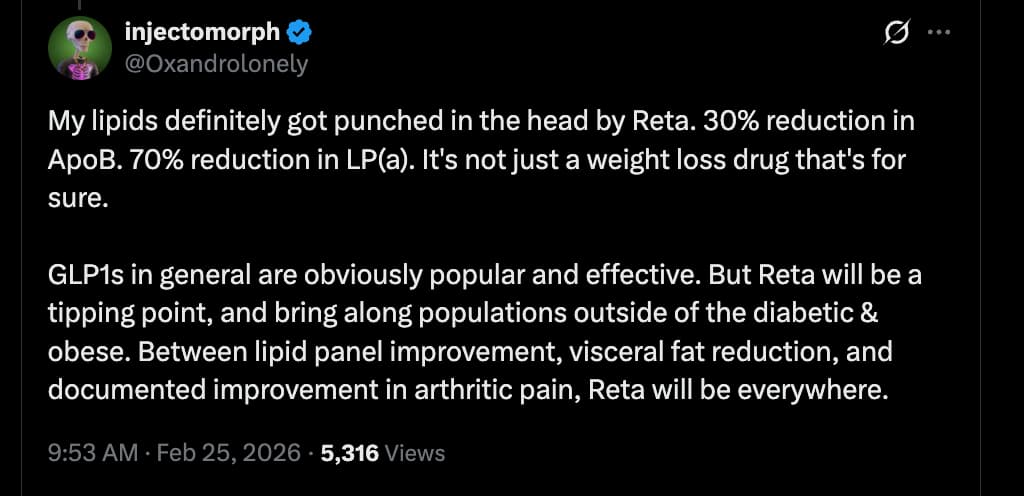


Source: https://x.com/Oxandrolonely/status/2026717263424786500?s=20
7 Likes
Reading about all these potential health benefits is making me want to increase my dose and just force some extra calories in to offset it.
There doesn’t seem to be much out there on lp(a).
My unscientific search on perplexity:
I found only 2–3 anecdotal reports across the internet claiming retatrutide lowered Lp(a), out of thousands of retatrutide discussions.
Details on the reports
- One Reddit commenter in a Peter Attia thread explicitly says retatrutide “also reduced Lp(a), which is quite rare,” in the context of broader lipid benefits (no numbers given).
- An X (Twitter) post references “this guy lowered his Lp(a) by 70% on retatrutide,” linking to an unspecified example with 18 likes as of late February 2026.
And it appears there have been no studies other than this one for other glp’s that began in 2015:
Yes, proposing a trial reflects preliminary optimism from in vitro data showing GLP-1 agonists reduce Lp(a) synthesis in liver cells.
Why trials get proposed
Researchers at Vall d’Hebron University Hospital launched this study (NCT02501850, started 2015) specifically to test if liraglutide, exenatide, or lixisenatide lower Lp(a) in type 2 diabetes patients, building on their lab findings.
- The hypothesis explicitly states: “Treatment with GLP-1R agonists will lower the levels of Lp(a) in patients with DM-2.”
- It’s an observational setup: 20 patients newly prescribed a GLP-1 agonist vs. 20 on metformin/sulfonylurea, measuring Lp(a) at baseline and 2 months.
Status and results
The trial was listed as “recruiting” as of 2015 with no posted results by February 2026, so the hypothesis remains unconfirmed in humans.
- No published outcomes mean we lack evidence of Lp(a) reduction with these drugs, despite the belief it "might work."
- Broader GLP-1 meta-analyses (up to 2025) highlight cardiovascular benefits like reduced MACE and mortality but do not mention Lp(a) changes.
1 Like
Reta has had zero effect on my Lp(a), even at 6mg/week. I notice that the poster on X is posting on a forum (Oxandrolonely?). Oxandrolone is an anabolic steroid that does decrease Lp(a), so my guess is there’s a confounding variable involved here.
6 Likes
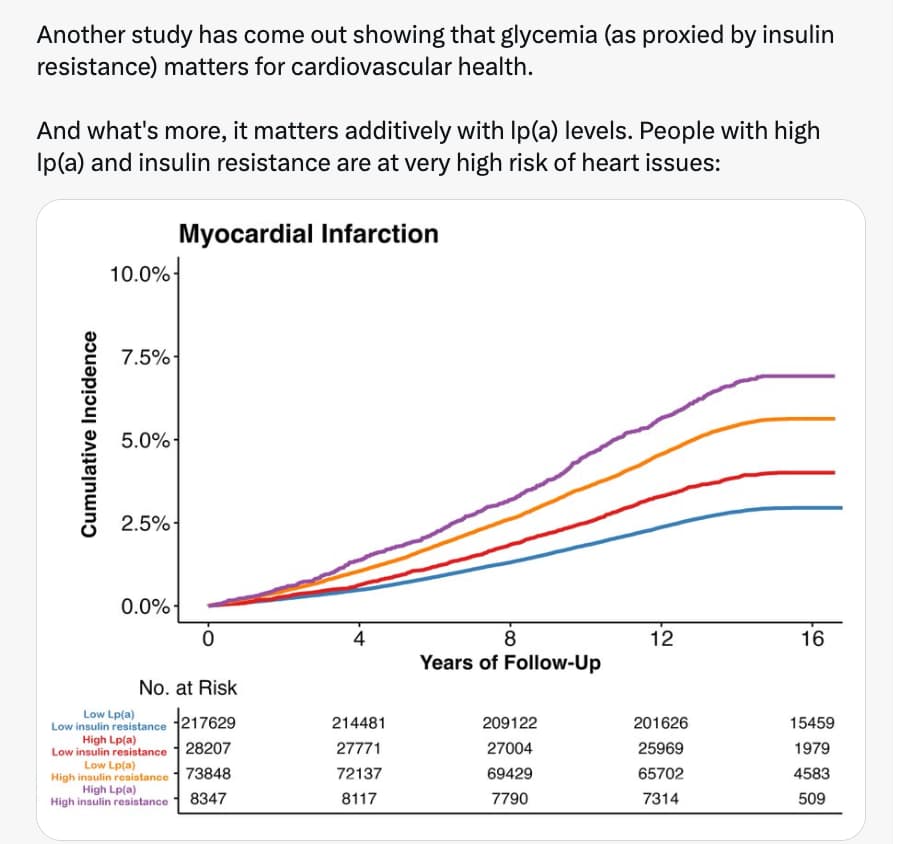
2 Likes
"Another study have come out showing glycemia…"?
Statins have been approved and studied to reduce risk in diabetics for a long time, who have high risk.
But you can’t get atherosclerosis with low apoB + Lp(a) for long as the genetic studies show. Ironically people believe insulin sensitivity does this.
1 Like
I just wanted to check this, so used this prompt:
and here is the result:
Atherosclerosis is fundamentally a disease of subendothelial lipoprotein retention and subsequent immune response. While apolipoprotein B (apoB) is the necessary causal agent for plaque formation, and Lipoprotein(a) [Lp(a)] is an independent causal risk factor, driving both to physiological minimums does not confer absolute immunity against atherogenesis.
Atherosclerosis can still progress with minimal circulating apoB and Lp(a) if endothelial permeability is compromised, vascular matrix proteins are modified, or the immune system is hyper-activated.
Here is the verified scientific and clinical consensus on lipid-independent atherogenic pathways.
Part 3: Claims & Verification
-
Claim 1: Residual Inflammatory Risk Drives Atherogenesis Independent of Lipids
- Mechanistic Summary: Even when atherogenic lipoproteins are aggressively lowered, persistent systemic inflammation—typically measured by high-sensitivity C-reactive protein (hsCRP)—drives endothelial dysfunction, upregulates adhesion molecules, and activates macrophages into foam cells.
- Evidence Level: Level A/B (Human Meta-analyses / Human RCTs).
- Supporting Evidence: The CANTOS trial demonstrated that inhibiting Interleukin-1β (a pro-inflammatory cytokine) significantly reduced major adverse cardiovascular events (MACE) without any reduction in apoB or LDL-C. Meta-analyses confirm that elevated baseline hsCRP predicts plaque progression regardless of statin or PCSK9 inhibitor intensity.
- External Verification: Residual inflammatory risk after contemporary lipid lowering therapy (2021)
-
Claim 2: Mechanical Stress and Hypertension Induce Endothelial Permeability
- Mechanistic Summary: Chronic hydrostatic pressure and disturbed shear stress physically damage the single-cell layer of the endothelium. This mechanotransduction downregulates protective nitric oxide (NO) synthase, forces cytoskeletal changes that widen intercellular gaps, and increases vascular permeability. This allows even trace amounts of circulating apoB to penetrate and become trapped in the intima.
- Evidence Level: Level C (Human Observational / Clinical Cohorts).
- Supporting Evidence: Clinical pathology confirms that structural alterations in resistance arteries and endothelial dysfunction often precede overt hypertension and are strictly correlated with future cardiovascular events.
- External Verification: Endothelial Dysfunction in Hypertension: Current Concepts and Clinical Implications (2022)
-
Claim 3: Clonal Hematopoiesis of Indeterminate Potential (CHIP) Accelerates Plaque Formation
- Mechanistic Summary: As humans age, somatic mutations in hematopoietic stem cells (commonly in DNMT3A, TET2, ASXL1, and JAK2 genes) create mutant leukocyte clones. These clones drive a hyper-inflammatory macrophage phenotype that significantly increases atherothrombotic risk entirely independent of plasma lipid levels.
- Evidence Level: Level C (Human Cohort Studies) and Level D (Pre-clinical).
- Translational Gap: FLAGGED. The epidemiological association in humans is undeniable (CHIP roughly doubles the risk of coronary heart disease). However, the specific molecular pathways (e.g., TET2-driven chemokine overexpression) are heavily derived from Tet2 knockout hypercholesterolemic mice. How these specific macrophage pathways translate directly to human interventions remains unverified.
- External Verification: Clonal Hematopoiesis and Risk of Atherosclerotic Cardiovascular Disease (2017)
-
Claim 4: Advanced Glycation End-Products (AGEs) Modify the Vascular Matrix
- Mechanistic Summary: In states of impaired glucose tolerance, non-enzymatic glycation forms AGEs which cross-link with extracellular matrix proteins (like collagen), causing arterial stiffening.Binding to their receptor (RAGE) triggers intracellular oxidative stress and inflammatory cascades (NF-κB pathway), accelerating atherogenesis regardless of circulating apoB concentrations.
- Evidence Level: Level C (Human Cohorts) and Level D (Pre-clinical).
- Translational Gap: FLAGGED. Human studies show a strong correlation between AGE accumulation (via skin autofluorescence or serum) and atherosclerosis severity. However, claims that exogenous (dietary) AGEs directly cause plaque rupture rely heavily on high-fat, high-AGE feeding trials in genetic (db/db) murine models, which do not perfectly mirror human metabolic responses.
- External Verification: Advanced Glycation End Products: Building on the Concept of the “Common Soil” in Metabolic Disease (2020)
Knowledge Gaps & Actionable Insights
To achieve maximum longevity and cardiovascular risk mitigation, driving apoB and Lp(a) down is necessary but mathematically incomplete. Complete risk mitigation requires suppressing systemic inflammation (maintaining hsCRP well below 1.0 mg/L), maintaining strict normoglycemia to prevent matrix glycation, and optimizing blood pressure to preserve endothelial integrity.
The primary knowledge gap lies in the clinical management of CHIP. We currently lack human RCTs demonstrating whether targeted anti-inflammatory agents or specific lifestyle interventions can neutralize the cardiovascular risk conferred by these somatic mutations.
Would you like me to pull the clinical data on current pharmacological interventions (like colchicine or specific GLP-1 RAs) that are being used to target the residual inflammatory risk pathways?
1 Like
The key point is for long, which you missed:
But you can’t get atherosclerosis with low apoB + Lp(a) for long.
How does reducing inflammation independently of apoB+Lp(a) having an effect, refute my claim? Is it the same with smoking? It has nothing to do with it.
Find a single case of a heart attack following plaque rupture with total abetalipoproteinemia (LDL = 0).
1 Like
I’m not sure what you’re saying here. Are you saying you can’t get long-term atherosclerosis with low APOB and LPA? Or are you saying you need to have LP(a) for a long time to achieve atherosclerosis? I’m not sure what “for long” is referring to.
Yeah you can’t get atherosclerosis if you have low apoB + Lp(a) for a long time. At least the atherosclerosis we are familiar with today. Of course people have CVD with low apoB and Lp(a) in clinical trials which are short term. They’ve already had 40+ yrs of normal or high cumulative exposure.
You seem to have forgotten the Cohen 2006 study with PCSK9 loss of function, and that was only a slight decrease in LDL-C but over a long time.
3 Likes

I’m not sure that the above evidence hierarchy, which follows the conventional narrative, accurately reflects the underlying biological phenomena.
More precisely, I would put reliable human observational studies, like NANHES and Framingham, in place 2 together with human RCTs.
My reasoning is that big data + long duration + little accuracy is a complement to small data + small duration + high accuracy.
indisputably so, in big data = observational studies, the size of the sample makes inference to the whole population very rigorous. In other words, epistem ic uncertainty, related to the size of the sample compared to the size of the population, is almost nil. And we are almost sure not to miss very low or very high percentile data, that is, we are reasonably sure that the studied sample embraces the whole variability of the population.
1 Like
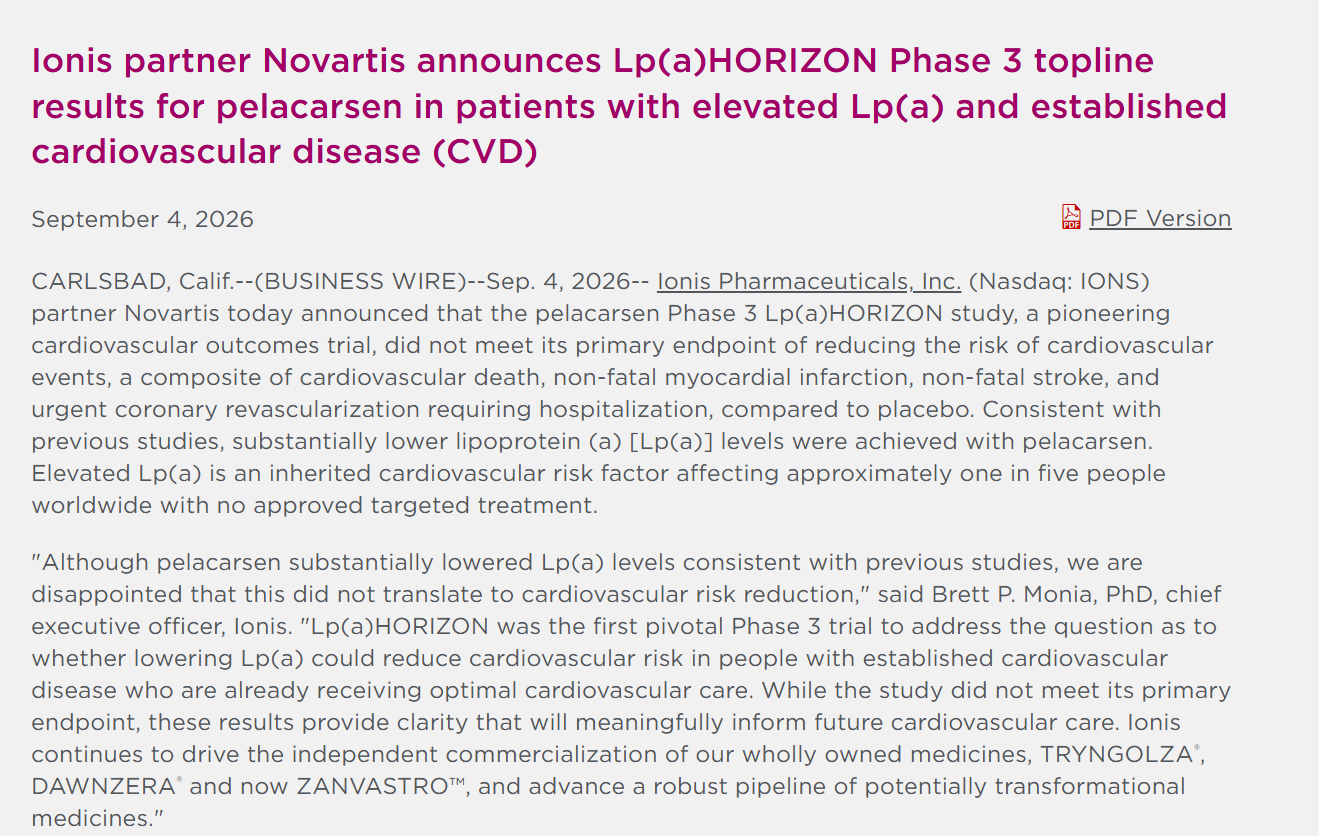
Very interesting. Disappointing, because what does it mean for future drugs designed to lower Lp(a)? Two things: this is in people with established CVD, and not designed to find out how this would impact future events among people without established CVD, but high Lp(a) - that might have demanded a much larger cohort over a longer span of time. Still, not good  …
…
1 Like
Reading these results of the Pelacarsen trials (reduced Lp(A) but did not meaningfully reduce CV events) made me think of another drug (lecanemab) that reduced the targeted substance (amyloid) but did not meaningfully impact cognition. And it seems that inflammation is the underlying culprit that drives both.
I’ve read that if both APOB and inflammation are low, that Lp(a) is much less dangerous. We know that lifestyle impacts inflammation to some degree, and maybe a couple of supplements also do (astaxanthin?). I personally do not want to try colchicine. What else is there . . . .?
1 Like
I agree with you. I have meaningfully reduced cholesterol with berberine (was low dose and not every day and this was proven with blood test). However I also take PEA daily past three weeks. And am looking into BHRT at 65 to also maintain my good health status. I have very low inflammatory markers however my LP (a) is 187. I eat a fairly high fibre diet, plenty fresh fruit and veggies including high pulp juiced veggies daily, moderate exercise (I use an indoor rower 15 mins and 10k steps a day) good sleep etc. A recent stress echo report said excellent so am happy with that. I have supplements now and again such as astaxanthin 12 mg, magnesium, daily D3 K2, berberine, taurine, one cap microvitamin every now and then. My main focus of health is on good quality nutrition and fresh, clean air and sleep.
3 Likes
1 Like
Here’s an excellent in-depth analysis of why the recent IL-6 drug as well as the Lp(a) drug may have failed, and what researchers can/should do to improve the quality of future studies:
2 Likes
Google Gemini Summary:
 The Core Issue
Two highly anticipated, massive clinical trials investigating heart disease treatments recently failed to reduce cardiovascular events (like heart attacks and strokes).
- The ZEUS Trial: Tested ziltivekimab (an anti-inflammatory IL-6 antibody).
- The HORIZON Trial: Tested pelacarsen (a drug designed to lower the genetic risk factor Lp(a)).
Both drugs successfully lowered their target blood markers but failed to improve actual patient outcomes.
 Why the Trials Failed
Topol argues that these failures do not disprove the “inflammation hypothesis” (the fact that artery inflammation causes heart attacks). Instead, they reveal a fundamental flaw in how the medical community measures risk.
- Surrogate Blood Markers are Inaccurate: Doctors have relied on blood tests like hs-CRP and IL-6 as stand-ins (surrogates) for artery inflammation. However, these markers are highly non-specific. A person can have high hs-CRP from a common cold or joint pain without actually having inflamed coronary arteries.
-
Flawed Patient Enrollment:
- The ZEUS trial enrolled patients with chronic kidney disease because they naturally have high blood inflammation markers, but many likely lacked actual inflammation in their coronary arteries, diluting the drug’s measurable benefit.
- The HORIZON trial targeted Lp(a), a lipid particle that is most dangerous when it carries “oxidized phospholipid (OxPL)” cargo. Standard blood tests only measure total Lp(a), not the specific toxic cargo that triggers arterial inflammation.
 The Solution: AI Artery Imaging
Topol highlights a major breakthrough: we no longer need to guess using blood tests.
- What it is: A newly FDA-authorized technology (developed by Caristo Diagnostics, a University of Oxford spinout) uses AI to analyze routine chest CT scans.
- How it works: It measures the Fat Attenuation Index (FAI)—the level of inflammation in the fat surrounding the coronary arteries.
- Why it matters: Studies show a poor correlation between blood markers (hs-CRP) and actual coronary inflammation. AI imaging can identify people with completely normal cholesterol who have dangerously inflamed arteries, as well as people with zero calcium buildup who are still at massive risk for a heart attack.
 The Bottom Line
Moving forward, clinical trials for heart disease should stop relying on vague blood biomarkers. Instead, researchers should use low-cost, AI-driven CT scans to enroll patients who have proven coronary artery inflammation.
What should patients do now? If you have high Lp(a) or genetic heart risks, continue aggressive preventative measures—such as managing blood pressure, using statins to lower LDL cholesterol, exercising, and eating a healthy diet—while the medical community catches up to local inflammation imaging.
Would you like me to clarify how the AI technology analyzes the CT scans, or would you like more details on the specific drugs mentioned in the trials?
4 Likes
Interestingly, dapagliflozin has some evidence that it improves FAI (the CT-based direct measure of coronary vessel inflammation noted above):
4 Likes