Yes, he was pretty thin. I met with him when he was working at CHORI (Oakland) about 20 years ago when I was first getting into longevity. A super nice guy and very open to enthusiasts. I have no idea of his dietary habits, but he was big into micronutrients so I suspect he had a good diet and vitamin regimen (he was co-founder of the company Juvenon that sold a combination alpha lipoid acid and acetyl-L-carnatine (I believe). No idea if he ever tried rapamycin - but I suspect not.
7 Likes
2024 is not a good year for longevity experts. RIP Bruce Ames. You will be missed.
4 Likes
Dr. Eric Verdin of the Buck institute takes the supplements to cure the base deficiencies - Vitamin D3, B12, Omega 3s, and Creatine.
He probably should add Magnesium as well for Vitamin D3 absorption.
5 Likes
90% of Americans are deficient in choline. Here’s a brief guide to the 3 types:
Which is the best Choline - Neurologica.
However, be aware that increased choline can lead to increased chance of lethal prostate cancer. Hence, a deficiency may not be bad if prostate cancer is a risk for you.
5 Likes
According to Dr Brad, 97% of Americans are deficient in potassium.
2 Likes
How to optimise your supplements.

Modern Healthspan talks about common deficiencies in elderly Canadians.
Top deficiency - vitamin D.
Next is B-12 and Folate.
Finally, if you take zinc, you should also take copper in a 10:1 ratio.
6 Likes
Best sports drink… 1/2 coconut water, 1/2 tomatoe juice and a pinch of salt.
1 Like
Copper is very important. I was supplementing just zinc for a long time. I’ve reduced zinc to 3x a week and take copper with it, and also take chlorophyll in the form of copper chlorophyllin 7x a week morning and night.
2 Likes
@DeStrider @AustraliaLongevity
I’m glad you posted this. It was just this week, when I was hunting for a good zinc lozenge to have on hand in the event I start feeling sick, my friend said make sure you also take copper.
Your post inspired me to look at my multi and I see my daily blueprint capsule contains 15mg of zinc, but alas, no copper.
Do you happen to know if we need to take copper daily to offset it, or is this the kind of thing we could take a couple times per week (trying desperately not to add things to my too big stack! 
The doctor in the video said there are combination zinc/copper supplements available.
2 Likes
Every time I take zinc I make sure to take copper.
2 Likes
NOW has a very good Zinc + Copper (30 mg + 0.3 mg) product which is about $.08 a cap.
2 Likes
Doesn’t have the right ratio does it? 30mg zinc, 0.3mg copper. Don’t you need 3mg copper with that?
1 Like
Experts range in their recommendation from a ratio of 1:8 to 1:80 for zinc to copper. Whichever you feel most comfortable with.
I also take a multivitamin with 0.5 mg of copper and 11 mg of zinc. So my ratio would be 1:50.
If you want more copper, you can try this:
2 Likes
If you guys are concerned about copper deficiency or excess, it would probably be a good idea to check your Ceruloplaslmin level most importantly and also your serum copper level.
4 Likes
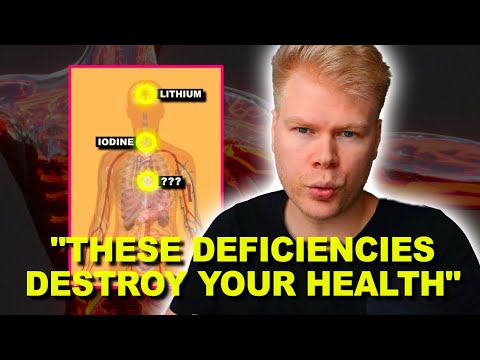
A step by step guide to the body and which organs need what for good health. Specifically discussing most common deficiencies.
2 Likes
For people who prefer to read an overview rather than watch the video:
CGPT5.1 Video Summary
A. Executive Summary (150–300 words)
The video is a systems-level tour of human physiology framed through organ-specific micronutrient demands. The central thesis: many common, non-specific symptoms (fatigue, brain fog, skin problems, mood and hormone issues) often reflect chronic, subclinical deficiencies in a small set of vitamins, minerals, and fatty acids, and these deficits are organ-specific rather than global.
For the brain, the speaker highlights DHA as a structural omega-3 that enables synaptic signaling, magnesium as a regulator of glutamate–GABA balance and mitochondrial function, and low-dose lithium as a neuromodulator linked epidemiologically to lower suicide and dementia rates. For the thyroid, iodine provides the raw material for T4/T3, while selenium drives T4→T3 conversion and protects the gland from oxidative damage; an imbalance between the two can worsen thyroid stress.
Skin depends heavily on vitamin A (cell turnover, barrier function, sebaceous output) and zinc (wound healing, antimicrobial and anti-inflammatory roles, hormone modulation). Heart function relies on CoQ10 for ATP generation in mitochondria and chloride as a less-discussed electrolyte in volume and electrical rhythm control. Lungs require antioxidant defenses, particularly vitamin E and glutathione.
The adrenals and kidneys are framed as sodium–potassium-dependent systems, with vitamin C concentrated in the adrenals and potassium deficiency presented as very common. The liver is described as B-vitamin-dependent (phase I) and amino-acid-dependent (phase II) for detoxification. Muscles rely on the calcium–magnesium contraction–relaxation dyad; bones on vitamin D, K2, and boron to direct and utilize calcium; and reproductive organs on zinc and copper balance for hormone production and mental health. The speaker closes by advocating nutrient testing and hair mineral analysis over standard serum micronutrient panels.
B. Bullet Summary (12–20 bullets)
- Each organ has distinct “co-factor” requirements; symptoms can often be mapped to specific micronutrient deficits.
- Brain health: DHA is positioned as a key structural fat in neuronal membranes; low intake is linked to cognitive and mood issues.
- Magnesium is portrayed as central for brain excitability (glutamate vs GABA), mitochondrial function, and neuroprotection; subclinical deficiency is claimed to be widespread.
- Low-dose lithium is framed as a natural mood stabilizer moderating sodium flow in neurons, with ecological data linking higher water-lithium levels to lower suicide and possibly Alzheimer’s risk.
- Thyroid: iodine supplies the substrate for T4/T3, while selenium is required for T4→T3 deiodination and antioxidant protection of the gland.
- Over-supplementing iodine without adequate selenium is said to increase oxidative stress in the thyroid.
- Skin: vitamin A regulates keratinocyte turnover and barrier integrity; deficiency leads to rough skin and clogged pores.
- Zinc supports wound healing, local immune function, antimicrobial defense, and hormonal regulation; zinc supplementation can unmask copper overload via transient acne.
- Heart: CoQ10 in cardiac mitochondria is critical for ATP production; low levels are associated with reduced exercise tolerance and heart failure.
- Chloride is emphasized as an underappreciated electrolyte for volume status, blood pressure, and cardiac electrical conduction.
- Lungs rely on antioxidants (vitamin E, glutathione); low glutathione is associated with chronic lung disease.
- Adrenals concentrate vitamin C for steroidogenesis and depend on sodium and potassium for blood pressure control.
- Potassium is described as widely deficient and essential for kidney function, blood pressure control, and kidney-stone prevention.
- Liver detox: phase I relies on B-vitamin-dependent enzymes; phase II conjugation uses amino acids, especially sulfur-containing ones (cysteine, methionine, taurine).
- Muscles require calcium for contraction and magnesium for relaxation; relative magnesium deficiency drives cramps and stiffness.
- Bones require vitamin D for calcium absorption, vitamin K2 to direct calcium into bone rather than soft tissue, and boron to improve mineral utilization and sex-hormone support.
- Reproductive organs depend on zinc for testosterone, sperm, and ovulatory function, and on appropriate zinc–copper balance for estrogen handling and mental health.
- The speaker is critical of standard serum micronutrient tests and favors hair mineral analysis for assessing long-term status.
Full Summary here:
3 Likes
Matt Kaeberlein and Tommy Wood on Optispan
Neuroscientist Reveals What’s Actually Working for Brain Longevity .
I am always down for a @mkaeberlein - fresh Kaeberlein interview. 
4 Likes
Transcript?
1 Like