Chemically induced reprogramming to reverse cellular aging

TGF-β is very interesting in aging, but it has very complex functions, It is in some cells a driver of aging, and is up regulated in aging and cancer. But “TGF-β signaling elicits complicated effects (e.g., beneficial or detrimental), including neuroprotection, gliosis, hydrocephalus, and vascular fibrosis, depending on the cellular, spatial, and temporal context”. So it needs to be balanced in a way that reminds me of mTOR. It definitely needs more research before it can be targeted for longevity.

The Conboys have also studied it and its relation to aging.

1 Like
1 Like

It is irresponsible of David Sinclair to make these kind of claims. I still think he’s been a force for good overall, but I can’t help think that this is going to lead to people trying these cocktails. I don’t understand why he can’t be more measured with his language. It looks like an interesting first step but that’s all it is.

1 Like

With all due respect to Matt, he should probably avoid being named in the same article as Brenner, who seem to have David Sinclair living rent free in his head. It seems to affect his language saying things like “nonsense”, show some respect to David Sinclair and achievements, least of all making many of us interested in the field?

Also the Brenner Vs. Sinclair saga has to end up in a cage fight, I would buy tickets… :rofl:
They remind me of the two magicians in The Prestige.

3 Likes

I think Matt is just getting tired of the hype that David’s announcements generate all over the Internet and news… the types of stories like those below are all over the web now, which might be helpful for getting people excited about longevity research, but I think most people will be disappointed by the reality, and that breeds skepticism and “longevity” fatigue because the promises never come true.

It seems like David comes out with these every 6 months…

Age Reversal Breakthrough: Harvard/MIT Discovery Could Enable Whole-Body Rejuvenation

1 Like

It’s because David Sinclair is the poster boy for Longevity research. He popularized resveratrol, everyone knew about that, and gossiped about red wine, regardless how wrong it was. The problem you are mentioning is for everything, people just need critical thinking. It just not a good look to dogpile on Sinclair who is a Harvard scientist regularly publishing in Nature with his lab.

Instead I think Matt should make David join his cause, that would be better…

1 Like

Also it is very common for people like Sinclair to have weird beliefs, like Linus Pauling.

Imagine a black box which, when you pressed a button, would generate a scientific hypothesis. 50% of its hypotheses are false; 50% are true hypotheses as game-changing and elegant as relativity. Even despite the error rate, it’s easy to see this box would quickly surpass space capsules, da Vinci paintings, and printer ink cartridges to become the most valuable object in the world. Scientific progress on demand, and all you have to do is test some stuff to see if it’s true? I don’t want to devalue experimentalists. They do great work. But it’s appropriate that Einstein is more famous than Eddington. If you took away Eddington, someone else would have tested relativity; the bottleneck is in Einsteins. Einstein-in-a-box at the cost of requiring two Eddingtons per insight is a heck of a deal.

What if the box had only a 10% success rate? A 1% success rate? My guess is: still most valuable object in the world. Even an 0.1% success rate seems pretty good, considering (what if we ask the box for cancer cures, then test them all on lab rats and volunteers?) You have to go pretty low before the box stops being great.

I thought about this after reading this list of geniuses with terrible ideas. Linus Pauling thought Vitamin C cured everything. Isaac Newton spent half his time working on weird Bible codes. Nikola Tesla pursued mad energy beams that couldn’t work. Lynn Margulis revolutionized cell biology by discovering mitochondrial endosymbiosis, but was also a 9-11 truther and doubted HIV caused AIDS. Et cetera. Obviously this should happen. Genius often involves coming up with an outrageous idea contrary to conventional wisdom and pursuing it obsessively despite naysayers. But nobody can have a 100% success rate. People who do this successfully sometimes should also fail at it sometimes, just because they’re the kind of person who attempts it at all. Not everyone fails. Einstein seems to have batted a perfect 1000 (unless you count his support for socialism). But failure shouldn’t surprise us.

3 Likes

Its interesting, because Matt has said in past interviews that he agrees with David on probably 95% or 98% of the science. Its just when David steps over the line that isn’t supported and starts claiming “age reversal breakthroughs” that they differ.

I prefer Matt’s more measured response but I can also see why David does it… have to keep the lab in the news, have to keep publishing, have to keep the positive news articles around the technology to keep the investors putting money into all the startups he’s spinning out…

2 Likes

Brenner:

today @davidasinclair is telling the world that he has achieved age reversal with chemical cocktails

Kaeberlein:

Sad sign of the times this even needs to be said, but headlines claiming @Harvard researchers developed a chemical approach to reverse aging are not true. Nobody has a drug to reverse aging. @elonmusk and everyone else, please don’t start taking anything based on this nonsense twitter.com/stacyliberator…

Sinclair:

Grateful to share our latest publication: We’ve previously shown age reversal is possible using gene therapy to turn on embryonic genes. Now we show it’s possible with chemical cocktails, a step towards affordable whole-body rejuvenation 1/17 aging-us.com/article/204896…

Title of the Article:

Chemically induced reprogramming to reverse cellular aging

Fourth paragraph of the article’s introduction:

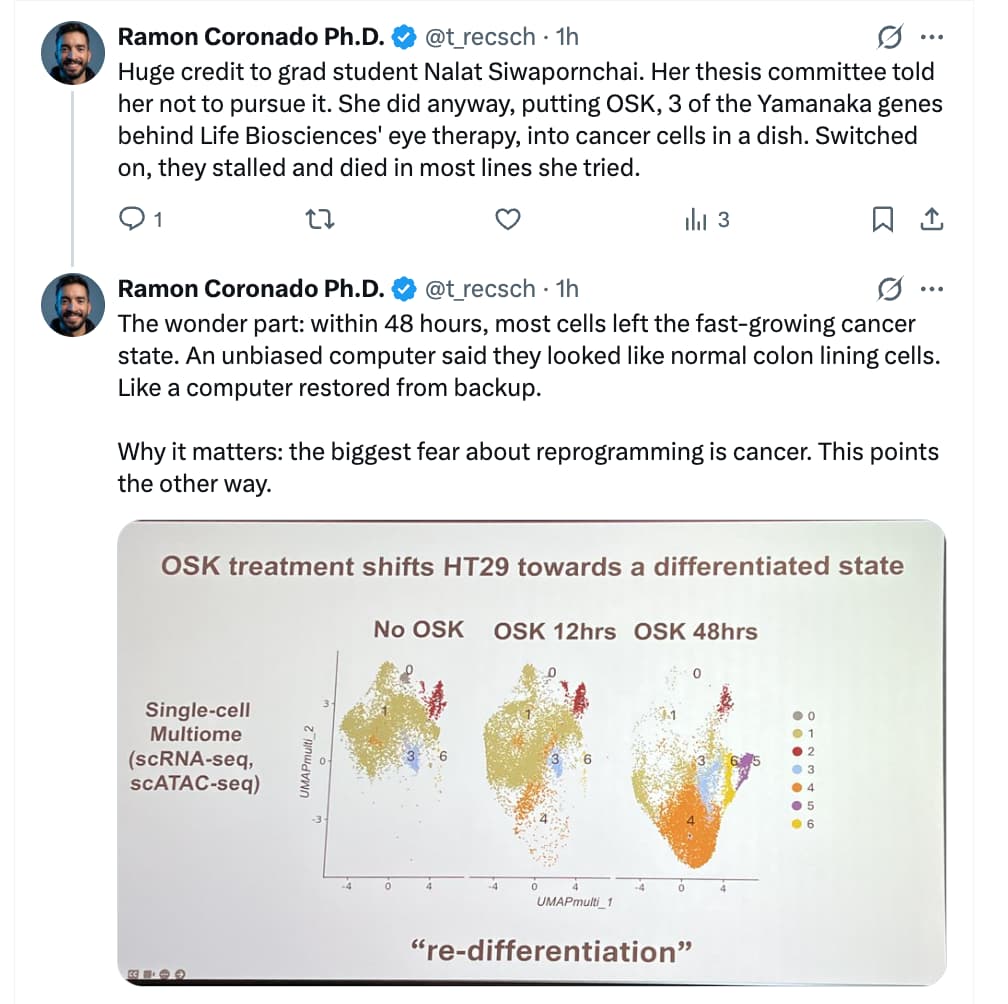
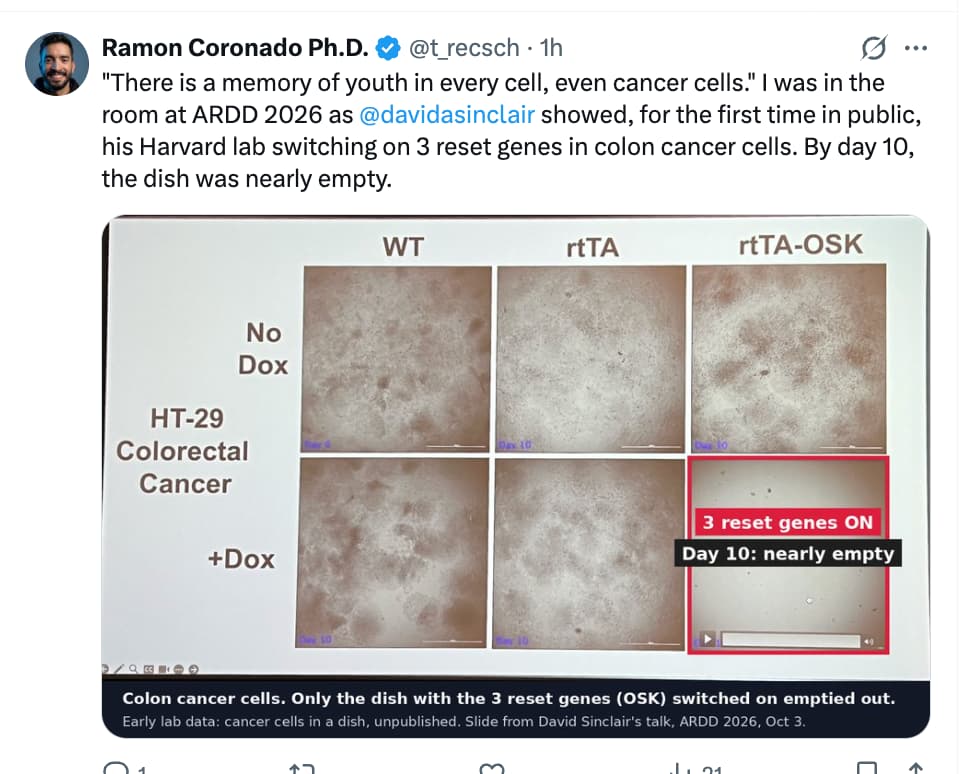
The ability of the Yamanaka factors to erase cellular identity raised a key question: is it possible to reverse cellular aging in vivo without causing uncontrolled cell growth and tumorigenesis? Initially, it didn’t seem so, as mice died within two days of expressing OSKM. But work by the Belmonte lab, our lab, and others have confirmed that it is possible to safely improve the function of tissues in vivo by pulsing OSKM expression [22, 23] or by continuously expressing only OSK, leaving out the oncogene c-MYC [7, 8]. In the optic nerve, for example, expression of a three Yamanaka factor combination safely resets DNA methylomes and gene expression patterns, improving vision in old and glaucomatous mice via a largely obscure mechanism that requires TET DNA demethylases [8]. Numerous tissues, including brain tissue, kidney, and muscle, have now been reprogrammed without causing cancer [7, 8, 22, 24, 25]. In fact, expression of OSK throughout the entire body of mice extends their lifespan [26]. Together, these results are consistent with the existence of a “back-up copy” of a youthful epigenome, one that can be reset via partial reprogramming to regain tissue function, without erasing cellular identity or causing tumorigenesis [7–9].

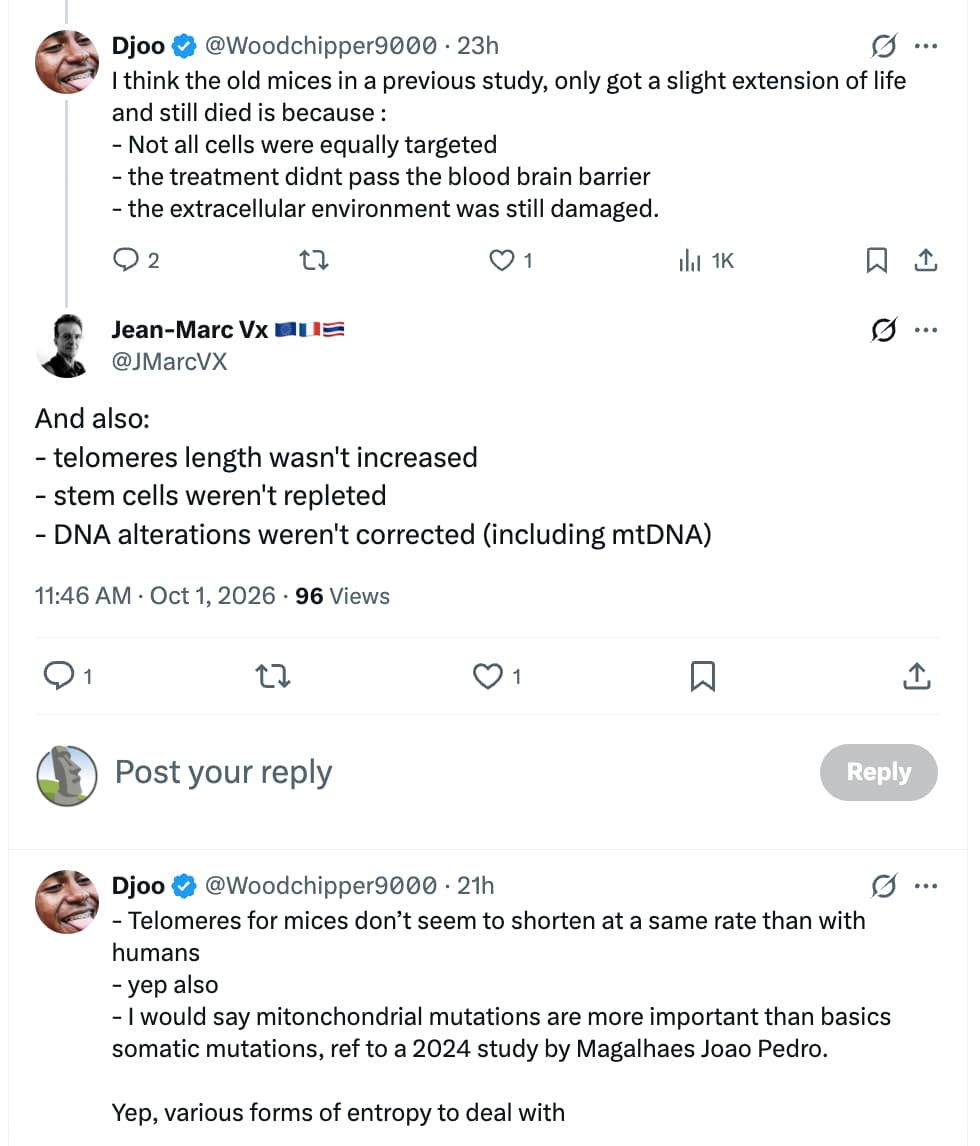
Winner of the accurately informative tweet award - Kaeberlein. He said it is the headlines that are the problem. He made no statement on the merits of the article.

I am reading and re-reading the article. Until then, I will suspend judgment.

3 Likes

The actual journal article is solid. They hype around it is of course super wild. And I think a lot of big names don’t like that Sinclair sometimes fans the flames of hype a little. Most scientists are always downplaying their work to avoid having anyone think they’re claiming anything more than what is 100% supported by evidence.

do you think SIRT2104 is the key ingredient in the study? the rest of it are supplements that you can buy on Amazon, it seems.

Here’s a list Sirtuin activators-

They’re all sirt1 and sirt6 activators.

Sirt3 is below:

Honokiol (magnolia), dihydromyricetin, and salidroside (rhodiola), among others.

https://sinclair.hms.harvard.edu/people/thomas-dixon-mcdougall

More generally, shared across 2c and 7c treatments was an upregulation in the phosphorylation of mitochondrial proteins (Figure 5A). In addition, for 2c-treated fibroblasts, proteins involved in lipolysis and constructing muscle were also increasingly phosphorylated. Although 7c treatment reduced splicing damage (Figure 2E), we observed no statistically significant changes in the phosphorylation of proteins required for mRNA splicing. Overall, we determined that 2c and 7c treatment share a common mechanism in upregulating OXPHOS activity by phosphorylating mitochondrial proteins, with 7c having a stronger effect relative to 2c. We also observed that 2c treatment activated additional pathways (lipolysis and muscle contraction) compared to 7c.

2 Likes

In the same theme

Chemical reprogramming ameliorates cellular hallmarks of aging and extends lifespan

https://www.embopress.org/doi/full/10.1038/s44321-025-00265-9

Abstract

The dedifferentiation of somatic cells into a pluripotent state by cellular reprogramming coincides with a reversal of age-associated molecular hallmarks. Although transcription factor induced cellular reprogramming has been shown to ameliorate these aging phenotypes in human cells and extend health and lifespan in mice, translational applications of this approach are still limited. More recently, chemical reprogramming via small molecule cocktails have demonstrated a similar ability to induce pluripotency in vitro, however, its potential impact on aging is unknown. Here, we demonstrated that chemical-induced partial reprogramming can improve key drivers of aging including genomic instability and epigenetic alterations in aged human cells. Moreover, we identified an optimized combination of two reprogramming molecules sufficient to induce the amelioration of additional aging phenotypes including cellular senescence and oxidative stress. Importantly, in vivo application of this two-chemical combination significantly extended C. elegans lifespan and healthspan. Together, these data demonstrate that improvement of key drivers of aging and lifespan extension is possible via chemical-induced partial reprogramming, opening a path towards future translational applications.

Charles Brenner had a direct criticism of one molecule:

https://www.twitter.com/CharlesMBrenner/status/1944525395216478494

tranylcypromine is a monoamine oxidase inhibitor that can cause severe hypertension

please don’t take tranylcypromine or ALK5 inhibitors if you are not a worm

O3: do a summary, critique and identify what is novel in

TL;DR

Schoenfeldt et al. show that a brief “partial-reprogramming” pulse with just two small molecules rejuvenates aged human cells in vitro and — when fed to C. elegans — lengthens median life-span by ~42 %. The work establishes a minimalist, non-genetic route to age-reversal, but the evidence is still limited to cells and worms, and key translational and safety questions remain open.


1. What the paper did — succinct summary

Level Main findings Key read-out(s)
Human fibroblasts & endothelial cells (aged donors) Short (4-day) exposure to a seven-compound “7c” chemical reprogramming cocktail: ↓ γ-H2AX foci (DNA damage), ↓ epigenetic age (Horvath clock), restored nuclear-cytoplasmic compartmentalisation, ↓ senescence markers, ↓ ROS Immunostaining, RRBS, Seahorse, SA-β-gal
Optimisation screen An iterative drop-out/combinatorial screen distilled the full cocktail down to two molecules (“2c”) that retained ≥80 % of the rejuvenation read-outs. High-content imaging
Worm longevity Lifelong exposure to 2c in food: +42.1 % median and +25 % maximum life-span, improved thrashing & pharyngeal pumping. Kaplan-Meier, behavioural assays
Mechanistic hints Transcriptomics points to restoration of nuclear envelope integrity, chromatin remodelling (↓ H3K9me3/H3K27me3), and NRF2-centred oxidative-stress response. RNA-seq, CUT&RUN

(PubMed, Fight Aging!, Nature)


2. Why it matters — what is novel here?

  1. First peer-reviewed proof that fully-chemical partial reprogramming reverses multiple aging hallmarks in human cells. Earlier chemical protocols produced iPSCs; rejuvenation per se had only been shown with transcription-factor (OSKM/OSK) methods. (Fight Aging!)

  2. A minimalist “2c” recipe. Previous chemical iPSC recipes needed 7-10 compounds and weeks of treatment; the authors cut this to two molecules and four days, making systemic delivery and GMP manufacturing far more plausible. (PubMed)

  3. In-vivo benefit without gene therapy. Demonstrating organismal life-span extension with oral small molecules moves the field beyond viral or transgenic interventions and avoids integration-driven tumour risk. (Nature)


3. Critical appraisal

Aspect Strengths Caveats / open questions
Experimental design Multi-parameter hallmarks panel; blinded image-analysis; orthogonal validation (epigenetic clock, transcriptomics, functional assays) No mammalian in-vivo model; fibroblasts from only two aged donors — limited genetic diversity
Mechanistic depth Integrates DNA damage, chromatin marks, redox and transcriptome; hints at NRF2 and nuclear‐lamina pathways Largely correlative; no loss-of-function or target-engagement data for the two compounds
Translatability Pure small molecules; short exposure window; oral delivery feasible Compounds not yet disclosed publicly (patent-protected); pharmacokinetics, blood-brain permeability, and long-term safety unknown
Safety Avoids c-Myc & genomic insertion; no teratomas in worms Dedifferentiation risk in proliferative mammalian tissues not assessed; off-target toxicity of chronic 2c not tested
Statistics & reporting Appropriate mixed-effects models for cell-based assays; full Kaplan-Meier with >100 worms/arm Power calculations absent; some supplementary data (compound IDs, raw RNA-seq) under embargo

Conflict-of-interest: two authors are co-founders of Epiterna SA, which holds IP on the compounds (PubMed).


4. Where next? — constructive suggestions

  1. Mammalian validation: Test 2c in naturally aged mice, focusing first on a tightly-defined window (e.g., monthly pulses) and on tissues with low tumour propensity (eye, muscle).
  2. Target deconvolution: Use CETSA or photo-affinity probes to pin down direct protein targets; CRISPRi screens could reveal essential mediators.
  3. Safety filter: Conduct GLP 28-day toxicity in two species, with particular attention to proliferation markers and karyotype stability.
  4. Delivery optimisation: Formulate lipophilic pro-drugs or nanoparticle encapsulation to improve bioavailability and tissue specificity.
  5. Biomarker development: Pair treatment with longitudinal methyl-clock or proteomic age assays to detect early efficacy signals in future human trials.

Bottom line

The study is an important proof-of-principle that minimal chemical cocktails can rewind cellular age and translate into organismal life-span gains. It narrows the gap between elegant reprogramming biology and a realistic anti-aging therapeutic, but definitive evidence in mammals, rigorous mechanistic work, and transparent disclosure of the compounds will be essential before clinical excitement can be justified.

O3 on the 7c

Overview
The seven compounds you listed span approved prescription drugs, herbal extracts and laboratory‐only research reagents. Their human safety data therefore range from well-characterised (valproic acid, tranylcypromine, forskolin) to almost totally inferential (CHIR99021, DZNep, TTNPB, RepSox). Below is a molecule-by-molecule summary of the most important human-relevant risks, starting with those for which real-world clinical experience exists.


1 Valproic acid (VPA)

Key hazards Practical implications
Major teratogen – up to 30–40 % risk of neurodevelopmental problems and 10 % risk of major malformations when taken in pregnancy (NCBI, European Medicines Agency (EMA)) Contra-indicated in pregnancy and in women/girls of child-bearing potential unless no alternative works; EU/UK Pregnancy Prevention Programme required.
Hepatotoxicity & pancreatitis (boxed FDA warning) (FDA Access Data) Baseline and periodic liver-function tests; warn patients about early “flu-like” hepatitis symptoms.
Other notable effects – weight gain, thrombocytopenia, endocrine disturbances (PCOS in women), tremor, hyperammonemia (Wikipedia) Monitor weight, platelets and ammonia; discuss reproductive-hormone changes.
Emerging signal – possible neurodevelopmental risk in offspring of men exposed in the 3 months before conception (European Medicines Agency (EMA)) EMA now advises counselling and considering sperm banking.

2 Tranylcypromine (TCP)

Key hazards Practical implications
Hypertensive crisis after ingesting tyramine-rich foods or interacting drugs (Mayo Clinic, FDA Access Data) Strict low-tyramine diet; 2-week wash-out before/after most sympathomimetic or serotonergic drugs.
Serotonin-syndrome risk with SSRIs, SNRIs, triptans, linezolid, etc. (FDA Access Data, NCBI) Absolute contra-indication; allow appropriate wash-out periods.
CNS & psychiatric – agitation, insomnia, suicidal ideation (class warning for all antidepressants) (Mayo Clinic, Mayo Clinic) Close early-treatment monitoring.
Orthostatic hypotension / hypertensive swings, hepatic injury (rare) (Mayo Clinic) Baseline BP & LFTs; educate about postural dizziness and red-flag liver symptoms.

3 Forskolin (Coleus forskohlii extract)

Key hazards Practical implications
Cardiovascular instability – hypotension, reflex tachycardia/arrhythmia (Memorial Sloan Kettering Cancer Center, RxList) Avoid in patients on antihypertensives, vasodilators, β-blockers or with cardiac disease.
Bleeding tendency via platelet inhibition (Medscape Reference, Verywell Health) Caution/avoid with anticoagulants, NSAIDs and bleeding disorders.
Embryo-toxicity (animal) & traditional use as abortifacient (Drugs.com) Do not use in pregnancy; insufficient data for lactation.
Overall: only small, low-quality human trials; no established therapeutic dose. Treat as an unregulated supplement with unpredictable potency.

Laboratory-only small-molecule modulators

The next four compounds are reagents used in stem-cell or epigenetic research cocktails (e.g., “7-factor” or “Yamanaka-Free” reprogramming mixes). They have no approved human indication; human risk must be inferred from mechanism, in-vitro / animal data and Safety-Data-Sheet (SDS) classifications.

Molecule SDS / mechanistic hazards Why the risk matters if accidentally ingested or systemically absorbed
CHIR99021 (GSK-3 inhibitor) Acute oral toxicity Cat 2 (fatal if swallowed); skin/eye irritant; STOT-SE Cat 3 (STEMCELL Technologies, store.reprocell.com) Potent WNT/β-catenin activator – theoretical tumour-promotion with chronic exposure.
3-Deazaneplanocin A (DZNep) Very toxic if swallowed; risk of serious eye damage; possible reproductive toxicity (R62/R63) (selleckchem.com) S-adenosyl-homocysteine hydrolase inhibitor → global histone methylation loss; embryo-toxicity plausible.
TTNPB (retinoid RAR agonist) H360 “May damage fertility or the unborn child”; classified carcinogenic / teratogenic; >1000-fold more teratogenic than all-trans-retinoic acid in animals (labchem-wako.fujifilm.com, PubMed) Minute exposures during pregnancy could cause severe malformations; handle under strict reproductive-hazard precautions.
RepSox (TGF-β RI/ALK5 inhibitor) “Very toxic if swallowed”; eye/skin irritant; possible impaired fertility (R62); health damage on prolonged exposure (R48) (selleckchem.com) TGF-β blockade is pro-oncogenic in some contexts; systemic exposure uncharacterised.

Practical take-aways

  1. Only valproic acid and tranylcypromine are licensed medicines; their risk management hinges on strict patient selection, monitoring and education.
  2. Forskolin remains a poorly regulated supplement – the main human dangers are cardiovascular and bleeding-related, magnified by drug interactions and lack of batch consistency.
  3. CHIR99021, DZNep, TTNPB and RepSox are not for human use. Treat them like potent laboratory toxins: gloves, eye protection, biosafety cabinet if airborne dust is possible, dedicated pregnancy-risk signage and no food/drink in the area.
  4. In any circumstance where an individual might have been exposed to these research chemicals (spill, needle-stick, ingestion), seek immediate occupational-health advice; there is no clinical antidote and supportive care is the only option.

Bottom line: from a human-health perspective, most of this list belongs on the “handle as hazardous, not for therapeutic self-experimentation” shelf. When in doubt, keep them in the fume hood—and keep valproate and tranylcypromine under tight medical supervision.

2c is TCP and Repsox

First, using an MTS assay, we observed that while cell survival and proliferation were unaffected or enhanced by Repsox or TCP treatment respectively, proliferation was impaired by CHIR99021, DZNep, Forskolin, TTNPB, and VPA at high concentrations, in agreement with previous publications and suggesting their removal (Appendix Fig. S2B) (Paine et al, 2024; Wu et al, 2006; Jung et al, 2008; Rodriguez et al, 2013; Girard et al, 2014). In addition, DZNep has a known S -adenosylhomocysteine (SAH) hydrolase-mediated inhibitory effect on the H3K27 methyltransferase EZH2, further supporting its exclusion (Girard et al, 2014). The remaining compounds, TCP and Repsox, met the selection criteria for chemical reprogramming functional categories and were thus selected. Therefore, we next treated aged human fibroblasts with this reduced two-chemical cocktail (2c) for 6 days to determine its effect on aging hallmarks.

One issue I personally have is that DMSO (which is the vehicle and control for the above) is not inert. I asked O3 for some info on this

In a nutshell

Dimethyl-sulfoxide (DMSO) is not an inert carrier in C. elegans assays. Its impact on longevity follows a classic hormetic (“the dose makes the poison / tonic”) curve:

% DMSO (v/v) Typical lifespan effect Key remarks
≤ 0.05 % ~ 0 % change (most studies) Safe background level for routine drug delivery.
0.1 – 0.3 % Context-dependent, –2 % to +5 % Shortening reported when worms are on dead-bacteria plates, showing diet interaction. (ScienceDirect)
≈ 0.5 % Peak extension: +15 – 25 % median/mean lifespan Reproducibly extends lifespan on both solid and liquid media; effect abolished in sir-2.1 or daf-16 mutants, implicating mild-stress signalling. (PubMed, ScienceDirect)
1 – 2 % Small extension (0 – 15 %) or neutral Some high-throughput screens still see gains, but variability grows; development is slowed and thermotolerance drops. (ScienceDirect, Wiley Online Library)
≥ 5 % Toxic: shortened lifespan, impaired reproduction, locomotion defects, lethality over days Use only for acute exposure assays. (ResearchGate)

What the main studies show

  1. Wang et al., 2010 – First to flag lifespan extension (0.5 % & 2 % DMSO gave +24 % and +23 % mean lifespan). Effect vanished in sir-2.1 or daf-16 loss-of-function worms, suggesting a conserved stress-response pathway is required. (PubMed, PubMed)

  2. Boyd & colleagues, 2013 (liquid culture) – 0.5 ‒ 1 % DMSO added from hatching prolonged lifespan up to 20 %, but benefit disappeared at ≥ 2 %. (ScienceDirect)

  3. Charlesworth et al., 2022 – Systematic examination on agar plates found that up to 0.5 % had no detectable change in lifespan or fertility; ≥ 1 % began to slow development and alter movement, while still leaving lifespan largely intact. Authors recommend ≤ 0.5 % for drug-delivery work. (PubMed)

  4. McCormick et al., 2024 – Showed that when worms are fed dead bacteria, even 0.1 % DMSO shortens both lifespan and healthspan, underscoring the diet-solvent interaction. (ScienceDirect)

  5. Large multi-site profiling, 2025 – In liquid culture screens, 1 – 2 % DMSO shifted median lifespan ~20 days (≈ +12 %) but became toxic at 5 %. (Wiley Online Library)


Likely mechanism

  • Mild cellular stress (hormesis). DMSO slightly perturbs membranes and mitochondrial function, raising reactive oxygen species just enough to trigger defensive transcription factors (DAF-16/FOXO, SIR-2.1/Sirtuin, SKN-1/NRF2). Knock-out experiments confirm the requirement for sir-2.1 and daf-16. (ScienceDirect)
  • Solvent effects on xenobiotic metabolism. DMSO can induce phase-I/II detox enzymes; that may overlap with longevity pathways.
  • Physical impacts at higher doses. Above ~2 % it disturbs cuticle integrity, osmotic balance and neuronal signalling, shortening life.

Practical take-aways for your own experiments

  • Stay at or below 0.5 % v/v DMSO when longevity itself is an endpoint; this keeps lifespan and fertility near baseline while retaining good compound solubility.
  • Report the exact percentage (two decimal places) in methods; “1 %” and “0.1 %” are biologically distinct in worms.
  • Match food source and medium (agar vs liquid) across control and DMSO conditions; diet strongly modulates the response.
  • Include a DMSO-only control at the same concentration used to dissolve your test molecule; never assume it is inert.
  • If you must exceed 1 %, consider short-term exposures (hours) rather than continuous dosing to avoid lifespan artefacts.

Bottom line: DMSO can extend or shorten the lifespan of C. elegans depending on dose and culture conditions. The safer window for “biologically neutral” solvent use is ≤ 0.5 % v/v; beyond that, longevity pathways are triggered and your aging readouts may be confounded.

Reading this:

Lifespan analysis

Animals were synchronized and lifespan analyses were conducted at 20 °C as previously described (Porta-de-la-Riva et al, 2012) and were transferred onto NGM plates containing treatment or vehicle at stage L4. TCP was dissolved in water at 100 mM, Repsox was dissolved in DMSO at 200 mM, and Metformin was dissolved in water at 1 M. TCP and Repsox were added directly into the molten agar to a final concentration of 50, 100, or 200 μM each before pouring. Metformin was added directly into the molten agar to a final concentration of 50 mM before pouring. After proper drying of plates, UV-killed OP50 bacteria were seeded (150 μl of 120 mg/ml UV-killed OP50 per P60 plate) and FUDR (150 μM) added as a reproductive suppressant. Treated and control plates contained an equivalent DMSO concentration. Animals that crawled off the plate or displayed extruded internal organs were censored. Lifespan analyses were assessed manually by counting live and dead animals based on movement.

I get confused as there appears to be only one set of DMSO controls, but one would expect the concentration of DMSO to vary between plates depending on the treatment. It would be sensible of them to indicate the actual DMSO concentration in each case as it is active.

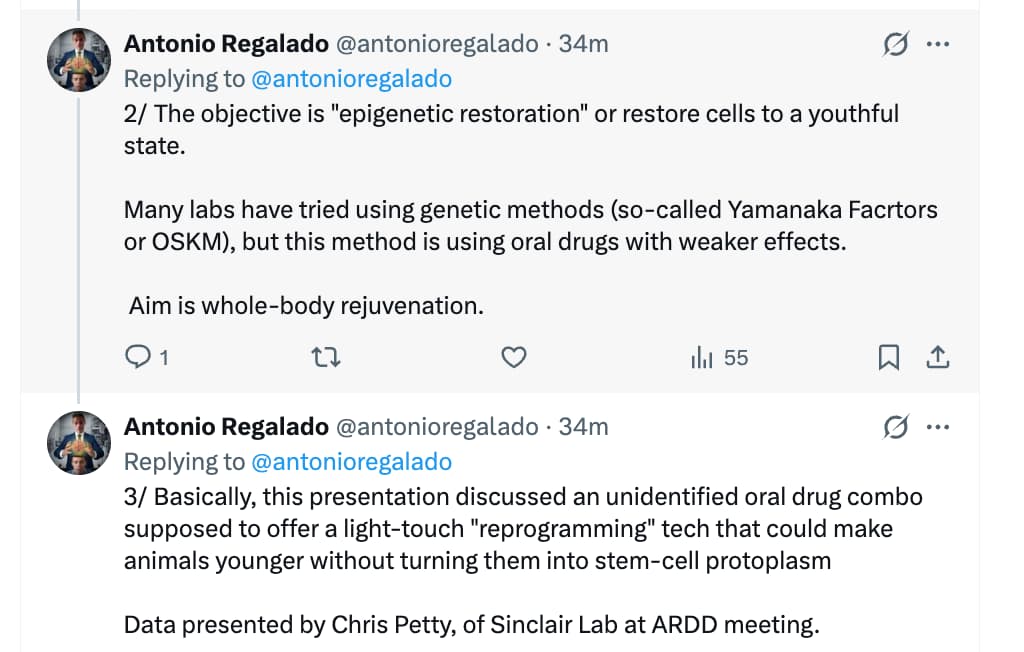
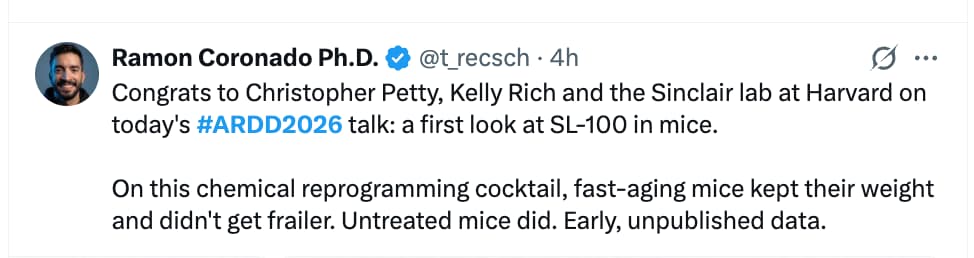
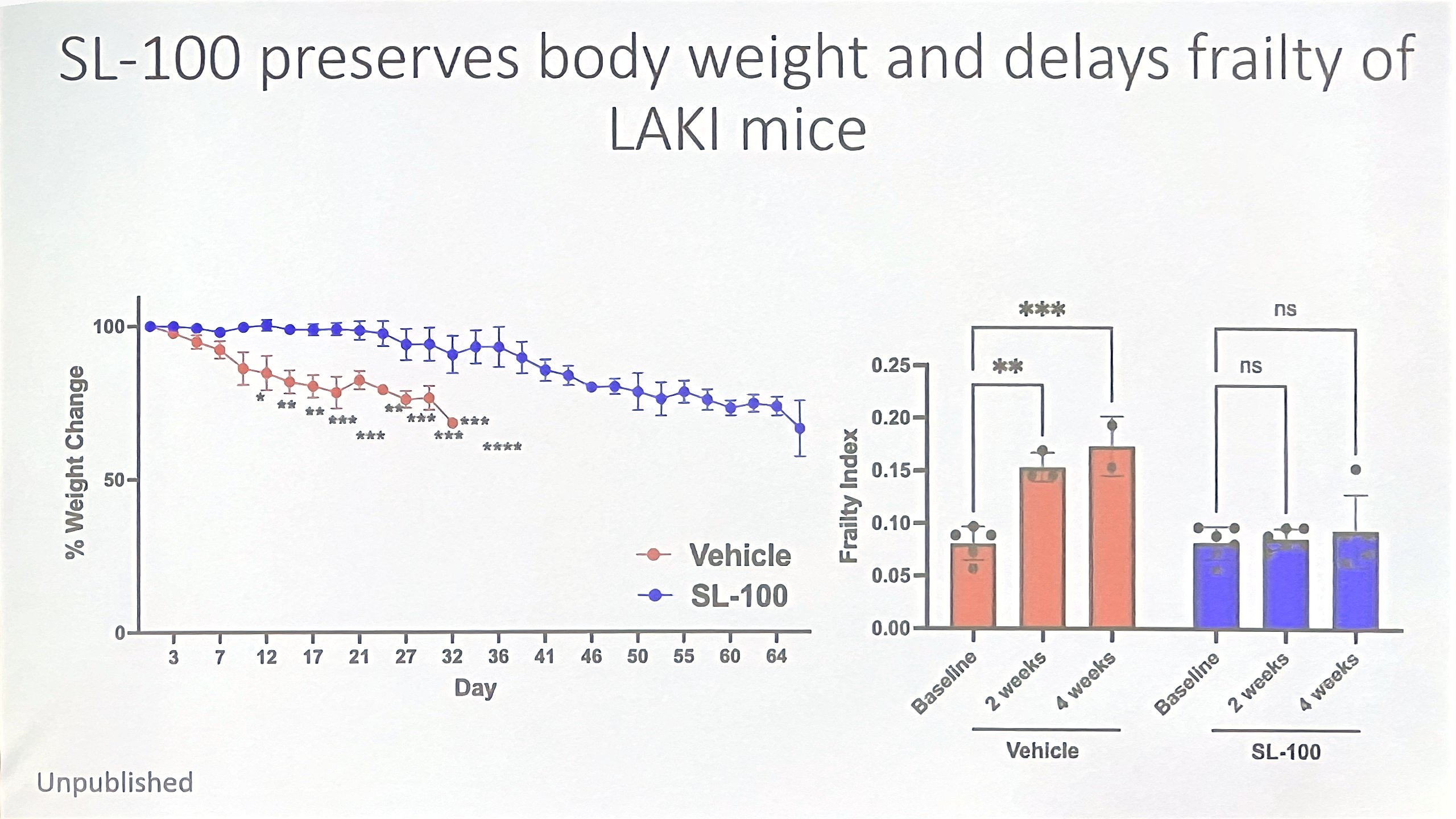
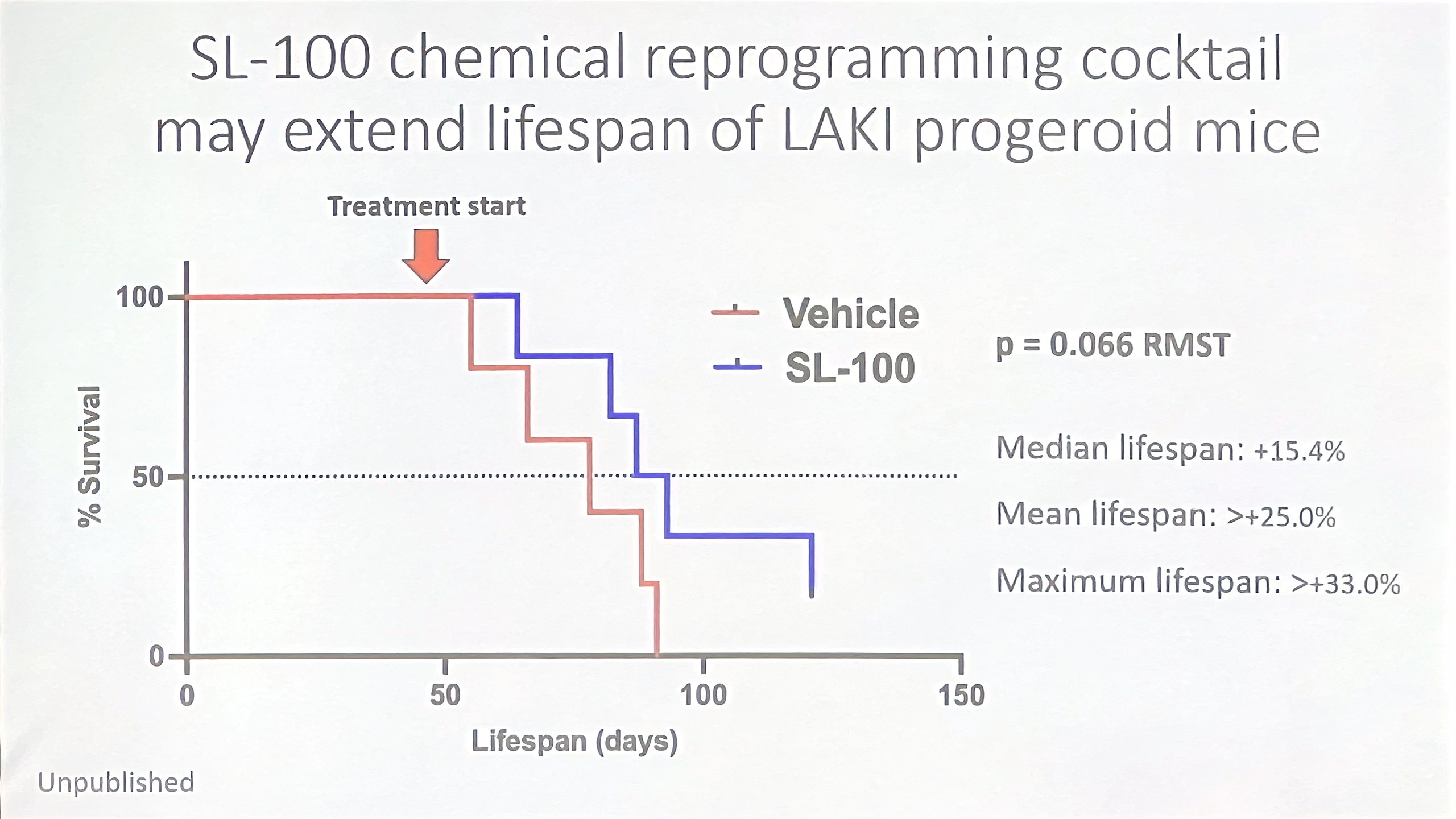
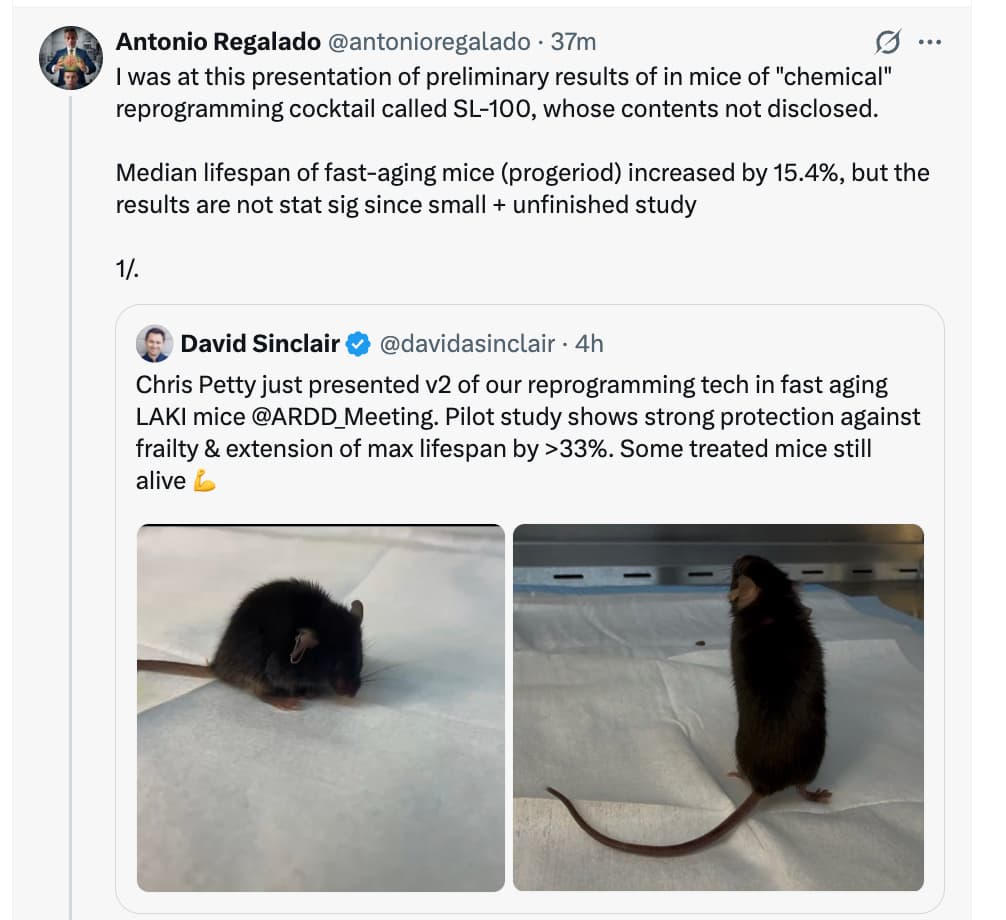
From ARDD:


1 Like

There is always the issue of using progeroid models.

2 Likes