I agree that it is good to cultivate some skepticism in this field. I have but done a cursory search in the most recent literature on berberine and there seems to be some evidence of moderate benefits, sometimes trivial benefits. I have yet to dig deeper, though.
What I have noticed is that supplements on their own appear often to provide limited or no benefits, whereas if used in conjunction with prescribed pharmaceuticals they exhibit a synergy which sometimes may be more than additive.
At least, this is what many doctors are doing now, suggesting some supplements together with a more traditional prescription. I was surprised when I saw this done in psychiatric pharmacology.
An ensemble of supplements (SaME, magnesium, and Valerian if I remember well) allows in many cases to keep low the dosages of SSRIs used in depression and is used as a first-line medication in mild cases.
Bottom line: I have yet to place that berberine order.
Can you please post a link to that Cool pill divider. The quartering ability is not something I have seen before.
Of course, however it refers specifically to the European and British Amazon sites, it might be available elsewhere. The producer is Dzmuero from China.
And for US based consumers, it is here:
https://www.amazon.com/Cutter-Divider-Cutting-Vitamins-Tablets/dp/B09WGX7BFD/
I take Berberine, but not Resveratrol. Berberine has a lot of long term research on it. Resveratrol is another cox-1 inhibitor. I don’t like inhibiting cox-1.
Berberine is generally considered safe for most people and is on the shelf of most retailers selling supplements.
The problem I have with berberine is (N=1) that I did not find it effective at the recommended doses and I did experience some of the side effects.
The studies of berberine are not very convincing so I dropped it from my supplement list.
Common Side Effects
Gastrointestinal Issues:
Nausea: Some individuals may experience nausea when taking berberine.
Diarrhea: Diarrhea is a common side effect, especially at higher doses.
Constipation: Conversely, some people may experience constipation.
Abdominal Pain and Cramping: Berberine can cause abdominal discomfort and cramping in some individuals.
Bloating and Gas: Gastrointestinal bloating and gas are also reported.
Less Common Side Effects
Hypotension: Berberine may lower blood pressure, which can be problematic for individuals with already low blood pressure or those taking antihypertensive medications.
Serious Side Effects
Liver Toxicity:
Hepatotoxicity: While rare, there have been reports of liver toxicity associated with berberine supplementation, particularly at high doses or with prolonged use. Symptoms can include elevated liver enzymes and jaundice.
Interactions with Medications:
Cytochrome P450 Enzymes: Berberine can inhibit certain cytochrome P450 enzymes (CYP3A4, CYP2D6, CYP2C9), which are involved in drug metabolism. This can lead to interactions with various medications, potentially increasing their effects or side effects.
Anticoagulants: Berberine may enhance the effects of blood-thinning medications, increasing the risk of bleeding.
Antidiabetic Medications: Berberine can enhance the effects of antidiabetic medications, potentially leading to hypoglycemia (low blood sugar).
Vitamin B12 Absorption:
Reduced Absorption: Some studies suggest that berberine may reduce the absorption of vitamin B12, which can lead to deficiencies over time.
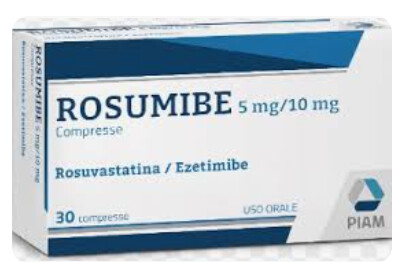
Back to a basic cholesterol-lowering strategy, today I dropped off the local pharmacy and discovered that there is a product, called Rosumibe, which provides in a single, circular-shaped pill, 5 mg rosuvastatin and 10 mg Ezetimibe. Its cost is 9 €, about 10 US$.
This pill can be relatively easily split into four, constituting 4 single doses of 1.25/2.5 mg Rosuvastatin/Ezetimibe.
By taking a quarter of a pill daily, the monthly cost would be less than 3 €.
I’m an extremely cautious guy, but this is starting to be convincing, I may even contemplate a quarter of a pill every other day, at least to start out with.
Are you sure that the content of the active ingredients (eze and rosu) is evenly distributed in the tablet? I would take them as separate pills.
Really liking this guy’s videos. He’s like a Brad Stanfiled but with less annoying clickbait titles and more depth in the science. Good work.
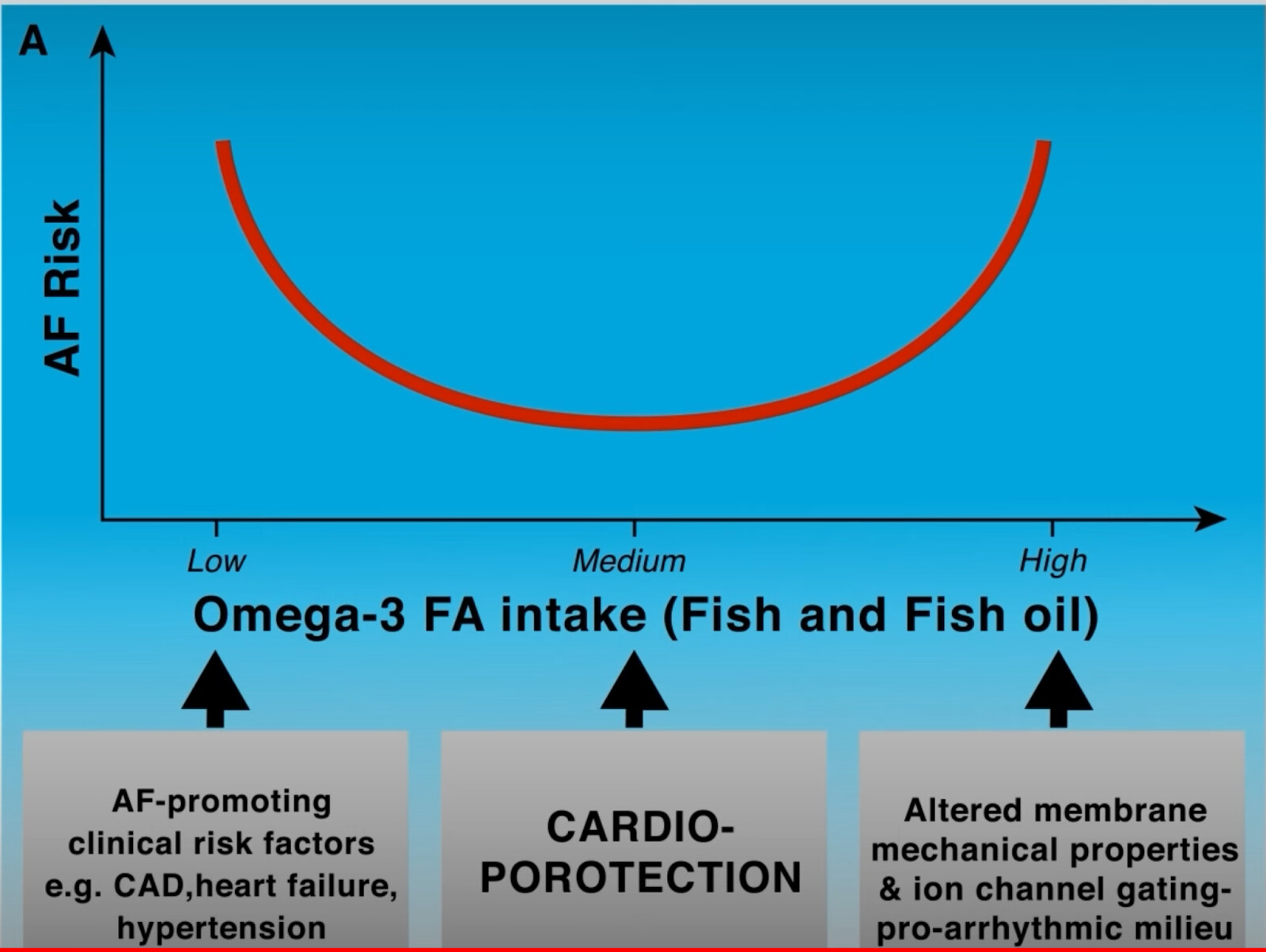
I was taking a lot of fish oil as I’m APOE 4/4 but I’ve dropped to 2g a day for now. Need to find a descent and affordable test in the UK.
I have been on ezetimibe 5 mg and rosuvastatin 5 mg. My LDL-c is the same (about 30) as with ezetimibe 10
Good point, I’m going to ask the pharmacist soon. The Zetia pills are nearly impossible to split into four identical parts and then the combination Rosumibe is incredibly inexpensive, these are the distinct advantages of the combo.
Good to know that the empirical data coming from this forum would tend to support efficacy for smaller doses, and congrats for the tiny value of LDL-C!
I just asked the pharmacist, he said that not only there is no guarantee of perfect homogeneity if an unsplittable (by design) pill is split, but this is true also for a single ingredient pill.
In a few words, we cannot require that a Zetia pill split in two provides exactly one half of the dosage per half-pill.
It also turns out that the homogeneity issue is well-known in the pharmaceutical industry. A small pill is like a volumetric sample drawn from the much larger volume of the mix.
I can only guess they have developed their own procedures with ensuing standards and regulations, as the following article suggests.
In a few words, that appears to be a pretty deep rabbit-hole we may perhaps ignore to dig into.
https://www.sciencedirect.com/science/article/abs/pii/S0378517321011790
Yes, thanks.
And the rosuvastatin was held constant at 5 mg.
So I went from rosuvastatin 5/ezetimibe 10 mg to rosuvastatin 5/ezetimibe 5 mg. And there was no change in LDL-C at about 30.
This is in line with what has been posted about ezetimibe being as effective at 5 mg as at 10 mg.
Berberine promotes rosuvastatine uptake. Since I’m planning to use berberine in my scheme (because of potential glycaemic control) I’m considering other combos, even if less powerful, like Simvastatin/ezetimibe 10/10 mg.
I wouldn’t rely only on an obscure Chinese paper to make decisions for your health.
Also, just to play the devil’s advocate: the low-dose strategy is perfectly relevant for cost cutting. It can also lower known adverse events for the same LDL target (for instance the risk of diabetes with some statins). But could it also lower potential beneficial side effects?
For instance (and for the sake of the argument, no matter whether the article is correct or not), this paper suggested that ezetimibe might lower the risk of Alzheimer’s: Ezetimibe Reduces Alzheimer's Disease Risk (study)
The authors note that: “While these benefits may have been assumed to be secondary to cholesterol reduction via sparing of vascular inflammation, our human-cell-culture and intact-nematode experiments support a direct neuroprotective effect via disruption of aggregate-specific protein interactions.”
So ezetimibe might be protective via an off-target pathway independently from LDL reduction. If correct, is this neuroprotection dose dependent? If so, one might argue that 20 mg of ezetimibe is even better! (again, I don’t say that’s the case, just theoretically it could be)
I would agree with your suggestions, although, since berberine has been a part of the traditional chinese and Ayurvedic medicine, it’s maybe obvious that the Chinese and the Indians tend to study more this plant-derived principle.
I’m not able to judge if the substance of the article is reliable enough, although formally it would appear pretty good. I also concur that it would be best if there were more articles on this subject. I also read the literature on the IMPROVE-IT study and relative comments. I’m not 100% convinced, but a choice must be done.
At the end, this choice may turn out to be conservative on the side of safety although less effective on the side of results.
Last, and I did not mention it before, the issue is not just berberine. My GP won’t give me a prescription because these preventional strategies are not contemplated in the guidelines.
The specialist I know, a friend of mine, will give a prescription but has suggested Vytorin (with simvastatin) instead of Rosumibe (with rosuvastatin) because he’s taking this combo without problems after consulting with a cardiologist.
So, in this specific and personal situation, the easiest way now would appear to settle on Vytorin and potentiate it with berberine. I can always change if results are not as desired.