Did anyone go to the free omegaquant c15 talk on the 15th? Was it worth trying to watch? I registered but cant find the recording easily
1 Like
$45 → $40 for also a supplement that has a more sketchy website and packaging…
$5 savings for that seems not worth it to me.
1 Like
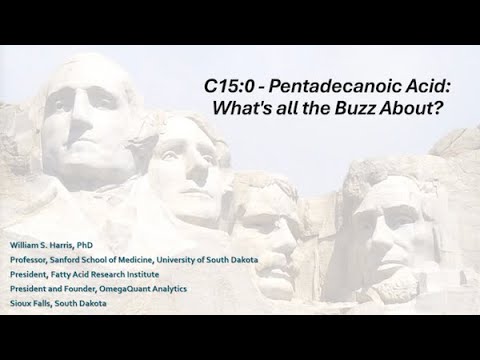
@Josh I watched the omegaquant webinar on fatty15. The research does not say what the fatty15 company claims. Fatty15 might have value but you can get the same amount as in the supplement by eating a small amount of dairy. Clearly no one should stop consuming omega 3 in favor of fatty 15. That was my take. I was hoping omega quant would send a recording but I didn’t receive it.
Edit: here’s the link to the recording
3 Likes
Fair enough call, and yes, I see their 90 day is now <$120.
I wish they’d stop with their overstatement of what their product does.
I can always count on you to correct me!
3 Likes
1 Like
I am huge fan of goat and sheep cheeses mainly Pecorino and Manchego - apparently highest food sources of C15. There is some evidence of neuroprotection, lowering of CAD with these, and they are eaten by people in Sardinia (blue zone) and Icaria ( Feta).
Food sources are always superior as the cheese also comes with high quality protein, other odd chain fatty acids (they may be helpful too), butyric acid and other nutrients…
AND IT TASTES SO GOOD !
3 Likes
I agree, though Pecorino has a crazy amount of salt.
1 Like
True, maybe an issue for some. Personally, I sweat it out in a desert so I actually need some sodium back. Went for some HIIT bike this morning for 45 minutes, lost 2 lbs or about 1 liter of fluids. I also don’t salt my pasta dish when I use Pecorino.
1 Like
https://x.com/gregmushen/status/1815219776299638812
not sure how to get the preview to show up
1 Like
Absolutely love the job Professor Harris did on this. It’s not an essential fatty acid, it is a classic Dr. Gundry move.
Make up a problem that doesn’t exist, make is sound “sciency” do some BS research that seems good to the casual observer, and then invent the solution to fix the problem, that only you are selling.
Once people realize it’s all rubbish, then repeat. In the meanwhile, make millions from gullible individuals.
Not an essential fatty acid, no evidence in vivo that it does anything.
7 Likes
I notice that the dose per kg of human weight changed from .189 mg/kg (that is the number I get also when following the math) to 1.89 mg/kg in the discussion above. Also who who weighs 44 kg? That is about 100 pounds.
I took C15 tablet for about 4-6 weeks to see how it affects my fatty liver… and just got the results… To my surprise, my fatty liver is now normal.
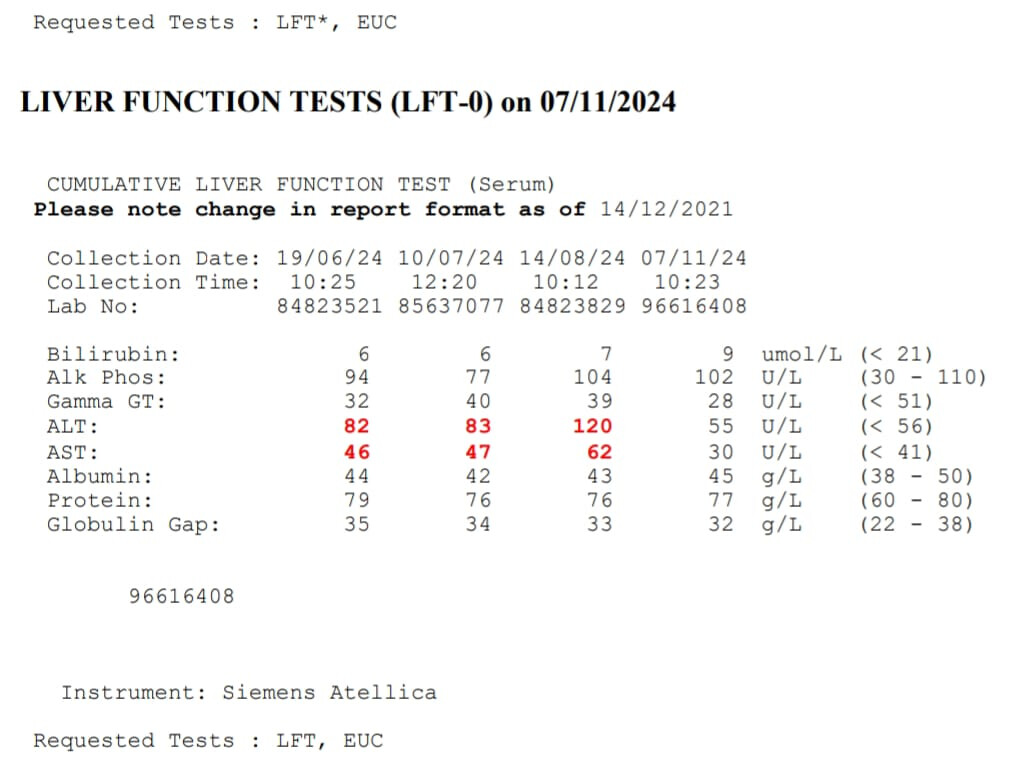
I have had fatty liver for a good part of the last year and a half… and I am shocked that it is gone by just taking the C15 pills… hmmmmmm and last week I just cancelled the autoship for C15. Let us see what happens in the next month without the C15 pills… lol.
2 Likes
Good information thanks. I was about to cancel mine because I started taking pectasol with alginates and it’s so expensive I thought maybe it was time to trim down the stack. I don’t have fatty liver, but don’t want it either.
I am prone to fatty liver. I actually cancelled mine last week. But now I will see what the next blood test is like in 3 months… I am actually shocked that it improved.
1 Like
Pecorino (like all aged cheeses) is also very high in advanced glycation endproducts (AGEs), which are terrible for health and longevity. Not sure if any possible pros from the C15 would outweigh the cons of eating it every day.
2 Likes
I know this is an old thread. But I am also considering C15 supplementation. Does anyone else have experience with this?
Save your money and move on.
Nevermind, I just saw the price for the supplements, lol. I’ll just buy some Pecirino cheese. Only need a small amount if it.
2 Likes
Try for a month. Do your bloodwork before and after. The cheese takes too long. It is cheap for fixing the liver. Once your liver normalise take it once every 3 days.
1 Like
Overview
A recent episode of Longevity Technology Unlocked brought together Dr. Stephanie Van Watson (veterinary epidemiologist, co-founder of Fatty15) and Dr. Nicholas Schafer (professor and scientific director of the NIA-sponsored Longevity Consortium) to make the case that C15 — an odd-chain saturated fatty acid found primarily in full-fat dairy — may be one of the most important nutritional discoveries in longevity science in decades. Here’s the condensed version for those without 45 minutes to spare.
Actionable Insights
- Test your C15 levels. It’s increasingly included in fatty acid panels alongside omega-3 testing. Target range based on current data: 0.4–0.6% of cell membrane composition (the “Sardinian zone”). Average person sits around 0.2%.
- Dietary sources. Grass-fed full-fat dairy (butter, cheese, whole milk) is the primary source. Grass-fed cows produce ~50% more C15 than grain-fed. Plant-based milks contain zero C15.
- Rough dosing math. Every 100mg of dietary C15 raises blood levels ~0.1%. Most people need 100–200mg/day to avoid deficiency. The Fatty15 supplement provides isolated pentadecanoic acid as a triglyceride for those avoiding dairy or wanting to optimize above food-achievable levels.
- Synergistic lifestyle factors. Exercise mobilizes C15 from tissue stores. High-fiber intake supports gut microbiome synthesis of small amounts of C15 from inulin fermentation.
- Check supplement quality. Van Watson flagged that ~75% of supplements don’t contain what they claim. She recommends Suffco as a verification resource.
- Add RDW to your labs. Red blood cell distribution width was highlighted as one of the most consistent and underused biological age biomarkers — it’s standard on CBC panels and free with most blood draws.
Key Points
Not all saturated fats are the same. The central argument of the episode is that lumping all saturated fats together — which drove the 1977 US dietary guidelines — was a category error. Odd-chain saturated fats (C15, C17) consistently associate with better health outcomes across prospective cohort studies and meta-analyses, while even-chain fats like C16 (palmitic acid) associate with increased T2D and cardiovascular risk. Over 150 peer-reviewed papers on C15 now exist, with roughly one new study published per week.
The dolphin discovery. Van Watson’s entry into C15 research came through the US Navy’s bottlenose dolphin program in San Diego Bay. Navy dolphins, cared for over 60+ years, routinely live into their 40s and 50s (vs ~20 in the wild). About one in three older dolphins were developing a syndrome of insulin resistance, metabolic syndrome, chronic inflammation, and fatty liver disease — near-identical to human metabolic hyperferritinemia, a disease formally defined in a 2023 Nature Aging consensus paper. Metabolomic analysis of dolphin serum and diet identified C15 as a top predictor of healthy aging, driving the move into human research.
Geroprotector candidacy. Schafer argues C15 qualifies as a geroprotector — an intervention that fortifies multiple independent biological systems simultaneously rather than targeting a single endpoint. Mechanisms identified so far include: mitochondrial membrane stabilization, AMPK activation, mTOR inhibition, dose-dependent reduction of 18+ pro-inflammatory cytokines, DNA repair support, and red blood cell membrane integrity. The NIA’s Interventions Testing Program is being pursued as a validation pathway.
The deficiency hypothesis. The 1977 recommendation to reduce saturated fat — specifically full-fat dairy — may have inadvertently created a population-wide C15 deficiency. Rates of obesity, T2D, and metabolic disease have worsened dramatically since, not improved. Infant formula contains no C15. C15-deficient mothers produce C15-deficient breast milk. The USDA Children’s Nutrition Health Center at Baylor is now collaborating with Van Watson and Schafer on studies examining C15 in early development.
Ferroptosis connection. The pathophysiology Van Watson describes runs: C15 deficiency → fragile red blood cells → RBCs engulfed by macrophages in the liver → iron overload in hepatic Kupffer cells → ferroptosis (iron-dependent cell death). This maps directly onto metabolic hyperferritinemia in humans and may represent the mechanistic link between C15 deficiency and fatty liver disease progression.
Additional Notes
- The evidence base is real but the human RCT data remains thin. Schafer explicitly says the large clinical trial he most wants to see “doesn’t exist yet — too expensive.” The mechanistic and epidemiological case is strong; the interventional proof is still being built.
- “Conditionally essential” is the working designation for C15 — meaning endogenous synthesis is insufficient to meet physiological demand. Full essential fatty acid status hasn’t been formally granted.
- Sardinian Blue Zone populations have C15 levels of 0.4–0.6%, roughly 2–3x the modern average, and show lower cardiovascular disease rates. Correlation, not causation, but consistent with the broader dataset.
- Schafer is on a National Academy panel evaluating diet-disease relationships and was a speaker at a recent Reagan-Udall Foundation / FDA joint conference on testing geroprotectors — C15 is entering mainstream longevity science infrastructure, not just supplement marketing.
Summarized with Claude
1 Like