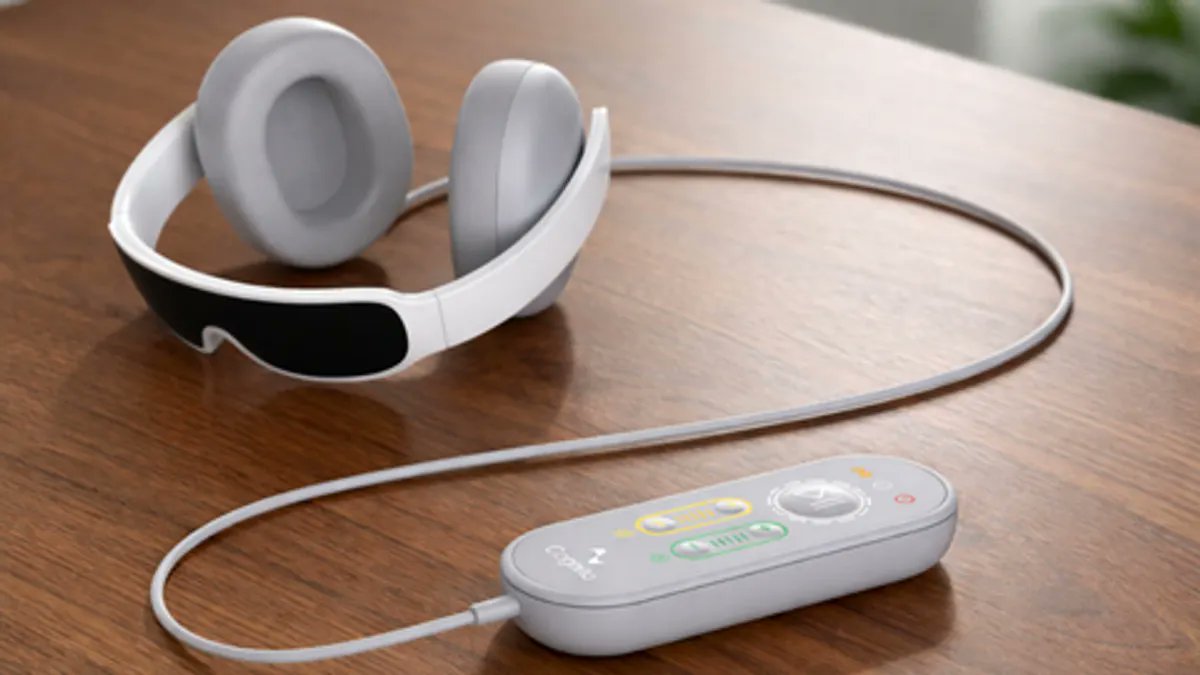
besides the MIT group and Cognito therapeutics can you point me to some of the other companies (and academic groups if they are doing any human trials)?
Harvard: Individual Closed-Loop Neuromodulation Therapy for Alzheimer’s Disease “To determine the impact of closed-loop 40 Hz tACS on the entrainment of natural gamma rhythms in patients with AD-MCI, 2.) To determine the impact of closed-loop 40 Hz tACS on cognitive performance in patients with AD-MCI”
The part the naysayers might be missing is the best results were seen with multi sensory stimulation—sound, light, vibration / tactile stimulation. Entrainment could be hit or miss with any of them in isolation. I think the devices specifically marketed for this are overkill at this stage — expensive and clunky.
A light strobe, binaural beats, and ideally massage or EMS at the same frequency, with marginal cost for each modality, would be my preferred choice. As I mentioned up thread, 40hz isn’t even ideal for humans, only for AD model mice. My only real concern before I buy the light strobe and massager is…. Do the frequencies need to be in phase with each other? It would obviously be very difficult to sync them in phase without their being controlled from a single central unit. The neck massager actually strikes me at the most likely to yield good results as there’s mechanical stimulation too in the vicinity of the cerebral fluid chambers, which could enhance the effectiveness of the vibration.
Also when it yields a pleasant sensation one is more likely to stick with it as part of a daily routine. And if it only costs something in the neighborhood of $100-200, there’s less reason to wait for the clinical trial before taking a plunge. I actually have a super powerful PEMF device that I could program for 35-40hz and operate it on my head (replaces those clunky transcranial helmets) but can’t do it yet as I’m pregnant.
You’ve done a lot more reading on this than I have, does it say anywhere what it feels like when it works? How do you know if you’re doing it right? Do people fall asleep? Do they stand or sit? It’s a surprise to me that it works this well.
I’ve seen no account of that. What I read is that it works better with white light (as opposed to other colors) for younger folks at least, better when their eyes were open vs shut, and better when they were performing mentally challenging tasks during the exposure — somehow it helped the entrainment reach the hippocampus.
The mice data suggests that it might work better if the conditions are enjoyable — that if and when the mice found the stimulus stressful or tried to avert it, it negated the benefits. So it helps to want to see the light. If there’s anything to this, I think it would help to layer in massage at the 35-40hz frequency as one element of the “multi sensory” matrix, so the whole thing feels better. Maybe people can work on their Wordle and such while lying down with the neck massager on at the same frequency as the binaural beat entrainment, and the light strobe somewhere in the corner of their visual field. Could be a nice little daily ritual of half hour or so.
A new review article in PLOS Biology describes the state of research so far and presents some of the fundamental and clinical questions at the forefront of the non-invasive gammastimulation now.
“As we’ve made all our observations, many other people in the field have published results that are very consistent,” said Li-Huei Tsai, Picower Professor at MIT, director of MIT’s Aging Brain Initiative, and senior author of the new review with postdoc Jung Park. “People have used many different ways to induce gamma including sensory stimulation, transcranial alternating current stimulation or transcranial magnetic stimulation, but the key is delivering stimulation at 40 Hz. They all see beneficial effects.”
I’ve been doing it with the Amazon device. It definitely entrains it as after I shut it off, I still “hear” the same buzzing in my head for a while. And I do it while I read a book on my kindle — helps me focus on it better while I read when I’m tired before bed. It’s not a very elegant mode of delivery though. I preordered that Bia device and I’m trying to get the founders to add it as a mode on their app. They seemed very receptive to it though haven’t flat out committed yet. Seems like a no brainer — to prevent the might-as-well-have-no-brain state.
“40-Hz auditory stimulation using a 1-kHz pure tone.”
There are several Android and probably iOS apps you can use to generate different frequencies using various waveforms and duty cycles. I also use strobed 680 & 810 IR LEDS occasionally. I was glad to see that the pure sine wave had an effect because the annoyance of the MIT buzz saw beat is too annoying for most people, considering how long you have to listen to it. Does this stuff work? Who knows? I have been using various forms for quite some time, and I am still semi-lucid.
Although 40-Hz physical stimulation shows therapeutic potential for Alzheimer’s disease (AD) in rodents, translational validation in nonhuman primates is critical. We applied 40-Hz auditory stimulation on nine aged rhesus monkeys and monitored their cerebrospinal fluid (CSF) Aβ and Tau level changes as indices of the treatment effect. Seven days’ stimulation triggered a rapid CSF Aβ increase by more than 200%. In addition, the Aβ elevation persisted for over five weeks after treatment cessation-unreported in any rodent studies. Postmortem analysis of four of the experimental monkeys revealed widespread Aβ plaques in the brains. This study provides the first primate evidence of 40-Hz auditory stimulation can sustainably modulate the Aβ metabolism in the brain, supporting its potential as a noninvasive AD treatment method.
In each round of stimulation, the rhesus monkeys were given 1 h of auditory stimulation at a fixed time (10:00 to 11:00 a.m.) in every day for 7 consecutive days.
 Brain stimulation with 40 Hz music and strobe light promotes removal of toxic amyloid via glymphatic pathways (Nature) - #9 by desertshores
 besides the MIT group and Cognito therapeutics can you point me to some of the other companies (and academic groups if they are doing any human trials)?