Beyond Wakefulness: Smart Drug Modafinil Repurposed as a Broad-Spectrum Anti-Inflammatory Weapon

A systematic review analyzing 14 experimental studies reveals that modafinil, a widely prescribed drug for sleep disorders, possesses potent anti-inflammatory, antioxidant, and anti-fibrotic properties across multiple organ systems. By inhibiting key molecular cascades including nuclear factor kappa B (NF-kB), cyclooxygenase-2 (COX-2), and specific calcium-activated potassium channels, modafinil significantly mitigates tissue damage in diverse animal models of stroke, inflammatory bowel disease, nonalcoholic fatty liver disease, and atherosclerosis. These findings highlight a major opportunity for drug repurposing in chronic inflammatory conditions, though notable safety concerns regarding bone density and long-term cardiovascular health remain critical hurdles.

Modafinil is globally recognized as a wakefulness-promoting agent, long utilized by clinicians to treat narcolepsy, shift work sleep disorder, and obstructive sleep apnea. However, a compelling body of preclinical evidence points to a completely distinct therapeutic capability: broad-spectrum immunomodulation. This systematic review synthesizes data from 14 experimental publications investigating modafinil’s capacity to suppress inflammatory cascades and shield vital tissues from oxidative stress across a wide array of induced pathologies. The core premise rests on drug repurposing—deploying an established pharmaceutical with a well-characterized safety profile to bypass the immense financial costs and extended timelines typical of novel drug discovery.

The “Big Idea” emerging from this analysis is that modafinil acts far beyond its classic identity as a weak dopamine reuptake inhibitor. In the central nervous system, modafinil directly attenuates neuroinflammation and immune dysregulation. In models of ischemic stroke, a single intraperitoneal dose of 80 mg/kg administered 30 minutes prior to carotid artery occlusion significantly downregulates the master inflammatory regulator nuclear factor kappa B (NF-kB). This molecular dampening reduces downstream expression of the proinflammatory cytokine interleukin-1 beta (IL-1beta) and decreases malondialdehyde (MDA), a key marker of lipid peroxidation, translating directly into improved post-stroke behavioral outcomes and reduced neurological deficits.

The drug’s systemic impact is equally profound. In models of cardiovascular disease, modafinil decelerated the development of atherosclerosis, reducing the extent and severity of aortic lesions by suppressing macrophage proliferation and lipid accumulation via the Akt/NF-kB pathway. Similar tissue-stabilizing effects were documented in acute pancreatitis, where modafinil upregulated Smad nuclear-interacting protein 1 (SNIP1) to quench systemic cytokine storms, and in nonalcoholic fatty liver disease (NAFLD), where it aggressively halted hepatic fibrogenesis. Rather than acting as a simple central nervous system stimulant, modafinil functions as a multi-targeted metabolic and immunological stabilizer. It downregulates pathogenic ion channels, preserves epithelial barrier integrity, and enhances endogenous antioxidant defenses like superoxide dismutase (SOD). While these results underscore powerful therapeutic plasticity, the exact underlying mechanisms driving these peripheral pathways require deeper elucidation before clinical translation can safely occur.

Actionable Insights

For the longevity and biohacking community, this systematic review outlines a complex profile of modafinil’s off-label utility as an anti-inflammatory tool, balanced by serious physiological warning signs. The primary practical takeaway is that modafinil exerts multi-organ tissue protection at specific experimental doses ranging from 5 mg/kg to 150 mg/kg body weight in rodents. To understand the real-world magnitude of these interventions, specific effect parameters must be extracted from individual disease models.

In models of acute pancreatitis, a daily dose of 10 mg/kg for 3 days successfully reversed histological tissue necrosis, decreased the severity of ascites, and significantly lowered serum C-reactive protein (CRP), amylase, and lipase. In random-pattern skin flap models, an optimal dose of 25 mg/kg maximized tissue survival and mediated angiogenesis through nitric oxide (NO) and ATP-sensitive potassium channel pathways, whereas a higher dose of 100 mg/kg was entirely ineffective, illustrating a strict biphasic dose-response curve.

Immediate human application for longevity is highly discouraged due to severe pathological trade-offs. Chronic administration in rodents triggers thermal hyperalgesia and induces high-turnover bone loss by upregulating osteoclastogenesis and impairing bone matrix mineralization. Furthermore, supratherapeutic doses carry long-term risks of cardiotoxicity, including atrioventricular block and ischemic heart disease.

Context & Source Evaluation

5 Likes

Did you get a chance to try out modafinil?
I’m going to guess armodafinil would have some of these same qualities mentioned above for modafinil.

1 Like

I have been trying it. I have tried 100mg a number of times, and saw a small benefit. 200 mg is stronger but only tried it once. It’s one more arrow in the quiver. I will continue to test it periodically.

1 Like

First time I took a dose of 100 mg in the morning it was like taking a dose of meth (based on what I’ve heard).

My body quickly adjusted. Now, I take 100 mg every morning morning to clear the fog of old age. If I go to bed later and don’t get at least 6 hours sleep, I take 200 mg. I love it, but I am not sure I could tolerate 700 mg daily, which is what I would have take to get the equivalent human dosage from the study.

3 Likes

You could be our test mouse?

I don’t think that taking a dose of 700 mg once daily would produce any dramatic effect other than losing sleep.
“Doses up to 400 mg orally once a day have been well-tolerated, but there is no consistent evidence of additional benefit beyond that of 200 mg orally once a day.”

2 Likes

Interesting. Is the idea to take it even if getting good sleep? Or is it strictly for sleepiness but other benefits may occur? In other words, is there ann impact on sleep if taken in AM (short or long half life)?

There certainly are days when I’d be very happy to have more than caffeine (or theacrine) but I’d hate to begin a doom loop of chemical uppers and downers.

2 Likes

“Furthermore, supratherapeutic doses carry long-term risks of cardiotoxicity, including atrioventricular block and ischemic heart disease.”

that’s why you also do beta blockers

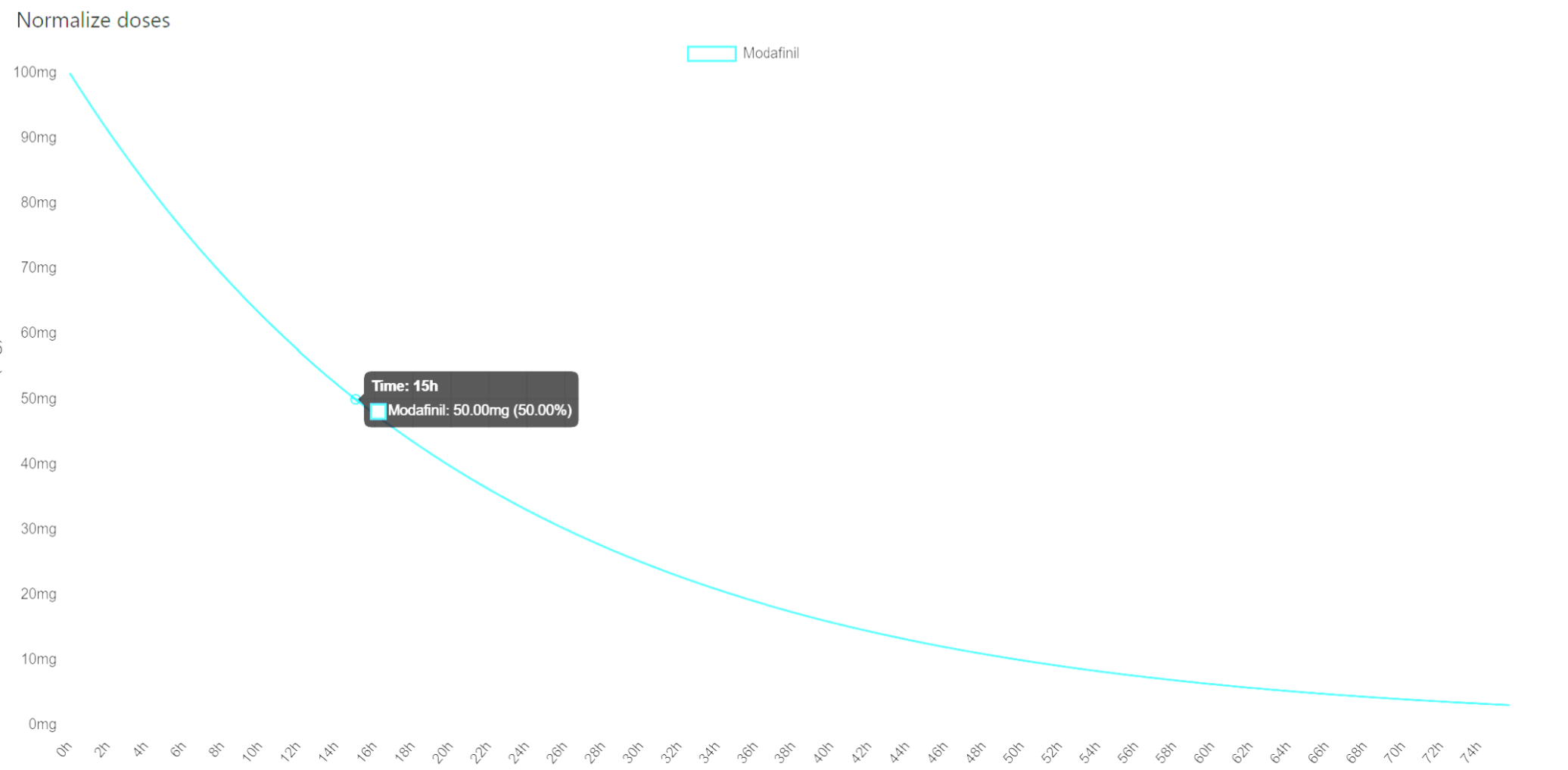
Modafinil has such a long half-life of ~15 hours; I’m surprised that I ever get to sleep. Though even 200 mg taken in the mornings does not subjectively affect my sleep. Apparently, caffeine would have a greater effect on my sleep, especially when taken later in the day.

So, I asked Gemini Pro for the answer to this paradox.

Gemini Pro:

It is a common pharmacokinetic paradox. If you take 200 mg of modafinil at 7:00 AM, a 15-hour terminal half-life means you theoretically still have roughly 100 mg in your system at 10:00 PM. By the numbers alone, that sounds like a recipe for insomnia.

However, the reason you can still sleep normally comes down to the drug’s unique chemical makeup and how it interacts with your brain’s natural sleep-wake architecture, rather than just its raw elimination time.

1. The “Two-Drug” Split

Modafinil is a racemic mixture, meaning every pill is composed of two mirror-image molecules (enantiomers) in an exact 50/50 split:

  • S-modafinil: Has a rapid half-life of roughly 3 to 4 hours.
  • R-modafinil (armodafinil): Has a much longer half-life of 10 to 15 hours.

When you take 200 mg in the morning, the S-isomer clears out of your system very quickly. By late afternoon, it is largely gone. By bedtime, you aren’t dealing with a half-dose of the whole drug; you are primarily only processing the remaining R-isomer. Because of this split, the total active concentration in your blood drops much faster in the first 8 hours than a flat “15-hour half-life” label suggests.

2. The Therapeutic Threshold

Modafinil is an exceptionally weak dopamine transporter (DAT) inhibitor. Because its binding affinity is so low, it requires a relatively high peak plasma concentration to occupy enough transporters in the brain to keep you artificially awake.

As the drug clears throughout the afternoon and evening, the concentration eventually falls below this therapeutic threshold. Even though a measurable amount of the drug is still circulating in your bloodstream at night, it is no longer concentrated enough in the brain to effectively block dopamine reuptake or stimulate your wakefulness pathways.

3. Amplification vs. Force

Unlike classic stimulants such as amphetamines — which brute-force the brain to release dopamine and norepinephrine regardless of the time of day — modafinil works largely by amplifying your existing wakefulness signals, specifically the orexin and histamine systems.

As evening approaches, your circadian rhythm shifts naturally:

  • Melatonin production rises.
  • Orexin (the brain’s primary wakefulness peptide) naturally decreases.

Because modafinil relies on these natural systems to produce its effects, it loses its “fuel” at night. It lacks the pharmacological force to override your brain’s natural wind-down sequence once those wake-promoting neurotransmitters drop to baseline levels.

4. Uninterrupted Sleep Pressure

Modafinil does not interact with adenosine. Adenosine is the chemical byproduct of cellular energy use that builds up in the brain all day, creating biological “sleep pressure.”

While caffeine directly blocks adenosine receptors to temporarily hide your exhaustion, modafinil leaves them alone. This means normal sleep pressure continues to build linearly in the background throughout your day. By the time the modafinil concentration dips below its active threshold in the evening, the heavy accumulation of adenosine easily overpowers the diminishing trace amounts of the stimulant, allowing you to fall asleep.

3 Likes

Good answer. Thanks a ton!

I have found that 200 mg will spike my BP into the 150s. If I am pulling an all-nighter, 100 mg gives me a speed-like rush, but the effect is short-lived. Nothing like Adderall.

1 Like

Some people claim it only helps you if you’re lacking in sleep, some claim it acts as a powerful nootropic.

I think the latter is true. I feel more “locked in” when using modafinil. I can just focus and get work done, and I find distractions from getting what I want/need to get done to be frustrating. It’s like the opposite of procrastination.

It can have a bad impact on sleep so you need to plan your day around it to combat this. Have it literally the moment you wake up, stop caffeine before 2pm, get what you want to get done as early as possible so you can wind down, have tools on hand like melatonin/taurine/glycine and any other sleep aid.

I’d also not advise starting at the full 200mg tablet dose. Start with 50-100mg.

I’d save it for when you have a project you want to complete, or a particularly hard day of work, or a very long drive, or something like this. Don’t just use it randomly to feel good.

2 Likes

I think it works well if it isn’t used daily. I seem to develop a tolerance so I stick to taking it “whenever necessary”

2 Likes

s00210-025-03964-9.pdf (742.0 KB)

2 Likes

I find that odd, as I have never had a blood pressure increase from taking 200 mg of modafinil even when I first tried it. After taking it a while, its wakefulness effect lessens. But if you have read the thread, it has other benefits.
FWIW, I asked Gemini Pro if a blood pressure spike was a common side effect.
Answer:
A severe “spike” in blood pressure is not a common side effect of modafinil at standard, prescribed doses. While modafinil is a central nervous system stimulant and can cause mild, transient elevations in blood pressure—especially during periods of physical or mental stress—sudden and significant spikes are classified as a rare but serious adverse reaction.

When Blood Pressure Spikes Occur

Although uncommon in healthy individuals, significant increases in blood pressure are more likely to happen under specific circumstances:

  • Overdose or Misuse: Taking modafinil in doses higher than prescribed is a primary trigger for acute cardiovascular symptoms, including a rapid heart rate and high blood pressure.
  • Pre-existing Conditions: People with a history of hypertension, heart disease, or left ventricular hypertrophy are at a much higher risk for cardiovascular complications. Because of this, doctors usually exercise extreme caution or avoid prescribing modafinil to patients with known heart issues.
  • Stimulant Stacking: Combining modafinil with other stimulants—such as large amounts of caffeine, decongestants (like pseudoephedrine), or other medications—can compound the effects and overwork the cardiovascular system.
2 Likes

Since I have several, I always test my BP on a new medication. If I get a rise–never mind a spike–I’ll lower the dose or discontinue it.

I have on ongoing Rx of Modafinil 100mg/day for work-shift disorder. However, i rarely take it. My b/p bumps up significantly, sometimes i feel a flutter in my chest, and i will have difficulty sleeping. When i can’t stay awake and i do take it i’ll bite off approx 1/4 of a 200mg tab (my Rx come as 200mg with directions to take 1/2 tablet).This would be close to 1-2 x month. i have never read about of the above possible benefits. With how it can effect me it’s easy to see how the cardio issues (that are sometimes incompatible with life) could potentially occur. So far my bone density is normal. I’m 62.

1 Like

My reason for taking modafinil is that I noticed a decline in my energy levels several years ago. After researching possible options, I decided to try modafinil. It has helped primarily by improving my mood, motivation, and alertness, which in turn has increased my energy levels on the days I take it.

In my experience, the minimum effective dose is the best approach when you have something you want to accomplish that would otherwise be difficult. Continuous use can become habitual, resulting in a decline in its beneficial effects.

In my case, I notice a slight hangover effect later in the day that seems to correspond to the dose I took that morning. When I skip a day or two, I notice the absence of the drug’s effects, but the longer I abstain, the more quickly that feeling becomes normal again.

After several years of use, I still find that 50 mg is very effective, as long as I don’t take it too many days in a row. At 50 mg, the effects can be subtle, but I know it’s working when I don’t become fatigued halfway through a one-mile swim. If I take a higher dose, I experience an anxious, jittery feeling that can linger for hours unless I stay physically active. I notice no further benefit if I use a dose greater than 100 mg.

Taking it on an empty stomach first thing in the morning, with breakfast, or about an hour after breakfast can noticeably change the effects I perceive.

Now, it’s good to know that it may be further benefits.

2 Likes

Where do you source it?

Indian pharmacies where people get rapamycin tend to have it. Maulik is one that people have used here with success, myself included https://www.shreejiimpex.co.in/

Super cheap too compare to the resellers in the West who buy from these places and mark up the price 10x.