Now even the NYT has turned against him; but they also take a jab at rapa: “for promoting medications for off-label uses that haven’t been thoroughly tested — such as rapamycin”
The Gray Lady Critiques Attia
People who live in glass houses???
1 Like
Very charitable and a nice guy indeed. He’s saved millions of lives LOL
1 Like
@Kelman are you saying if one sleeps with an old married guy, he is morally obligated to support them forever?
Asking for a friend
Also interesting…
On X I saw someone is boycotting David bars because Attia will still profit, even if stepping down as CSO
I went to Attia’s website to see his disclosures to see if he was an investor (I am 99% positive he is)… interesting that his disclosure button has been turned off…
2 Likes
New York Times article from many Doctors on Attia… and has the usual comments he is not certified and couldn’t even work in a hospital… but…
https://www.nytimes.com/2026/02/10/well/peter-attia-jeffrey-epstein-doctors-backlash.html
One physician’s attack might shed light on why he claimed to stop taking rapamycin. Could be to shore up his standings for the CBS job.
He’s a bright individual, but his whole medical practice is set up for tremendous monetary gain,” said Dr. Terry Simpson, a surgeon in California who also posted a video to his more than 350,000 Instagram followers.
Among other things, Dr. Simpson criticized Dr. Attia for recommending that people consume more protein than most experts suggest, and for promoting medications for off-label uses that haven’t been thoroughly tested — such as [rapamycin]. “Taking weird medications that work on fruit flies and may or may not work in humans is not research.”… Well we know these old docs who would never look at rapamycin’s potential. Lol (https://www.nytimes.com/2024/09/24/well/live/rapamycin-aging-longevity-benefits-risks.html), a drug normally used for transplant patients, which Dr. Attia once took to combat aging. Other doctors noted that the tests he recommends can reveal harmless abnormalities, as well as findings whose medical significance is unknown.
So maybe why Attia said he stopped rapamycin. … tbh… I bet he still takes it… unless living longer as a pariah is no longer appealing.
4 Likes
That was my guess as well. That he said that because he was being interviewed on CBS and obviously in talks about being a contributor. (HA on the second part of your statement!)
As much as I see his flaws, I personally don’t think it’s a big deal that a health podcaster is not board certified.
3 Likes
Rich Roll brought up this topic on his podcast:
3 Likes
I wonder what’s the status with Attia’s company and podcast? The most recent was Jan 25th, back before the sh*t hit his fan.
1 Like
@A_User
Thanks for the share. BRAVO RICH ROLL!!! Now THAT is what I call a man of character who also has backbone.
As far as I’m aware, out of the people who associated with Attia, only he and his co author have said anything.
On that note, I followed my hunch of being able to sniff out character, and I’m happy to report it appears the Attia videos on Optispan were removed. This tracks with who I THINK Kaeberlein is… and yeah, he’s still on Huberman which also tracks. So Matt, you get a bravo, too! I’ve been secretly hoping he’s been actively poaching Attia’s team.
1 Like
One problem IMO is that there’s also just a lot of bitterness and jealousy going around. These hospital doctors might be doing heroic work literally saving lives, while watching Attia becoming a multi-multi-millionaire celebrity despite being significantly less qualified than they are. I feel like most criticisms they make are inevitably tinged with jealousy, particularly when those doctors are also trying to be influencers themselves. Attacking him is a good way to build their own clout and engagement.
Honestly I think most of the scientific stuff from Attia has been great and is still good. Yes he recommends things outside of “normal” practice - for example annual low-dose chest CT for non-smokers - but he’s justified that many times before, in great detail. Same for the protein intake suggestions - he’s justified his recommendation at great lengths and given every caveat under the sun. You may look at the evidence and come to a different conclusion, which is fine, but you can’t really attack him for the recommendation itself IMO.
I can find many things to dislike about him personally, being an egomaniac etc. But to criticise a podcast focused on cutting edge longevity interventions for doing things outside of conventional medical practice is just silly.
4 Likes
@relaxedmeatball said very well. Right, I think credibility is lost when going after his credentials. It could be a ‘btw, did you know’ sort of thing. He’s not our doctor, to most, he is nothing more than a podcaster and info is info.
It all only dilutes the only current issue…. You don’t befriend a pedophile, period, the end.
Having said that, I have a friend who was extremely upset and felt tricked when she found out he was not board certified and didn’t finish residency. She said ‘I can’t believe I was listening to him and paying for membership etc. I’m never listening to another podcast.’ So this is obviously an important piece of info to a lot of people.
To me, that is the same thing as someone saying to me, no, I won’t check my apob or lp(a) because you are not a doctor so you could not possibly be able to give me good medical advice.
So, a Sultan has been ousted … the thing I expected the least. It turns out justice is much better served for the victims in every country but the US.
PS, seeing Pam Bondi refuse to look at the victims made me physically ill.
5 Likes
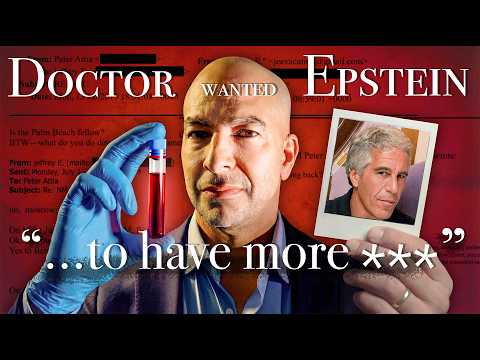
A bit of a video documentary on the whole ordeal
3 Likes
chatGPT:
Tidy transcript (cleaned + lightly edited for clarity)
Title (on YouTube): The Epstein Doctor: How Arrogance Ruined his Career (youtube.com)
0:00–5:28 — “What exactly did Peter say in the files?”
- The narrator says “longevity doctor Peter Attia” appears in “the Epstein files,” and claims there are 1,700+ PDFs mentioning him, which “paint a bigger story.” (youtube.com)
- The narrator focuses on email excerpts and frames them as showing closeness (“chummy,” “bros”), including jokes about sex and references to meeting/visiting. (Narrator says this is not an accusation of wrongdoing.)
- The narrator contrasts the timing of a reported family medical emergency with alleged meetings in New York, framing it as a character and priorities issue.
- The narrator cites Attia’s public statement denying criminal involvement and denies visiting certain locations, but argues the emails still look inconsistent with later distancing. (X (formerly Twitter))
- The narrator suggests (speculatively) that elite connections may have helped business success/wealth (e.g., expensive watches), but does not provide documentation beyond insinuation.
5:29–12:02 — Theme shift: “Overconfidence” and the VO₂max claim
- The narrator argues the same trait (overconfidence) explains both:
- how people end up in elite circles/emails, and
- overstated health/science claims.
- The narrator targets Attia’s frequent claim that VO₂max is an exceptionally strong predictor of longevity, and introduces criticism (via Chris Masterjohn) that some studies used to justify the claim did not directly measure VO₂max, but instead used treadmill performance/protocol-derived estimates.
- The narrator argues this distinction matters because many people stop maximal tests for non-VO₂max reasons (discomfort, pain, nausea, palpitations), and that over-focusing on VO₂max could narrow training at the expense of broader functional capacity.
12:03–16:58 — “Peter hides data again” (statins / GLP-1) + confidence style
- The narrator alleges Attia wrote about a statin paper while omitting a key graph panel showing decreased GLP-1 and worsened glycaemic markers, framing this omission as suspicious.
- The narrator claims statins can worsen insulin resistance via microbiome/GLP-1 pathways and uses this to critique “downplaying risks.” (A 2024 Cell Metabolism paper does report decreased GLP-1 with atorvastatin in the study’s results.) (Cell)
- The narrator critiques Attia’s communication tone, highlighting examples of definitive statements (e.g., “no evidence whatsoever” about Bluetooth harms), contrasting with Attia’s own insistence on careful scientific language.
- The narrator adds examples: seed oils debate framing and perceived disdain for dissent.
16:59–23:53 — Back to Epstein emails → statins → “LDL causality” argument
- The narrator returns to Epstein-related discussion (testosterone, medication advice) and links it to Attia’s strong pro–LDL-lowering stance.
- The narrator critiques Attia’s rhetoric around LDL/APOB causality (“causal” ≠ “most important,” and lowering a causal factor can have tradeoffs).
- The narrator argues that pushing very low LDL targets can be non-benign, and that communicators should present benefits and risks with more nuance.
23:54–34:13 — Dave Feldman / Norwitz conflict + “Oreo vs statin” + sponsor segment
- The narrator recounts a contentious Attia podcast with Dave Feldman, alleging repeated interruptions and dismissiveness.
- The narrator describes Feldman’s hypothesis (metabolically healthy people with high LDL may differ in risk) and argues this deserves more open debate and better-tailored evidence.
- The narrator frames the Keto/LMHR research and crowdfunding as evidence that incentive structures may discourage certain studies.
- Ends with an advertisement for Ground News (sponsor), tying the theme to “bias” and “spin” in media. (youtube.com)
Summary (what the video is trying to do)
- Primary narrative: Attia’s association with Epstein (via released emails) reflects poor judgment, and the same personality trait—overconfidence/arrogance—also shows up in Attia’s public health communication.
-
Secondary claims:
- Attia allegedly overstates VO₂max as “the” key longevity marker (and/or leans on evidence that uses estimated fitness, not directly measured VO₂max).
- Attia allegedly selectively presents data about statins (GLP-1/insulin resistance) and over-asserts certainty in some topics (Bluetooth, seed oils, LDL targets).
- Incentives in lipidology may suppress studies that threaten drug-centric paradigms.
Critique (where it’s strong vs weak)
What the video does well
- Separates “in the files” from “criminal involvement.” That distinction matters, and even mainstream reporting on the document dumps has stressed that inclusion doesn’t automatically imply wrongdoing. (ABC News)
- Points to a real methodological issue in fitness research communication: Many large cohorts use treadmill performance to estimate cardiorespiratory fitness rather than directly measure VO₂max, and people commonly conflate these. A nuanced discussion of “measured vs estimated CRF/VO₂max” is legitimate. (PMC)
- Raises a legitimate science-communication standard: If someone is positioning themselves as a high-rigor explainer, cherry-picking figures or using absolutist language (“no evidence whatsoever”) deserves pushback.
Where the argumentation is weak (or rhetorically loaded)
- Guilt-by-association drift: Even while disclaiming wrongdoing, the video repeatedly uses tone (“bros,” “elite,” “masters of the universe”) to imply moral contamination, and then lets that mood color unrelated scientific disputes. That’s persuasive storytelling, but weak inference.
- Speculation about money/wealth without evidence: Watch prices, “connections,” and insinuations about funding are not demonstrated—just suggested. This is a classic credibility attack that doesn’t advance the factual case.
-
Conflation risk: “VO₂max isn’t directly measured” ≠ “VO₂max isn’t predictive.”
Cardiorespiratory fitness is very consistently predictive of mortality across large datasets. For example, large treadmill-testing cohorts show strong associations between fitness categories and survival. (PMC)
The more accurate critique is: Attia (and others) may over-summarize heterogeneous evidence and blur the line between measured VO₂max, estimated VO₂max, and simple treadmill performance. - “One panel omitted” isn’t automatically misconduct: If Attia excluded a key panel, that can be criticized as incomplete communication—but inferring intent (“hard to think that’s not intentional”) is a leap unless you compare the full newsletter context and demonstrate systematic omission across topics.
-
Statins/GLP-1 inference needs careful scope: The 2024 Cell Metabolism paper reports GLP-1 reductions and worsened glucose-related outcomes in that study context. (Cell)
But jumping from that to broad, patient-level conclusions (“statins screw up the gut → diabetes”) needs guardrails: dose, population, baseline risk, absolute vs relative risk, and clinical endpoints matter.
What’s missing (if the goal is “truth-seeking” rather than dunking)
- A fair baseline for Attia’s actual position today: The video cherry-picks older clips and controversies without a structured “steelman” of his current recommendations (e.g., how he handles risk stratification, CAC scoring, apoB targets by risk, etc.).
-
A clean evidence map: If you want to critique VO₂max messaging, the gold-standard approach is:
- list the specific studies Attia cites,
- classify each as measured VO₂max vs estimated CRF vs performance time,
- show whether Attia’s wording matches that classification, and
- quantify effect sizes (HR per MET, etc.).
Without that, the critique is suggestive but not decisive.
My “bottom line” take
- On the Epstein-email portion: the video is mostly a character/judgment critique built on selective excerpts; it’s careful to avoid a direct criminal allegation, but it clearly aims to damage credibility by association. Independent reporting also notes that inclusion in dumps doesn’t equal wrongdoing, so the right standard is: what’s actually evidenced, vs what’s implied by tone. (ABC News)
- On the science portion: the best, most defensible critique is communication precision (measured vs estimated VO₂max; benefits vs harms; certainty language), not that the underlying relationships (fitness ↔ mortality, LDL/apob ↔ ASCVD) are fabricated. Large medical statements and reviews do support CRF as a powerful predictor of outcomes. (PMC)
If you want, I can turn this into an annotated transcript where I tag each claim as: email excerpt, speculation, supported by literature, needs citation, rhetorical framing, etc.
2 Likes
My view on VO2 max is that if you have too low a VO2 max then you are probably unhealthy, but not because of VO2 max being low instead because if you are unhealthy it is hard to have a high VO2 max.
3 Likes
Big fat “meh” from me here. Attia gets criticised by some of the “longevity” crowd for not being adventurous enough. VO2max, statins etc are boring mainstays, and they are absolutely pro-longevity. And the Dave Feldman interview was one of the very early podcasts, and Feldman’s “theory” is a pile of nonsense. Recently we even have the “lean mass hyper responder” (“plaque begets plaque”) paper to demonstrate it.
Don’t take this as some sort of defence of Attia. I cancelled my subscription based on the terrible judgment and his lying about the emails. But again, this just seems like somebody with an agenda, possibly coming from a place of jealousy.
5 Likes
On VO2max I don’t think maximising it is a top priority. We will perhaps be able to rediscuss this in about 50 years and see where things have got.
3 Likes
How would you summarise Feldman’s theory and argue that it is a pile of nonsense.
What I get from chatGPT (as to his theory) is:
3) Where “longevity” comes in (his implied view)
If you translate his public discussions into a “longevity theory,” it’s roughly:
- Prioritize metabolic health (low triglycerides, good insulin sensitivity, leanness, fitness).
- Interpret LDL in context of metabolic state and fuel flux, rather than treating LDL/ApoB as a near-universal driver of risk in all contexts.
Ah yes and the primary endpoint (LHMR ketards having very high plaque growth) was basically ignored in favor of the subgroup analysis that showed no difference in plaque growth between the super ultra high LDL-C group and the super duper ultra high LDL-C group. Something that Dr Budoff couldn’t explain in his interview with Dr. Carvalho.
Metabolic health is merely a small risk factor when it comes to plaque growth while apoB particles are the primary and causal driver behind it. A fat guy on statins with an LDL-C of 40 will never develop plaque while the marathon runner who goes to the gym 7x a week, only eats keto and has a bf of 10% but with an LDL-C of 180 will die of a heart attack in his 30s-50s.
6 Likes
That’s an interesting assertion. I don’t argue that ApoB/LDL-C is irrelevant, but what papers exist that substantiate this?
1 Like
Maybe the cardiovascular disease 2026 thread is better for this topic?
1 Like
I think the AI summary of his position is accurate, but that position is just flat-out wrong and not supported by good evidence.
Some of the absolute best evidence are the “PESA” studies. There are several papers showing the almost linear relationship between LDL-C and plaque formation, starting from an early age.
I don’t know about maximising it either, but we do know that it generally decline with age, and at some point it becomes a limitation on what you’re able to do. So building a large base seems to make sense to me if you’re interested in being fit in old age. Whether that fitness is purely reflected in VO2max, versus a bench press, pull-ups, or other metrics, I don’t have a super informed position on that. But still, nobody can argue that exercise isn’t going to help you live longer.
Either way, the thread is about Attia and Epstein, and I still stand by Attia in terms of his recommendations, while feeling pretty uncomfortable about his behaviour and personality.
3 Likes