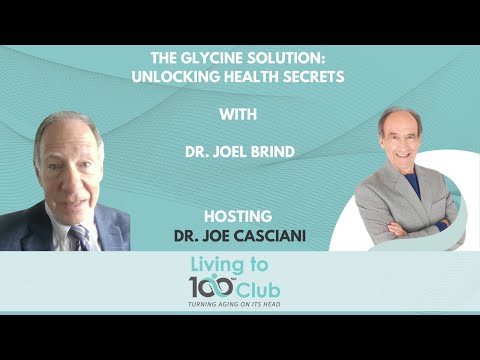
Just finished listening to the audio version of Joel Brind PhD* book “The Glycine Miracle” {the audio version was $4.00 on Amazon / Audible, July 05, 2026]
Very good, a large amount of published papers referenced {the references alone was worth the $4.00]
Audio is virtual{whispersync] so some of the words are not pronounced correctly.
*Joel Brind, a Yale-educated PhD in life sciences and biochemist. Current institution
Biochemist Dr. Joel Brind (developer of Seditamine/Sedamine glycine supplement, author of The Glycine Miracle) argues most Western diets run 5-8g/day short on glycine because we eat muscle meat without the connective tissue/bone that traditionally supplied it. His core thesis: glycine functions less as a biochemical substrate and more as a “safety” on macrophage activation — without adequate glycine, macrophages (and microglia, alveolar macrophages, etc.) fire inflammatory responses to routine cell turnover/minor injury that wouldn’t normally warrant it. He ties this glycine-deficiency-driven chronic inflammation to metabolic syndrome/T2D, atherosclerosis, hormone-driven cancers (breast/ovarian via cycle-count mechanisms), dementia (“type 3 diabetes”), and autism. Self-experimentation anecdotes (no sunburn reaction, no post-concussion symptoms, mild COVID/shingles course) anchor the narrative, backed by some real literature (Mexico City T2D reversal trial, glycine’s suppression of alveolar macrophage TNF-α/superoxide).
Actionable insights
Target intake: ~10g/day glycine total; typical diet only supplies 2-3g, so supplement the ~8g gap.
Sources: bone broth (~1 quart/day equivalent), unflavored gelatin (one box of Knox ≈ the daily target), or a glycine supplement (his product Sedamine, 8g/serving).
Self-test heuristic he offers: distinguish inflammatory pain (hurts constantly, at rest) from mechanical/structural pain (only hurts under load) — his proxy for whether you’re running glycine-deficient.
Methionine-heavy diets (high animal muscle meat, full keto) increase relative glycine demand — since glycine is the body’s main route for methionine clearance, more methionine intake without matching glycine may leave you more deficient, not less.
Low methylators (per Brind, e.g. MTHFR-type variants) may do better supplementing methionine-rich snacks (he cites Brazil nuts) rather than restricting — a different lever than the glycine story, worth not conflating.
Key points
Mechanism claim: glycine acts as a “trigger lock” on macrophages/microglia — not a classic enzymatic/receptor pathway in his framing, more a permissive/inhibitory environmental signal preventing inappropriate inflammatory activation during routine cell death/repair.
Reframe of inflammation: standard model (first-response to infection) is “half-true” per Brind — his position is that in a glycine-replete system, inflammation shouldn’t fire for sterile injury at all, only for actual pathogen clearance.
Disease linkages proposed: T2D/metabolic syndrome (visceral fat macrophage activation + obesity directly suppressing endogenous glycine synthesis — creating a feed-forward loop), atherosclerosis (arterial branch-point turbulence micro-injury + chronic inflammatory response), ovarian cancer (ovulation-count correlation), breast cancer (menstrual-cycle-count correlation, worsened by OCP due to extended hormone exposure), dementia/CTE (microglial activation), autism (glycine deficiency hypothesis, published as an opinion piece in BMJ ~2018-19, not a controlled trial).
Supporting citations he leans on: a 2018 Mexico City clinical trial reportedly showing T2D reversal via glycine supplementation without weight loss; older literature on glycine suppressing alveolar macrophage cytokine output.
Origin story: grew out of Orr Foundation-era methionine restriction research (30-40% lifespan extension in rodents on severe methionine restriction) — Brind’s own glycine-supplementation trials in animals produced smaller (10-20%) lifespan gains without changing blood methionine levels, which is what redirected his hypothesis from “methionine clearance” to “anti-inflammatory/immune modulation.”
Additional context (cross-checked against literature)
The methionine-restriction-extends-lifespan finding is well-replicated in rodents, and there’s legitimate peer-reviewed support for glycine’s role in longevity and inflammation control that’s more conservative than Brind’s framing:
A C. elegans study found glycine supplementation extends lifespan specifically in a methionine-cycle-dependent manner — the effect disappears in metr-1/sams-1 mutants, meaning glycine’s benefit routes through one-carbon/methionine metabolism, not purely through immune modulation as Brind emphasizes.
A mouse Interventions Testing Program study found an 8% dietary glycine supplement produced a real but modest 4-6% lifespan increase in both sexes — useful as a sanity check against Brind’s “10-20%” figure from his own unpublished/informal trials.
Chris Masterjohn’s treatment of the same glycine/methionine balance frames it more cautiously: methionine and glycine both play a role in longevity, with glycine offering protective effects while methionine needs to be moderated to avoid negative health impacts, and importantly excess methionine relative to glycine can compromise sleep, detoxification, blood sugar regulation, and collagen synthesis — mechanistically broader than the pure “inflammation trigger-lock” story Brind tells, and he stresses that individual genetic differences and rare mutations meaningfully affect how this plays out for a given person, which maps onto Brind’s own low-methylator aside.