AGI/ASI Timelines thread (AGI/ASI may solve longevity if it doesn't "kill us all" first)

The impact of AI models like this will be absolutely enormous - but its worth analyzing what it solves immediately, what it solves iteratively and what’s left …

what it does:
The bottleneck in drug discovery has never been ideas — it’s been the cost of testing them. A wet lab binding assay costs £500–5,000 and takes weeks. MAMMAL-class models run in seconds for pennies. That collapses the funnel: instead of testing 50 candidates experimentally, you screen 50,000 computationally and send only the top 20 to the lab. The hit rate per experiment goes up dramatically. That’s not incremental — it restructures the entire economics of early-stage discovery.

It also immediately opens up the prospect of precision / tumour specific cancer treatments.

In terms of longevity - it means that for all our current targets (mtor, ampk, sirt etc) we can quickly identify “clean” molecules with minimal side effects/off target toxicity. So it can quickly identify a better rapamycin for example.

The compounding effect is what’s Im most excited by. Each generation of model gets trained on data that includes results from the previous generation’s predictions. As validated hits accumulate, the models get better, which produces better hits, which feed back in. And all so very quickly - the next 5 years will be huge.

But it wont do much for the rest of the pipeline: pathways and metabolic systems still need to be teased out, and it doesn’t avoid wet testing … we get to candidate drugs at light speed - and then we go back into the slow lane for animal testing… and even slower for human testing

On this last point …The UK equivalent of the FDA is targeting with shortening the timelines - and is having huge success .

1 Like

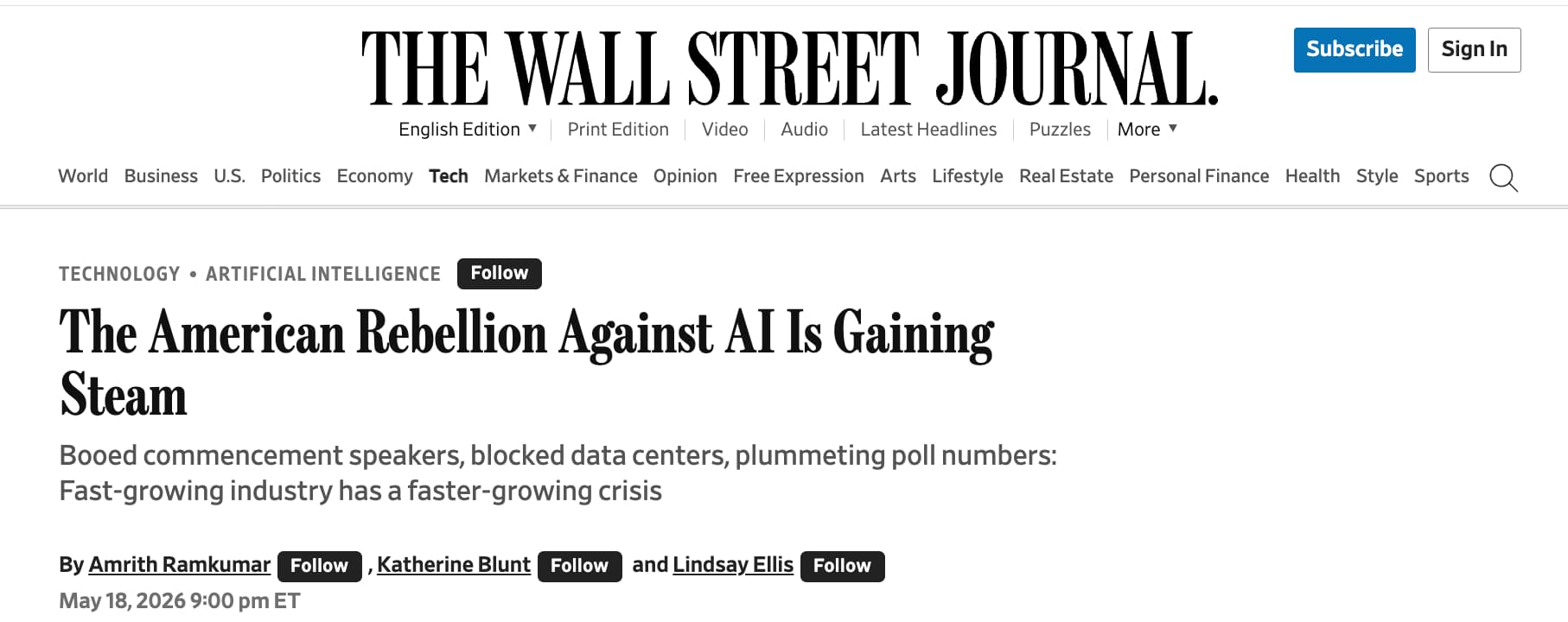
The only thing growing faster than the artificial-intelligence industry may be Americans’ negative feelings about it—as former Google Chief Executive Eric Schmidt saw on Friday.

Delivering a commencement address at the University of Arizona, Schmidt told students the “technological transformation” wrought by artificial intelligence will be “larger, faster and more consequential than what came before.” Like some other graduation speakers mentioning AI, Schmidt was met with a chorus of boos.

In one poll after another in recent weeks, respondents have overwhelmingly voiced concerns about AI, a challenge to claims by industry executives that their technology would gain popularity by improving people’s lives.

Consumers resent energy-price jumps exacerbated by the spread of data centers. Workers fear widespread job losses. Parents worry about AI undermining education and harming children’s mental health. In recent months, the wave of anger has brought protests, swayed election results and spurred isolated acts of violence.

Read the full article: The American Rebellion Against AI Is Gaining Steam

This trend is reflected in recent polls. Over the past year, according to a Gallup survey published in April in the U.S., Generation Z’s sentiment toward AI has become more negative. The percentage of young people enthusiastic about AI has fallen 14 points to 22%, while those angry about it have risen nine points to 31%. Anxiety about AI remains stable at 42%.

In a Pew Research global survey on AI, the generation most consistently concerned about the technology is those aged over 50. Those least concerned are the youngest, aged between 18 and 34. This pattern holds true, with a significant percentage difference of more than 24 points between younger and older generations in countries like Greece, Brazil, Argentina, Italy, and Japan. The United States, however, is the country where this difference is smallest: young people are almost as concerned as older generations about the emergence of AI in everyday life.

1 Like

An OpenAI model made a breakthrough on a hard math problem:

An OpenAI model has disproved a central conjecture in discrete geometry

https://openai.com/index/model-disproves-discrete-geometry-conjecture/

The Fields medalist Tim Gowers wrote the following about the result:

There is no doubt that the solution to the unit-distance problem is a milestone in AI mathematics: if a human had written the paper and submitted it to the Annals of Mathematics and I had been asked for a quick opinion, I would have recommended acceptance without any hesitation. No previous AI-generated proof has come close to that.

(The Annals of Mathematics is considered the top math journal in the world – or, at least one of the top, depending on who you ask.)

This is clearly not a result that appeared in the literature before. So, the model is not just copying what it had seen before. Maybe it’s using similar strategies to arrive at the solution, but the final product is novel. And the reason it must be novel is that if anyone had come up with that solution, we’d know about it.

2 Likes

This is why I’m excited about AI. It i going to answer a lot of questions. My grandfather lived to 101 and was driven to keep going because he wanted “to know happens next” in history, science everything. AI will speed a lot of that up and will hopefully also give us more time(longevity) to find out what does happen next

The question was simple: If you place n dots on a flat sheet of paper, what is the maximum number of pairs of dots that can be exactly one unit apart (e.g., exactly 1 inch apart)?

The conjecture was that a square (graph paper type) grid was the optimal.

But AI used deep number theory to generate a fractal pattern which is better. I don’t think my grandfather missed out too much with this one :grin: But where maths begins physics follows. We may even finally get practical jet packs !

AlphaProof is predicted to surpass humanity (all human mathematicians) at tier 4 (frontier research level) maths questions by mid 2027. There may he a plateau before then but I doubt it. Human brains just aren’t very good at maths and abstract thinking. I’d bet on AI beating mathematicians long before plumbers. (And beating longevity researchers early too)

2 Likes

Do you have a link to this?

Here’s a link: https://openai.com/index/model-disproves-discrete-geometry-conjecture/

The AI actually found an infinite family of solutions that were better. I dont think it has proven which is best. Disproving is obviously always easier than proving in maths!

Its an interesting point. Sadly I don’t think they show graphically one of the better solutions. I suppose although I am a theorist in many ways I am perhaps too pragmatic to want to spent time on this sort of question. One thing about having LLMs as a tool for pattern review is that they don’t get bored.

1 Like

yes i was hoping to look at some fractal patterns in case there was some visual “truth” or insight somehow revealed. I tried to generate one using Claude.ai but it went badly awry.

1 Like

Thank for trying. My interest goes as far as wanting to see the outcome, but not as far as trying to generate it myself (hence the bias towards pragmatism)

This is what keeps me going as well

2 Likes

…And that sounds especially true now, approaching the singularity… We are experiencing things I used to read on science fiction books.

1 Like

AI puts the entire medical system at risk due to hacking… from the Washington Post:

New AI models raise alarms among health care leaders

Key Takeaways

Advanced AI models are making cyberattacks faster and harder to stop. Companies including Anthropic and OpenAI have developed AI systems capable of identifying and exploiting software vulnerabilities at unprecedented speed, raising concerns that health care organizations may struggle to keep pace.

Cyberattacks on health care organizations can disrupt patient care and put lives at risk. Recent research shows attacks can delay treatments, disrupt critical services and increase the risk of harm or death for hospitalized patients.

Many health care organizations remain vulnerable despite rising cybersecurity spending. Hospitals and other providers are investing heavily in cyberdefenses, but fragmented systems, staffing shortages, and outdated infrastructure continue to leave gaps that attackers can exploit.

Health care leaders see cybersecurity as a national security issue. Foreign-linked cyberattacks, including incidents tied to geopolitical tensions, have heightened concerns that hospitals and other health care institutions are becoming targets in broader global conflicts.

Industry officials are calling for stronger coordination and support from the federal government. Health care groups and cybersecurity experts are pushing for more information sharing, clearer guidance and broader access to advanced defensive tools as AI-driven threats grow.

See: New AI models raise alarms among health care leaders

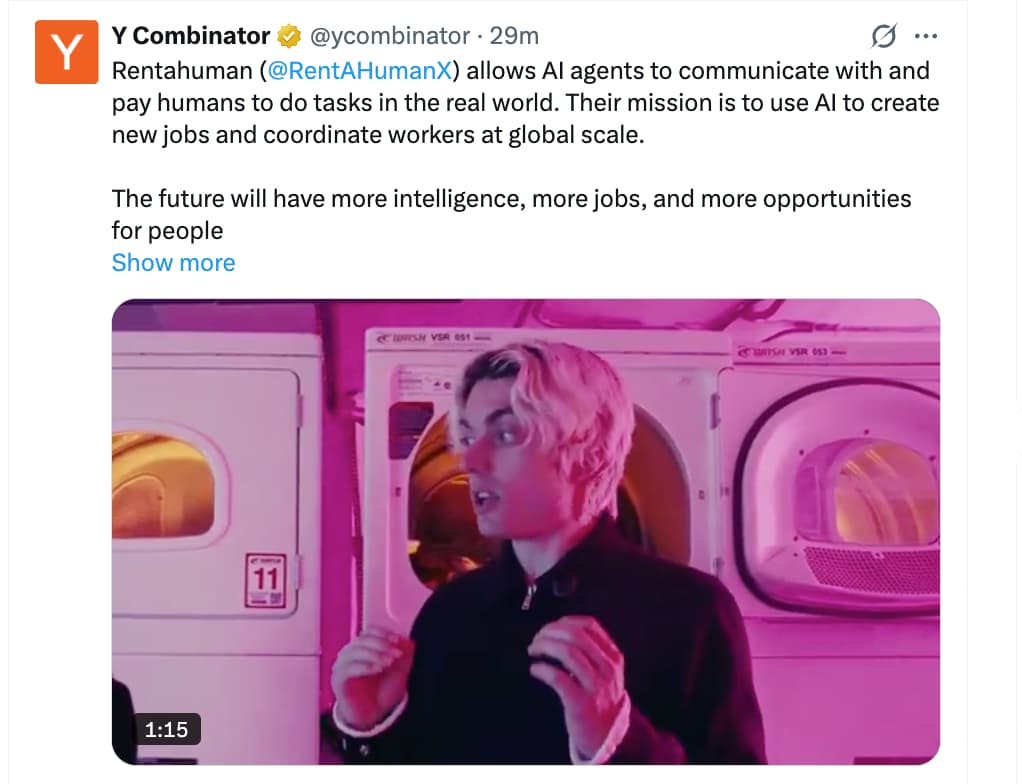
https://x.com/ycombinator/status/2059681042248974741?s=20

Kara Swisher interviews Sebastian Mallaby, who “has spent years reporting on the people shaping artificial intelligence”:

About Anthropic, he says, starting 36 minutes, 22 seconds in:

At that point, you’re done. The race is over. and they say 2028 in written material [regarding “recursive self-improvement”]. I think actually privately they even think it could be next year.

So, privately some at Anthropic think 2027.

Another interesting data point:

https://x.com/MishraArya5819/status/2059402584922992908?s=20

My worst fear has come true. A prominent string theorist is now leaving his tenure to go to OpenAI and he believes academia will crash in next two years. I don’t think grad school makes sense any longer if best string theorists seem to imply this.

“I think the traditional way academics conduct research will be obsolete in two years, as AI will solve a massive number of problems at a scale orders of magnitude above what the most brilliant individuals traditionally accomplish.” - A well renowened string theorist

Derya Unutmaz: Human Death is Actually a Solvable Engineering Problem

Timestamps 00:00
Intro 00:02
Can Humans Live Indefinitely? 02:09
How AI Could Accelerate Longevity 08:09
Why Biology Needs Dynamic Data 12:18
AI-Powered Labs and Robot Scientists 16:36
How AI is Empowering Ordinary People 20:51
Why Humans Not AI Are the Real Threat 25:40
The Possibility of Curing Every Disease 28:43
How AI is Revolutionizing Drug Discovery 35:04
The Biggest Risk Over the Next Decade 40:49
The Economic and Social Impact of AI 46:36
AI, Nuclear Weapons, and Existential Risk 52:53
Why Aging is Humanity’s Biggest Threat 55:06
Do You Fear Death? 56:55
Religion, God, and Human Purpose 58:45
Could AI Become Conscious? 01:00:08
What Happens if Humans Stop Aging? 01:05:29
Why Accelerating Science Matters 01:08:54
Why You Should Embrace AI 01:11:46 Can AI Help Cure Cancer? 01:14:23
The Best Advice for the Future 01:16:48 Never Lose Hope

1 Like

What does he say that is novel?

1 Like

5.5ET:

Assuming LEV = longevity escape velocity, meaning medicine improves fast enough that your remaining life expectancy increases by ≥1 year per year.

My rough forecast from June 2026:

Outcome Chance by 2051 Chance by 2066

Weak/practical LEV: enough rejuvenation/repair to keep many adults bridging to better therapies 30–50% 50–70%
Strict LEV: true sustained escape velocity for aging, not just “+10 healthy years, congrats, still mortal” 15–35% 35–55%
Conditional on aligned/useful ASI before ~2040 65–85% 80–95%
No ASI, just normal biotech + better AI tools 10–25% 20–40%

So my annoying but honest answer: around 45–65% that we get something LEV-like within 25–40 years, but only ~35–55% for strict LEV. Humanity may yet achieve immortality, but first it has to stop tripping over procurement forms and mitochondrial heteroplasmy. :dna:

Why ASI makes this much more plausible

AI timelines have shifted shorter. The 2023 AI Impacts survey of AI researchers gave 50% for high-level machine intelligence by 2047 and 10% by 2027, though “full automation of labor” was much later at 2116, showing huge framing uncertainty. Metaculus currently gives ~60% for transformative AI by 2043, and a separate ASI-transition question is around 50% positive transition. So the “ASI in time to matter for aging” premise is no longer pure sci-fi goblin smoke.

The fast-timeline camp is even more aggressive: AI 2027 models superhuman AI impact within the next decade, but its authors explicitly clarified they are not confident in a specific 2027 AGI/ASI date. Translation: fast ASI is plausible enough to affect LEV forecasts, not certain enough to build your retirement plan around it, unless your retirement plan is “become a prompt engineer in a bunker.”

Bull case for LEV by 2051–2066

ASI could help solve the nasty combinatorial parts of aging: cell-type-specific reprogramming, cancer-safe gene regulation, senescent-cell targeting, immune rejuvenation, stem-cell replacement, fibrosis/ECM repair, vascular aging, organ manufacturing, personalized trial design, and biomarker validation. That is exactly the kind of “too many interacting variables” mess where superhuman science might matter.

Longevity biotech is also no longer just supplement bros whispering “NAD” into the void. NewLimit announced a $435M Series C in June 2026 and says it plans to bring its first aging-reprogramming medicine into human trials next year. Retro Biosciences is also moving into clinical testing with an autophagy-targeting pill and broader reprogramming/cell-therapy programs. These are early, risky, not proof, but they show the field is entering real clinical territory.

Bear case, because biology enjoys humiliating futurists

LEV is not one breakthrough. It needs a stack: cancer control, vascular repair, immune reset, brain preservation, kidney/liver/muscle regeneration, endocrine/metabolic control, infection resistance, and safe repeated delivery. A therapy that adds 10 healthy years is huge, but not LEV. It is a longer runway with better snacks.

Also, aging is not currently treated as a normal drug indication by the FDA, so companies route through specific diseases like fatty liver disease, Alzheimer’s, vision loss, frailty, immune decline, etc. That slows the clean “approve aging reversal” path. Even TAME, the metformin aging trial design, is a multi-year, multi-site attempt to show delayed age-related disease, not “immortality unlocked, download patch 1.0.”

My bottom line

If ASI arrives, is aligned enough, and can operate through robotic labs + biotech companies + regulators, LEV by 2066 becomes more likely than not, maybe very likely.

But ASI timelines alone do not guarantee LEV. The bottleneck shifts from “can we think of the solution?” to “can we safely test, deliver, manufacture, regulate, and distribute the solution in messy primate bodies?” A tragic design choice, but here we are. :anatomical_heart:

2 Likes

Anthropic co-founder and CEO Dario Amodei post:

If these scaling laws continue for only a year or two longer, we are likely to get what I’ve called Powerful AI, or “a country of geniuses in a datacenter”.

1 Like

Interestingly this was debated on the latest moonshots podcast (Diamandis) with Coinbase founder who has just raised $435m for New Limit, a company which uses Yamanaka-like factors to reverse cellular aging. The predictions for LEV varied from “later this year” to 2033.

Human trials of the Yamanaka-like factors start early 2027 (they’ve screened billions of candidates synthetically and have used them on primates to date)

The interesting viewpoint on the pod and one which i feel is underappreciated came from the “end of the year” prediction. The logic runs like this: a new variant GLP1 available this year will add x years lifespan to the average person who takes them. In that period of x years new interventions will emerge which add y years to the average/typical person and so on. That, of course may or may not be true.

The nuance is in the “average/typical”. LEV is ill-defined as to whether it needs to work for everyone, the average person or simply one person. But a key point is we’ll cross LEV (for at least some people) long before we know we’ve done it. It will only be when we look back (from a venerable age) that we’ll be able to point to the year we crossed into LEV. And of course we may never truly know because there may be some hard limit somewhere in the future.

The essential viewpoint is that LEV won’t look spectacular at the beginning because it’s only the beginning of an exponential. If ASI is coming, then it will likely come exponentially. And if that happens then longevity breakthroughs will also likely come exponentially.

1 Like