Super Cool!
This is all very interesting, but to correct one point: the TRIIM-X trial did not use daily rHGH injections. The rHGH injections were about twice per week, while DHEA and Metformin were taken daily. (I was a subject in the TRIIM-X trial, so this is from first-hand knowledge.) In TRIIM-X we had frequent blood tests to measure IGF-1, Insulin, fasting Glucose, etc., with rHGH doses adjusted frequently to avoid pushing Insulin too high.
5 Likes
Thanks for sharing this info. Can you explain how much HGH was used in your case and in anyone else’s case you know of? I have been searching for this answer and it’s always rather vague. I get that it’s based on lab markers but what dose did that amount to? And why only twice weekly? Interesting it still worked on such infrequent injections.
FWIW…
Did you review the Study Details?
Thymus Regeneration, Immunorestoration, and Insulin Mitigation Extension Trial (TRIIM-X)
1 Like
Did your LLM mention tesamorelin-IgG antibodies and GHRH antibodies?
In my case, the issue is simple: I do not want antibodies against endogenous hormones. From what I understand, GHRH antibodies seem to decline after discontinuation, but I still see a potential risk here and would prefer a more modern preparation. Tesamorelin-IgG antibodies, on the other hand, do not concern me.
The second problem is DHEA. It was used because Fahy used it himself. It may have worked for him personally, but there is no clear evidence that DHEA improves insulin resistance.
Third, I would not use metformin, especially not to antagonise IGF-1. Fahy used metformin to prevent diabetes like symptoms, not to lower IGF-1.
Personally, I would use only somatropin/Norditropin and monitor fasting blood glucose, HbA1c, and zinc status roughly every six weeks.
Amount of HGH varies by person, as you pointed out yourself, so I’m not sure how that would help. The patent has more details on dose escalation, as pointed out here: Reversal of Epigenetic Aging and Immunosenescent Trends (TRIIM paper) - #2 by qBx123Yk
Also @cl-user , I notice your LLM didn’t consider the TRIIM-X patent when building your plan. You would probably benefit from looking at it, as it makes clearer what the dose escalation procedure is, and that this dose depends factors/guardrails based on your own physiology.
1 Like
No but I will look at that.
People should test their DHEA levels. Maybe they don’t need to supplement it. It’s an individual decision.
This protocol does not use Metformin.
Most people do not have the re$ource$ .$18,000 or more, this was the cost to participate. In the TRIIM-X trial/study
In my view the “gray market” {yes the HGH from China] make it reasonable to most people.
It would help. I’m trying to get a ballpark range of actual doses measured in iu (or mg) that were used by the people registered in the trial along with how much was injected per dose, etc. I get that everyone was dosed differently based on biomarkers but I would like to hear actual numbers as a reference point.
You are right: China might be worth a try as well, provided you have no concerns about importing it. Here within the EU, it’s not easy.
But at least the whole bodybuilding peptide scene may be good for something. They call these compounds “roids”, have specialised labs for testing purposes, such as RoidTeam, and they are well organised when it comes to sharing lab-testing results. The legal risks aren’t lower. In both cases you’ll have one frog to eat, if you want to cut costs.
I think I’d rather know target IGF-1 or z-scores. IU seems too individualized to be useful. The trial really wanted people in a target range based on labs. The patent describes what increase they were looking for, but I only skimmed it and need to read more closely later. Not sure I found the right levels after a first look.
1 Like
FWIW…
$600 per month is reasonable…
Pharmaceutical Industry in the US take as much as possible from your wallet.
$3000 and more per month
AI-generated answer below
Please verify critical facts
The cheapest place to purchase somatropin (including Norditropin ) is Costa Rica or Mexico , where medical tourism clinics offer FDA-approved brands like Norditropin and Saizen for $550 per month (for a 10–12 mg supply). This represents a 60–70% reduction compared to standard US retail prices, which can exceed $2,600 for the same medication.
In the United States , prices vary significantly by pharmacy and insurance:
- Retail/Cash Prices : Norditropin can cost as high as $2,646 to $9,465 per month at full retail.
- Discounted Prices : Using coupons or pharmacy programs (e.g., Kroger, CVS), prices may drop to approximately $1,737 per month.
- Patient Assistance : Eligible patients with financial need may access medication for as low as $70 per month through specific assistance programs.
Key Considerations:
- Legality : In the US, Norditropin is a prescription-only medication. Purchasing it from online vendors without a prescription carries risks of counterfeit products.
- Medical Supervision : Legitimate low-cost options in Mexico (e.g., Tijuana) and Costa Rica require a physician-supervised program and medical evaluation to ensure safe administration and cold-chain handling.
- Alternatives : Other brands like Zomacton ($301 ) and Genotropin ($359–$907 ) may offer lower costs than Norditropin depending on the provider and location.
AI-generated answer
Please verify critical facts.
Zomacton Injection (Somatropin)
12iu in 1 Vial with 1 Vial of water for injection Strength: 4mg
$85.00 per vial - online purchase
Jason, what is your cost for “gray market,” HGH?
I would like to know both. I think the only way we will get our answers are to hear about it from the person who is in the trial that posted here.
2 Likes
Good catch. Here is the most useful addition from the patent:
The patent claims that GH dose should be increased until the CD4/CD8 ratio peaks, then stopped — not titrated to a fixed IGF-1 value. The ratio declines if GH is pushed beyond the optimum. This implies the ideal GH/GHRH dose is individual and immune-guided, not weight- or age-based.
For the protocol this is actionable: IGF-1 monitoring is a safety ceiling, but the therapeutic target should be the CD4/CD8 ratio peak.
As CD4/CD8 ratio is not easy to get It will be added as an optional therapeutic target to the protocol.
3 Likes
Not sure if this answers your question but I recall seeing this:
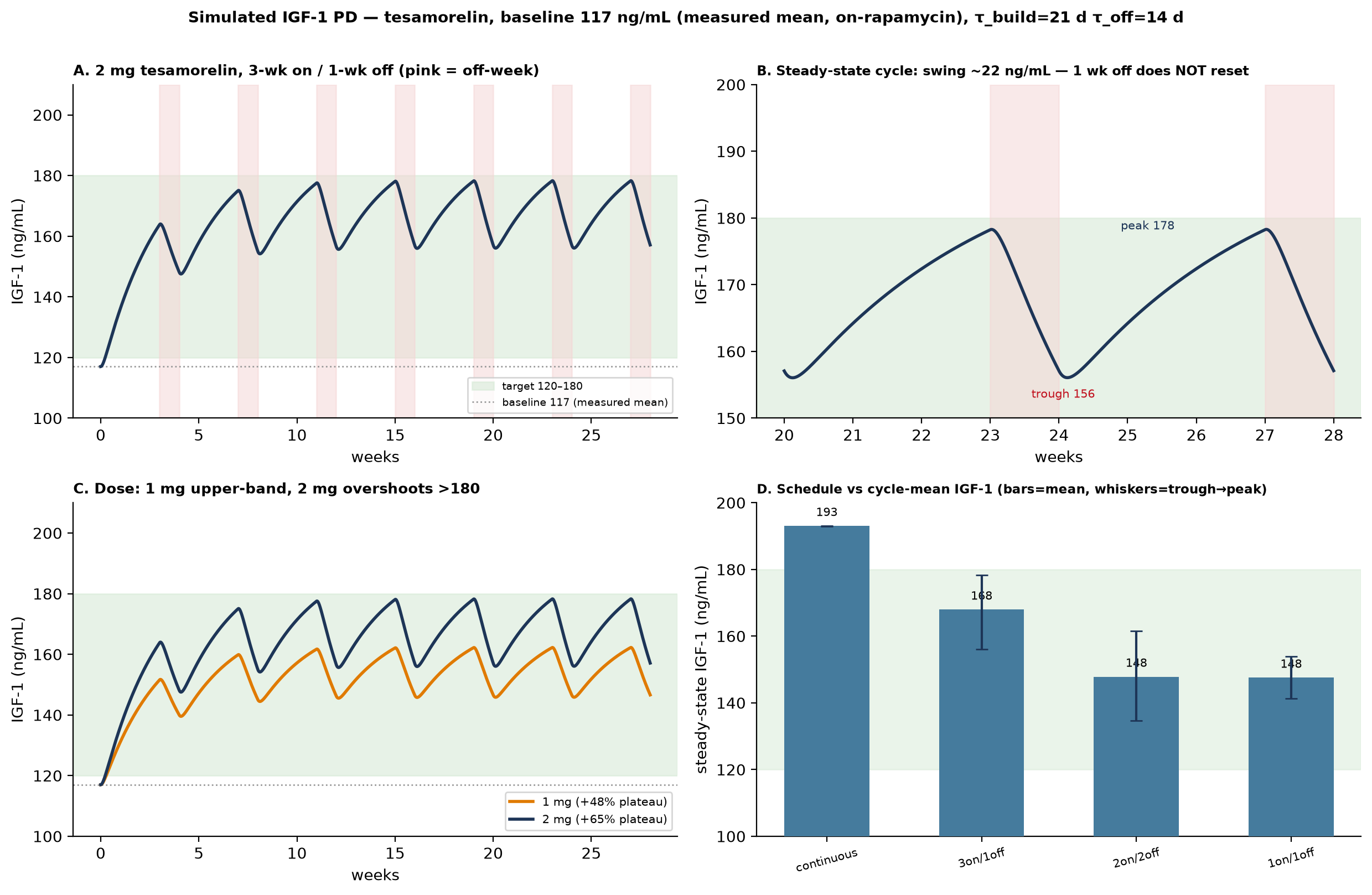
Since Tesamorelin is currently difficult to find and expensive, I have attached an appendix regarding the use of CJC 1295 noDAC and Ipamorelin as an alternative.
thymic_rejuvenation_appendix-1.pdf (62.9 KB)
2 Likes
Another practical disadvantage of tesamorelin (or CJC/Ipa for that matter) is injection site reactions (very common and often quite painful) and occasionally severe allergic reactions including anaphylactic shock. Such issues anecdotally seem to be virtually non-existent with actual gray market HGH. I personally will never touch tesamorelin again after breaking out in hives all over both thighs last time I used it.
3 Likes
Yea. I have taken both and tolerated fine. However if you follow some of the bio hacking subreddits, there is a post every week where tesa+ipa sent someone to the hospital.
3 Likes
Thanks for this! It’s the part I skimmed over, but wasn’t sure if there was more later in the patent. I was at work and didn’t have time to comb through it. Thanks for the assist!
1 Like